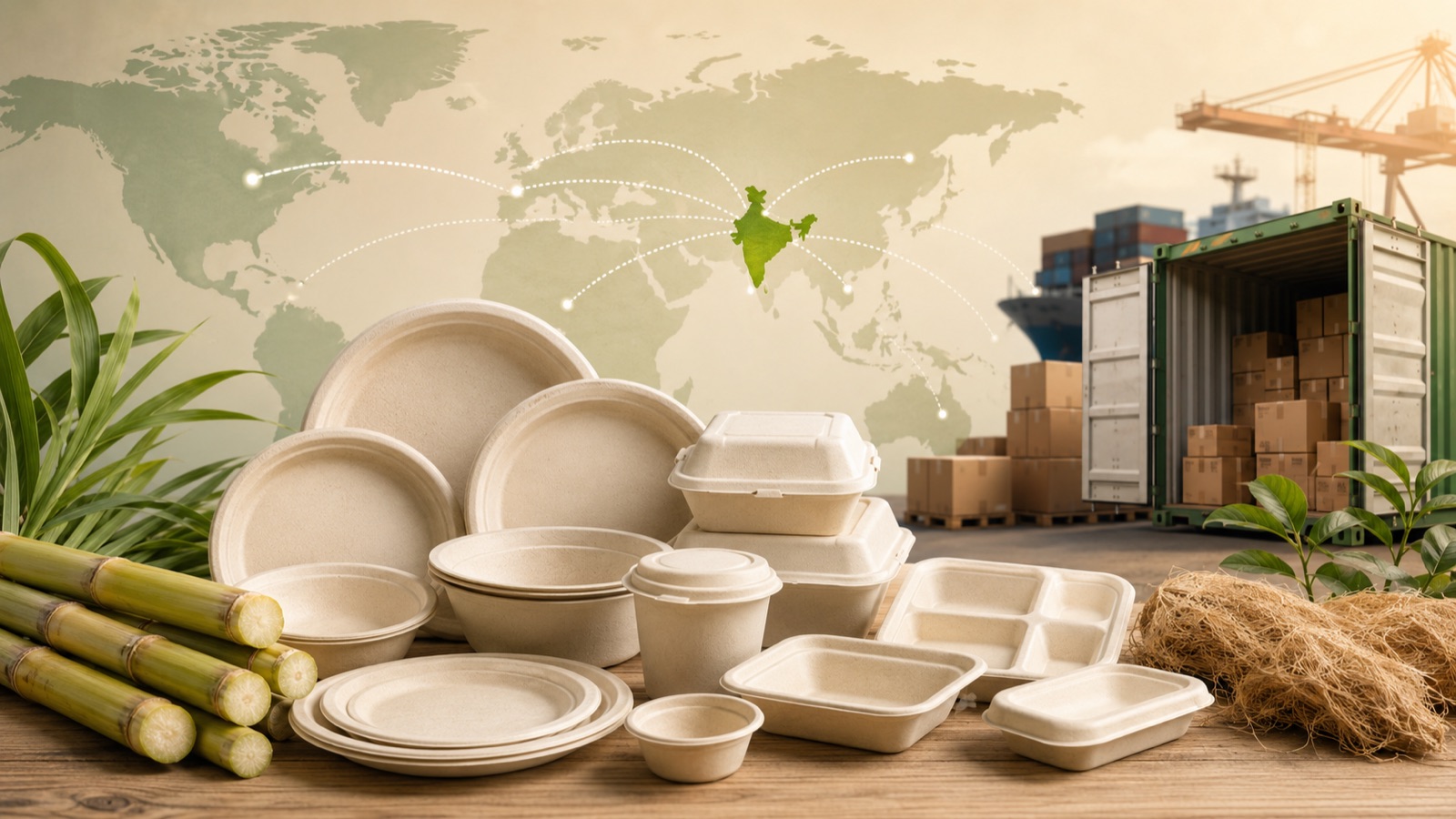
QSR Packaging Trends 2026: What Sourcing Teams Are Tracking
Compostable goes mainstream, kraft replaces white, modular SKU programmes accelerate. The 3 QSR packaging trends to watch in 2026.
On this page
Sourcing in bulk?
Tell us your products and quantity
We supply distributors and brands in 30+ countries, and reply with pricing, lead time and shipping.
Three industry trends are reshaping QSR packaging procurement in 2026. Each has direct implications for supplier evaluation, SKU planning, and unit economics.
Key takeaways
- Compostable packaging is now near cost-parity with plastic on many QSR SKUs, especially once UK and EU plastic-tax exposure is counted.
- Brown kraft has become the premium aesthetic; white still suits value and mass-market formats.
- Modular SKU sets that work across dine-in, delivery, and retail cut SKU count and total cost.
- Certifications (BRCGS, EN 13432) are now demanded at the supplier-evaluation stage, not after the PO.
- Re-quote annually, because the compostable-versus-plastic cost gap keeps moving.
Trend 1: Compostable becomes the default, not the premium option
In our own order data and broader industry observation, the unit-cost gap between compostable packaging and virgin plastic at FCL volumes has narrowed sharply over the past two years. Where compostable once carried a noticeable premium, on many QSR-grade SKUs such as clamshells, takeaway containers, and PET lids on bagasse bowls, it is now a single-digit-percentage difference for buyers we work with. Three forces drove the convergence:
- Plastic-tax exposure in the UK (£228.82 per tonne, 2025-26 rate) and across several EU member states adds a line-item cost to virgin plastic on procurement reports
- Scale-driven cost reduction in Indian and Vietnamese bagasse manufacturing, where capacity has expanded substantially since 2022
- Compostable alternatives meeting performance specs that previously required plastic (oil resistance, microwave reheating, leak resistance for delivery)
The practical effect: QSR chains that resisted compostable on cost grounds in 2023 are now switching, because the avoided plastic-tax cost often offsets what remains of the unit-cost premium.
| Year | Typical compostable premium over virgin plastic | Driver |
|---|---|---|
| 2024 | Mid-to-high single digits to low double digits | Limited capacity, smaller production runs |
| 2026 | Low single digits on major QSR SKUs | Expanded capacity, plastic-tax offset, performance parity |
Premiums vary by SKU, volume, and material spec; treat the table as a directional view from Ecofy order data, not a quoted price.
Trend 2: Brown kraft replaces white as the premium aesthetic
Premium QSR positioning shifted toward natural and unbleached materials between 2024 and 2026. Brown kraft clamshells, once a niche request, now anchor the packaging programmes for:
- Premium burger chains positioning on artisan / craft credentials
- Salad and grain-bowl chains targeting health-conscious consumers
- Café and bakery extensions of QSR brands
- ESG-led marketing programmes (kraft visibly reads as “less processed”)
White packaging remains dominant at the value end of QSR (mass-market chicken, pizza, fast-casual). In our order data, brown kraft typically carries a modest unit-price premium over equivalent white SKUs, and chains adopting it generally report it as a deliberate brand-positioning choice rather than a cost decision.
Trend 3: Modular SKU programmes for delivery + dine-in + retail
Single-channel packaging programmes (dine-in only, or delivery only) are giving way to modular SKU sets that flex across:
- Dine-in tray service
- Takeaway / counter pickup
- Third-party delivery (Zomato, Swiggy, DoorDash, Uber Eats, Deliveroo)
- Retail-pack programmes (RTE meals in supermarkets)
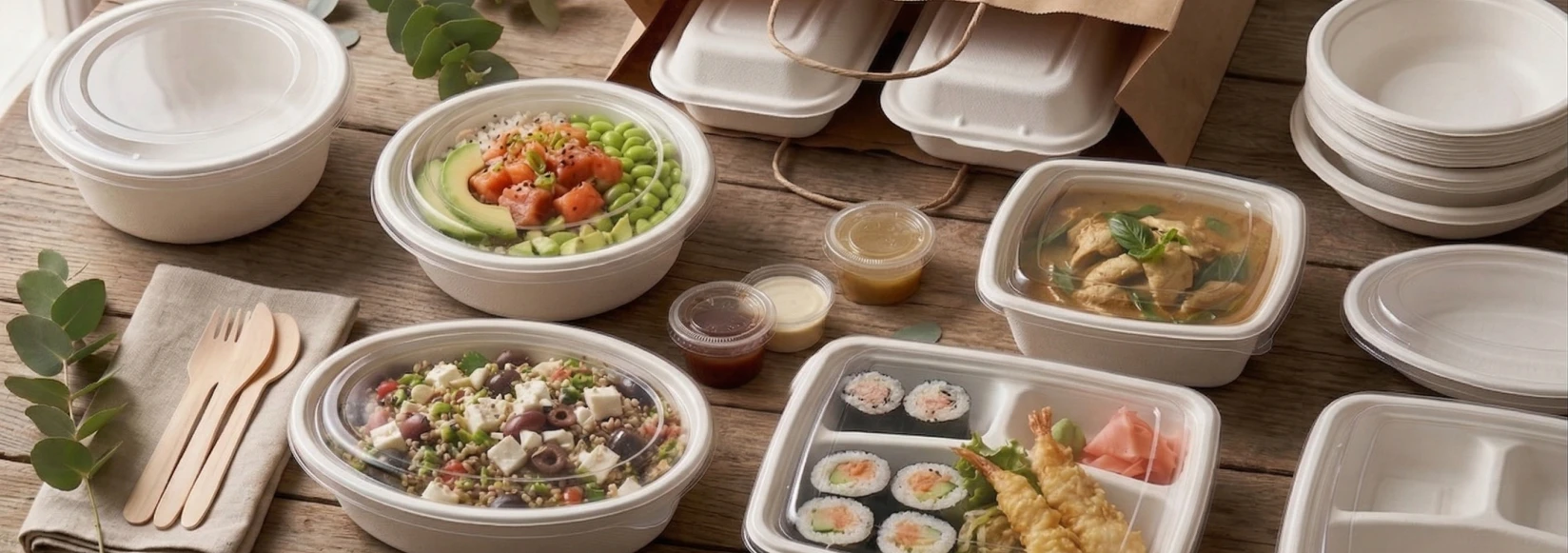
The driver: chains running 4 distinct packaging programmes face higher unit costs (smaller volumes per SKU), more SKU complexity at the kitchen line, and harder ESG reporting. Consolidating to a single SKU set that performs across all channels, typically built around modular bowls, clamshells, and matched PET lids, reduces total cost and simplifies kitchen operations. This pattern is common among the QSR and cloud-kitchen buyers we supply.
For Ecofy customers, this trend is reflected in larger initial PO scope (chains ordering 8-12 SKUs in the first PO instead of 3-4) and longer-term contracts (24-36 months vs the 12-month standard).
What this means for procurement in 2026
- Re-quote your packaging programme annually. The cost gap between plastic and compostable has narrowed faster than most procurement teams realize.
- Test brown kraft before assuming white is right. A pilot with kraft variants on 5-10 outlets often produces brand-perception data that justifies the small unit premium.
- Consolidate SKU programmes across channels. Fewer SKUs, larger volumes, lower total cost.
- Lock multi-year contracts when supplier capacity is ahead of demand, currently the case in Indian bagasse manufacturing.
Ecofy supplies modular packaging SKU sets across plates, bowls, trays, takeaway containers, PET lids, and clamshells (white and kraft), designed for dine-in, takeaway, delivery, and retail simultaneously.
Planning a multi-channel packaging programme? Request a quote and we’ll map a modular SKU set to your formats.
Want guides like this in your Google results?
Add Ecofy as a preferred source. Google will surface our compliance standards and trade-data guides more often when you search packaging rules, including in AI Overviews. Takes one click and you can remove it any time.