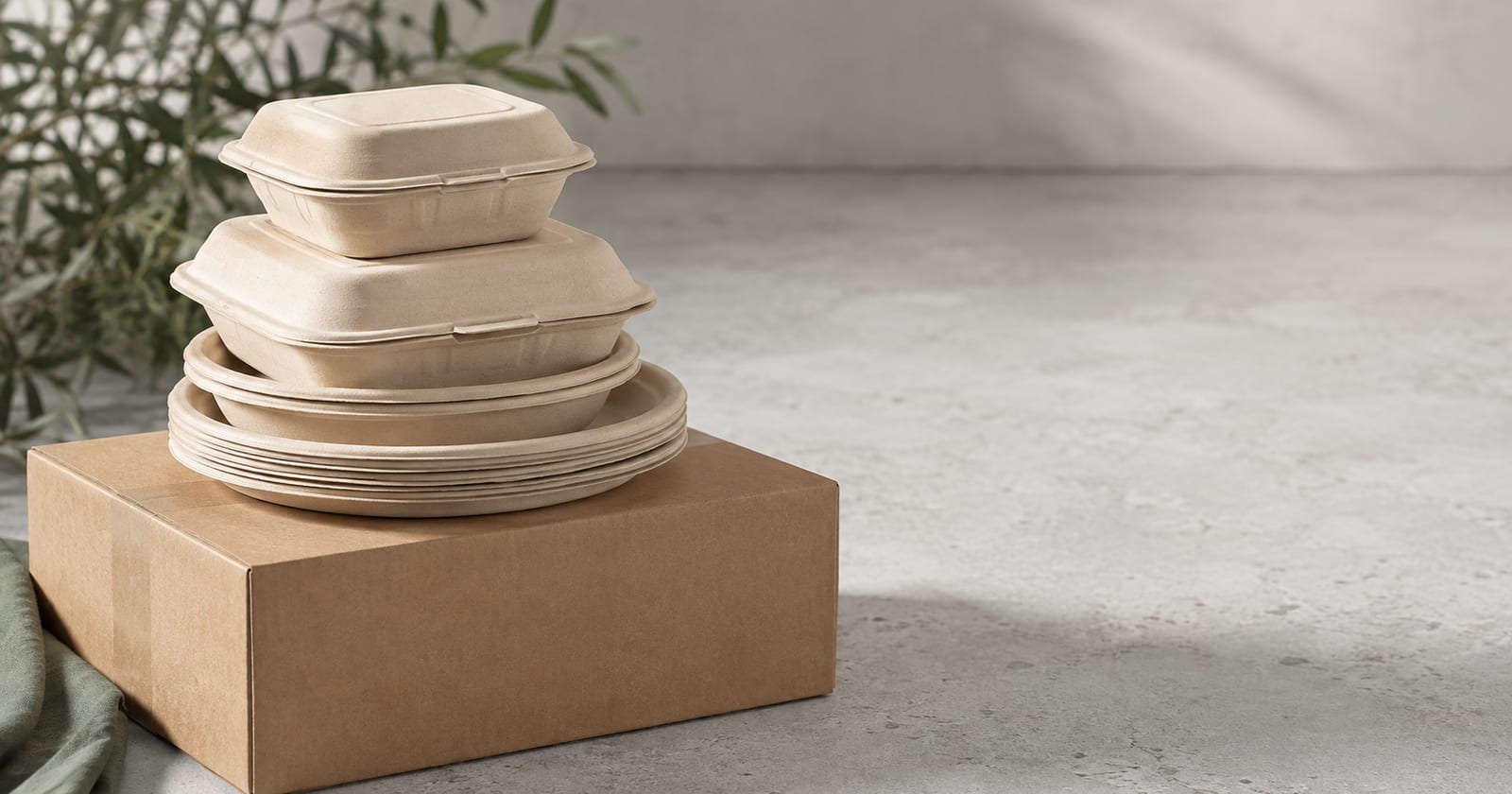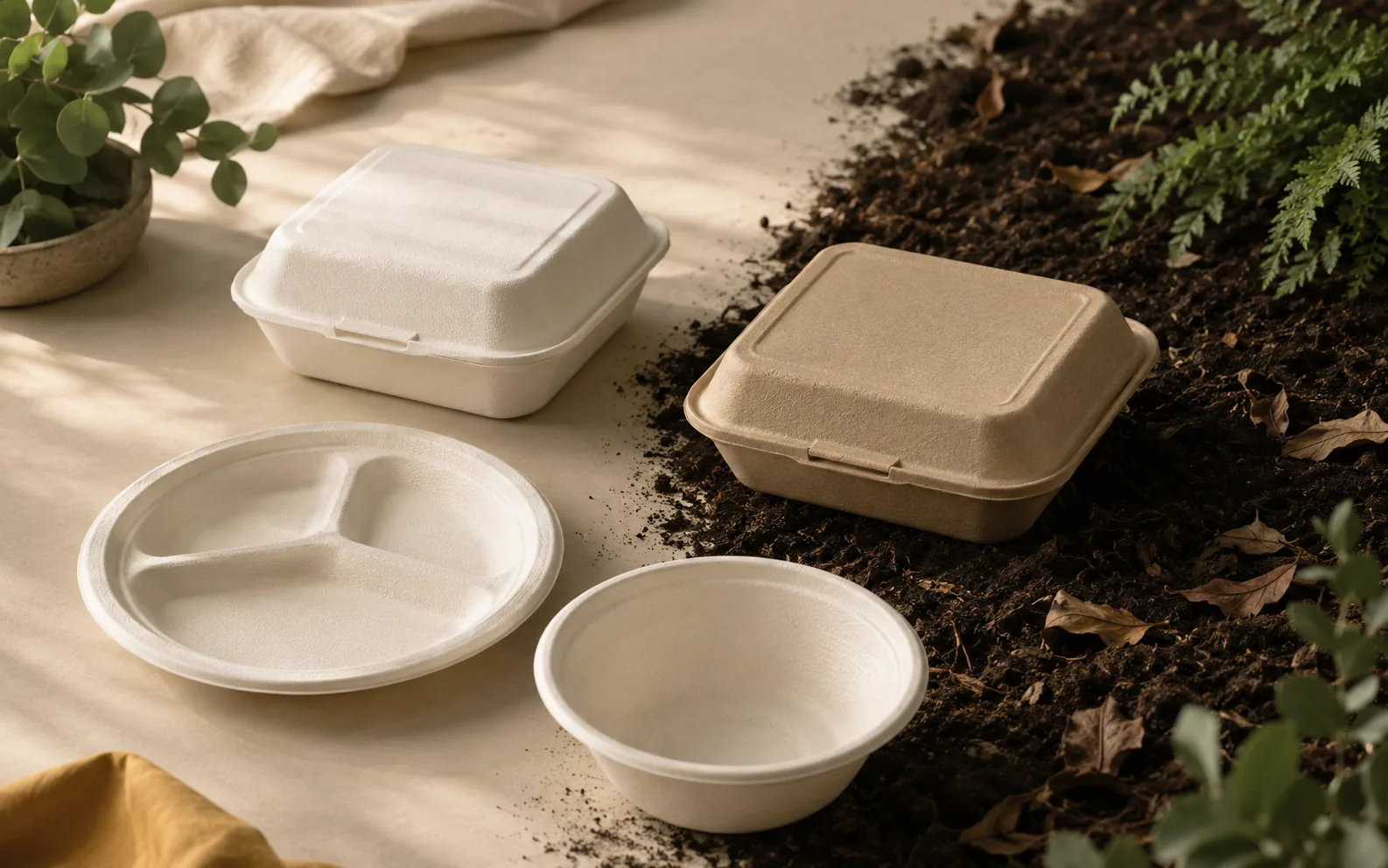
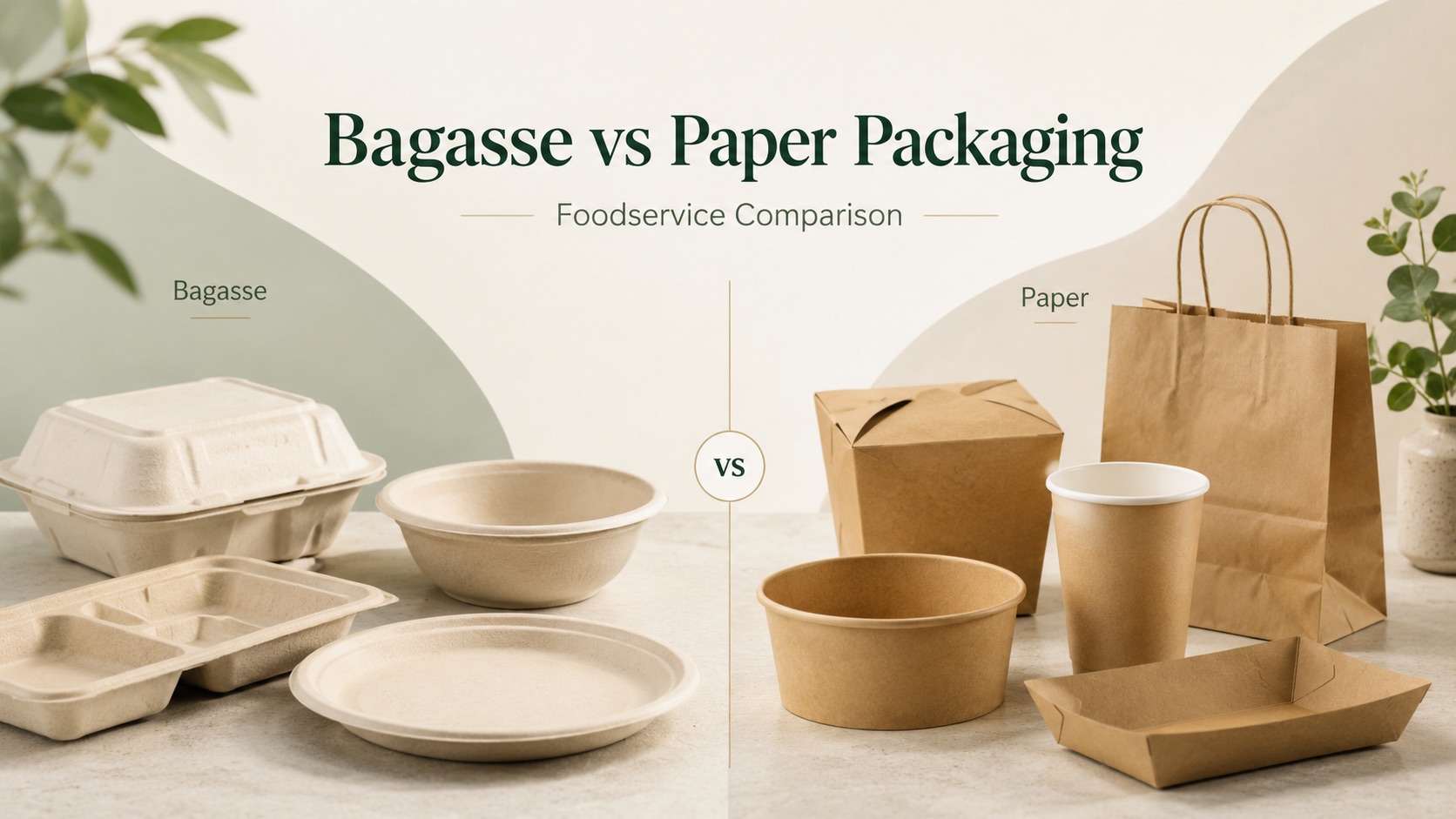
Bagasse vs Paper Packaging: Foodservice Comparison
Bagasse molded fiber vs paper / pulp packaging. Strength, water resistance, grease performance, cost, and lifecycle compared.
On this page
Sourcing in bulk?
Tell us your products and quantity
We supply distributors and brands in 30+ countries, and reply with pricing, lead time and shipping.
TL;DR: Bagasse outperforms paper and pulp for hot, oily, and wet foodservice. It resists grease and water without PFAS or wax coatings, is microwave-safe to 220°C, and holds shape under load. Paper’s one edge is curbside recyclability. Choose bagasse for hot, wet, heavy-duty items and PFAS-restricted markets; use paper for cold, dry, light-duty items. Most operators use both.
Bagasse molded fiber and paper-based packaging are often grouped under “paper alternatives” in procurement conversations, but their performance characteristics differ materially, and the right choice depends on the menu and operating conditions.
Material origin
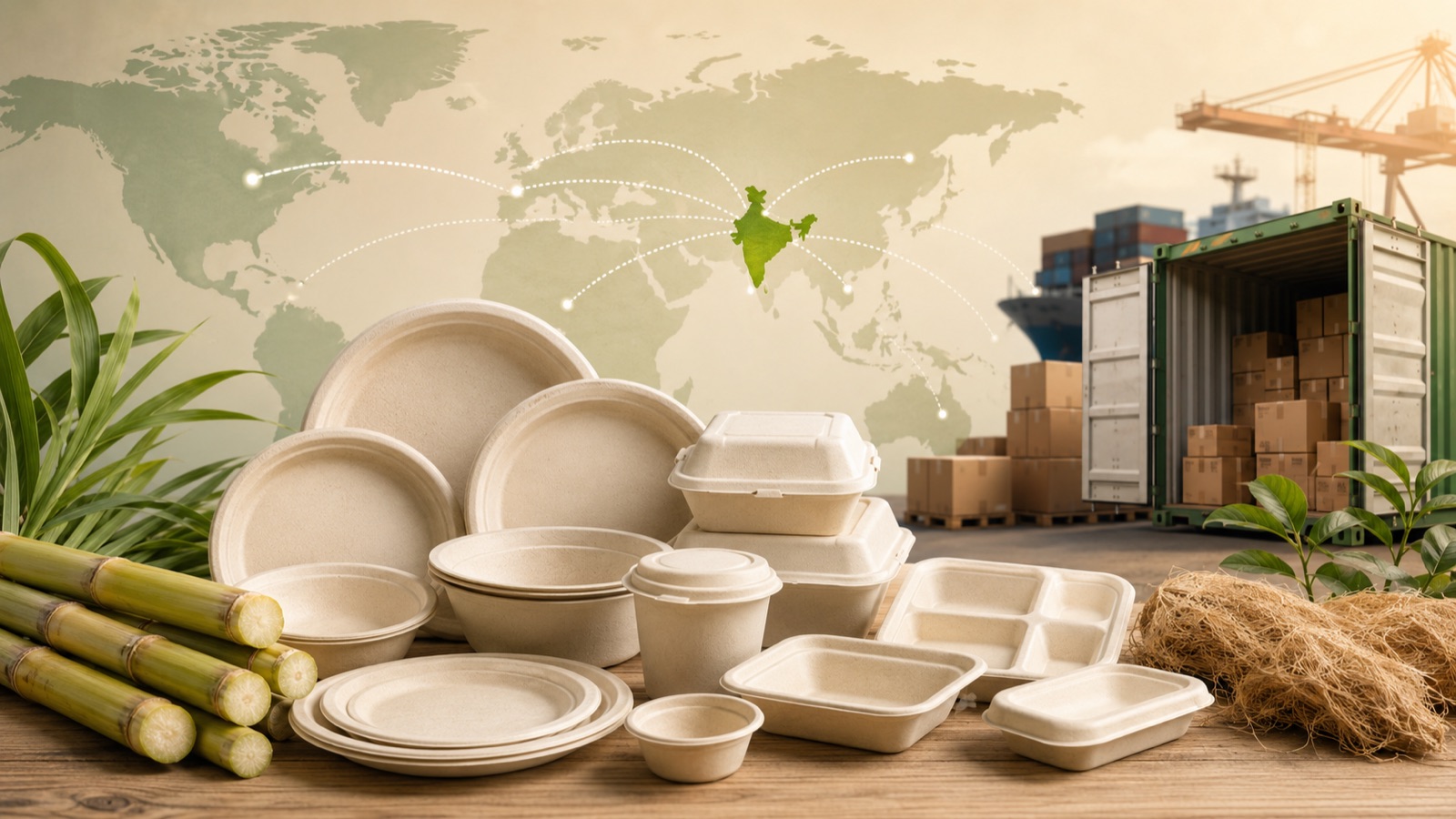
Bagasse is sugarcane fibre, a waste stream from sugar production. Production is concentrated in India, Brazil, and a handful of other sugarcane-producing countries.
Paper / pulp is virgin or recycled wood fibre. Modern foodservice paper packaging (paperboard clamshells, kraft bowls, pulp trays) typically uses virgin Kraft pulp from softwood species (pine, spruce) or hardwood (eucalyptus).
Performance comparison
| Performance Metric | Bagasse | Paper / Pulp |
|---|---|---|
| Hot food (soup, curry) holding | Excellent | Limited, softens after 30-60 min |
| Cold food | Excellent | Excellent |
| Microwave reheating | Safe to 220°C | Not microwave-safe (chars / scorches) |
| Oil / grease resistance | Excellent (without coating) | Requires PFAS or wax coating |
| Structural strength | Heavy-duty, holds shape under load | Moderate; collapses under heavy loads |
| Leak resistance (without coating) | Good | Poor |
| Stack height | Compact | Bulkier |
The decisive performance factor: bagasse holds hot, oily, and wet food without breakdown or chemical coating. Paper requires coatings (PFAS, wax, or PLA-lined) to perform comparably.
The PFAS issue
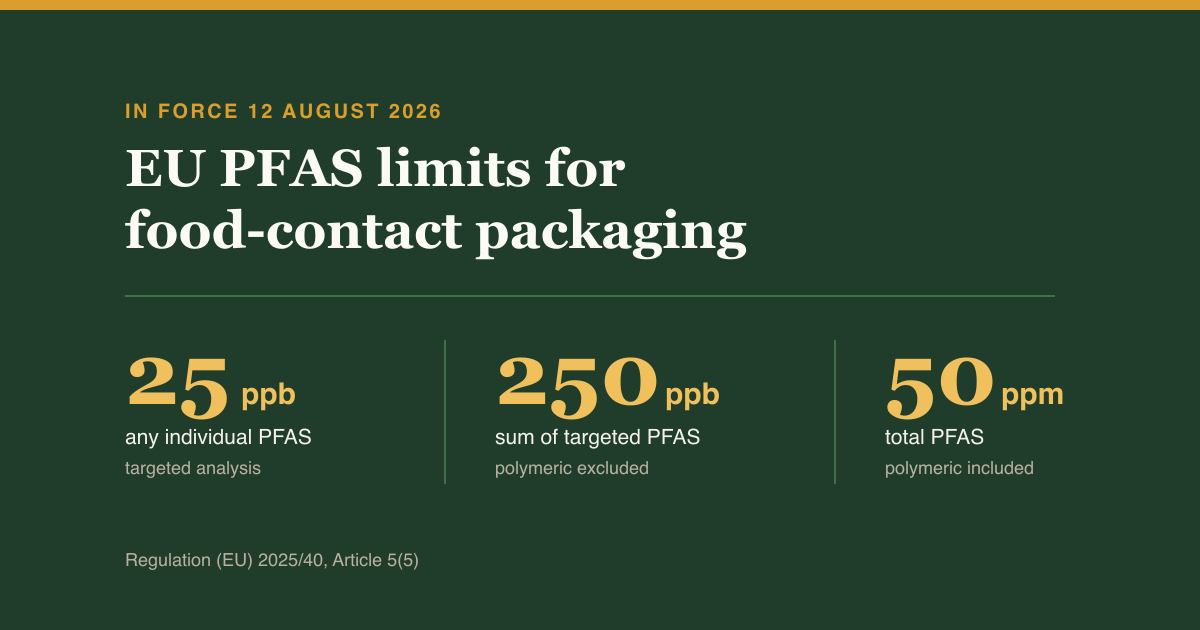
Most paper foodservice packaging historically used PFAS (per- and polyfluoroalkyl substances) for grease and water resistance. PFAS are now banned or restricted in:
- California (AB 1200, effective 2023)
- New York, Washington, Oregon, Maine, Vermont, Colorado, Minnesota
- The European Union (REACH restrictions)
- China (food-contact PFAS restrictions tightening)
Paper packaging without PFAS has lower performance: wax-coated alternatives don’t survive microwaving; PLA-lined paper composite is more expensive and harder to recycle.
Bagasse achieves grease and water resistance through structural density alone, without PFAS coatings. This is a regulatory advantage that has accelerated bagasse adoption since 2023.
Composting and recycling
| End-of-Life Pathway | Bagasse | Paper / Pulp |
|---|---|---|
| Industrial composting | Yes (60-90 days, EN 13432) | Yes (uncoated paper only) |
| Home composting | Some formulations (OK Compost HOME) | Uncoated paper only |
| Curbside paper recycling | Not accepted | Yes (uncoated, food-residue-free) |
| Energy recovery | Yes | Yes |
| Landfill biodegradation | 90-180 days | 6-12 weeks (uncoated) / years (coated) |
Paper has one advantage: uncoated paper is curbside-recyclable in most municipalities, whereas bagasse goes through composting streams. For markets with mature paper recycling but limited composting (most of the U.S., much of Europe), paper has end-of-life flexibility.
For markets with mature composting infrastructure (San Francisco, Seattle, parts of Italy and Germany), bagasse and paper compost similarly well; the choice comes back to performance.
Cost comparison
At FCL volumes for export:
| Cost Factor | Bagasse | Paper / Pulp |
|---|---|---|
| Unit cost (FOB origin, USD) | $0.04-$0.12 | $0.05-$0.15 |
| With grease-resistant coating (paper only) | N/A | +25-40% |
| Custom tooling cost | $3,000-$10,000 | $5,000-$15,000 |
| Plastic Tax exposure (UK, EU) | Exempt | Coated paper may trigger plastic-content thresholds |
Bagasse and uncoated paper are comparable on raw cost. Coated paper (the only paper that performs in foodservice) is materially more expensive than bagasse.
When to choose bagasse vs paper
Specify bagasse when:
- Menu includes hot, oily, or saucy food
- Microwave reheating is part of the operation (cloud kitchens, hotels, hospitals)
- Operating in PFAS-restricted markets (California, NY, EU)
- Heavy-duty structural performance matters (delivery, takeaway)
Specify paper / pulp when:
- Cold food only (sandwiches, pastries, dry-served items)
- End-of-life through curbside paper recycling matters
- Visual aesthetic specifically requires kraft paper texture
- Light-duty applications (snack trays, single-use napkin holders)
Most foodservice operators use both
In practice, modern foodservice packaging programmes use bagasse for hot/wet/heavy-duty applications (heavy-duty bagasse clamshells, compostable bagasse bowls, trays) and paper for dry/cold/light-duty applications (sandwich wraps, pastry sleeves, napkin holders). The two materials complement rather than compete.
Ecofy specializes in the bagasse side: molded fiber plates, bagasse bowls, compostable food trays, takeaway containers, PET lids, and clamshells (white and kraft). For paper packaging, we maintain partnerships with PFAS-free paper manufacturers and can recommend supplier matches.
Sources. PFAS restrictions: California AB 1200, which since 1 January 2023 has banned regulated PFAS in plant-based food packaging on a two-part test of intentional addition or 100 ppm total organic fluorine, and Maine DEP, PFAS in Products. US food-contact requirements for paper and paperboard: 21 CFR 176.170. Recycling context: US EPA, recycling. Cost differentials are Ecofy’s own sourcing experience rather than a published index. Verified 14 August 2026.
Want guides like this in your Google results?
Add Ecofy as a preferred source. Google will surface our compliance standards and trade-data guides more often when you search packaging rules, including in AI Overviews. Takes one click and you can remove it any time.