Kraft Bagasse Switch: MENA Luxury Hotel Rollout Scenario
Illustrative scenario: how a 12-property UAE, KSA and Qatar luxury hotel group would switch banquet and breakfast service to kraft bagasse. Cost, ESG and rollout details.
On this page
Sourcing in bulk?
Tell us your products and quantity
We supply distributors and brands in 30+ countries, and reply with pricing, lead time and shipping.
Illustrative rollout scenario based on typical B2B projects and public industry benchmarks. This is not a specific Ecofy customer, and the figures are representative examples, not actual results.
The challenge
The corporate ESG committee at the hotel group’s regional HQ in Dubai mandated a phase-out of single-use plastic for all banquet, room service, and breakfast packaging by Q1 2026. The deadline was driven by:
- UAE Green Agenda 2030 federal sustainability mandates
- Saudi Vision 2030 sustainability requirements for properties operating in NEOM and other giga-projects
- Internal ESG-reporting commitments to international hotel-chain parents
Procurement constraints:
- Replacement packaging had to read as premium for 5-star service contexts (banquet plates, in-room dining, breakfast amenity)
- Multi-property logistics: supply must reach all 12 properties on consistent schedules
- Halal-safe certification required for KSA properties
- Total material cost increase capped at 20% vs the existing plastic programme
Why kraft bagasse
Initial procurement evaluation considered three options:
- White bagasse molded fiber (standard compostable, food-safe)
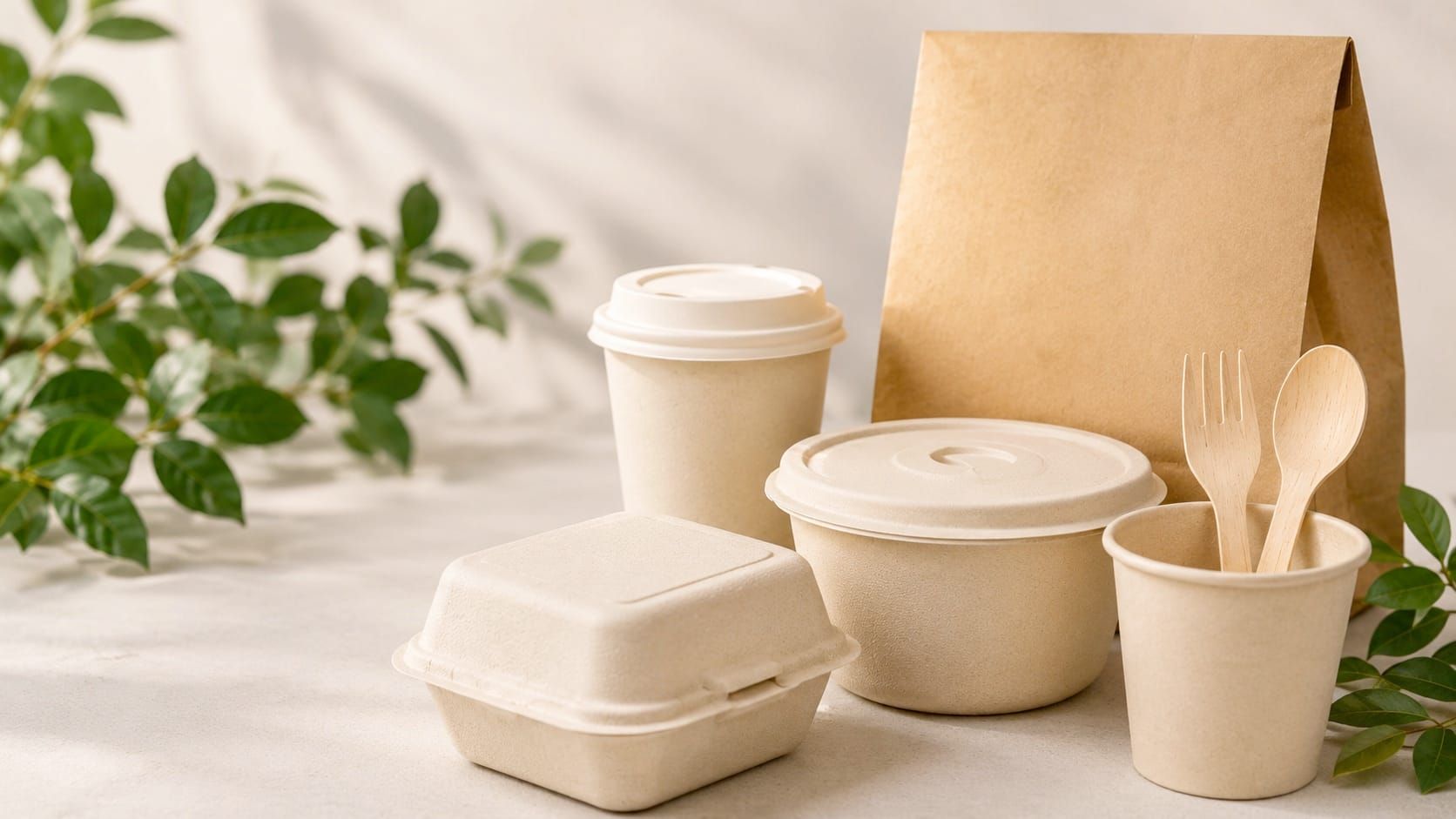
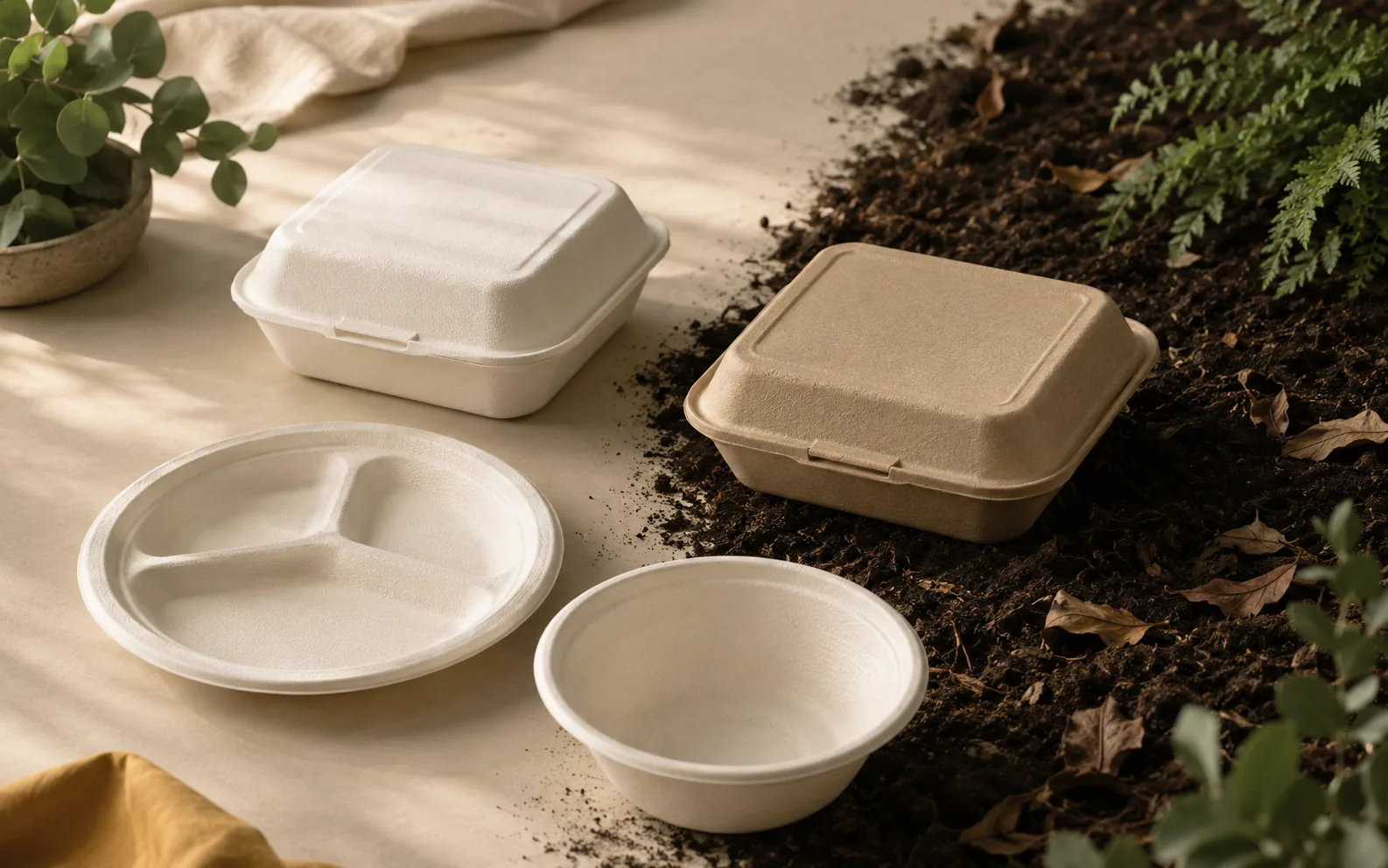
- Brown kraft bagasse (unbleached, premium aesthetic)
- PLA-composite reusable (reuse programme requiring dishwashing infrastructure)
The hotel group selected brown kraft bagasse for three reasons:
- Aesthetic fit: Kraft natural finish reads as “premium organic”, better aligned with the group’s positioning at properties targeting wellness and sustainability-conscious guests
- No reuse infrastructure required: Unlike option 3, kraft bagasse drops into existing room-service and banquet workflows without operational changes
- Regulatory headroom: Kraft is unbleached (no chlorine processing), preferred under stricter EU and emerging MENA standards
Ecofy was selected as supplier on:
- BRCGS Packaging Grade A certification
- Halal-safe declaration for KSA properties
- Single-site manufacturing (consistency across 12-property programme)
- Container-load logistics through Jebel Ali, Dubai
Rollout phases
Phase 1 (60 days): UAE properties
4 properties in Dubai and Abu Dhabi piloted the kraft bagasse programme:
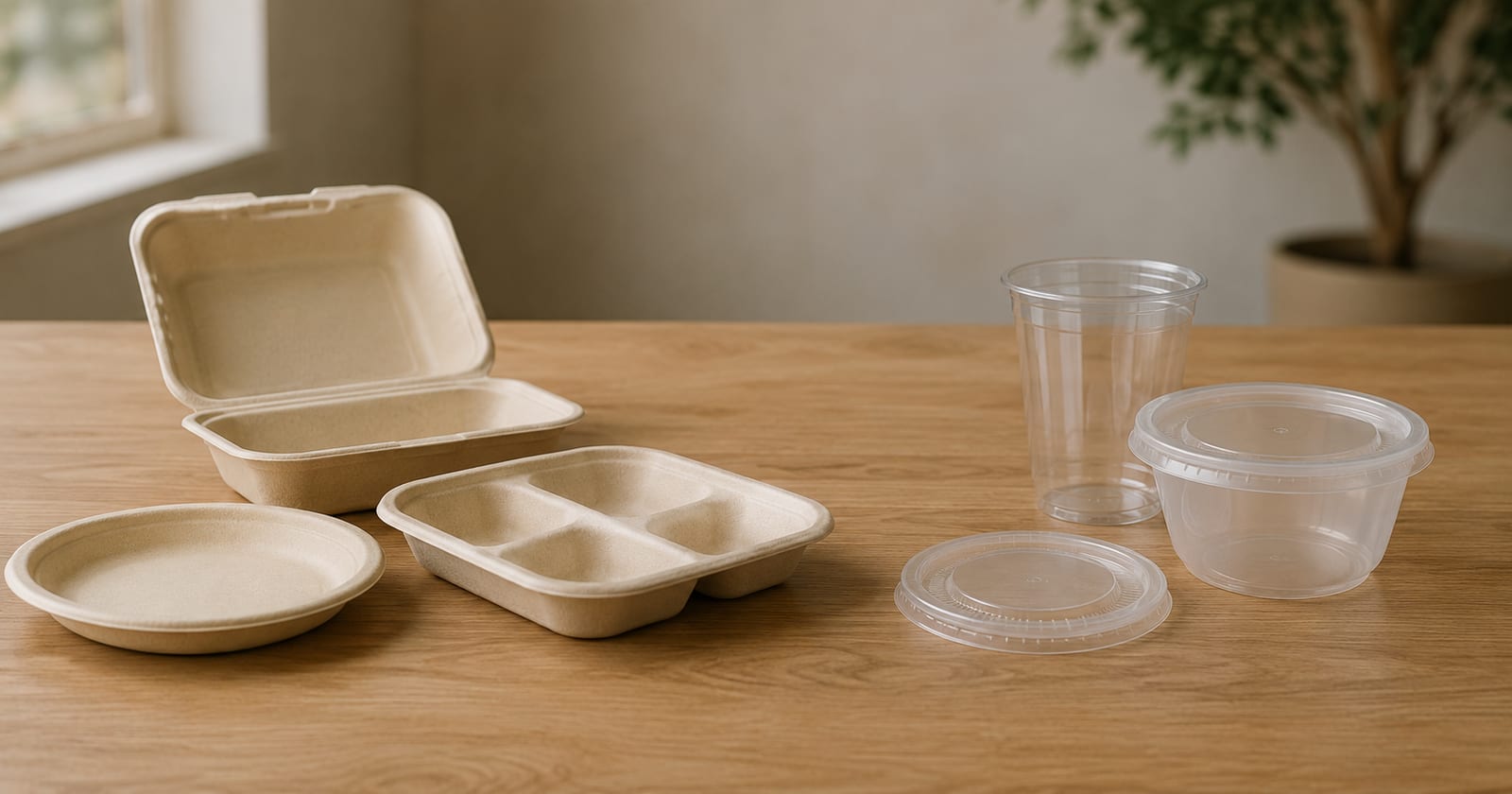
- Banquet service: 11” round plates, 4CP compartment plates, 5CP trays
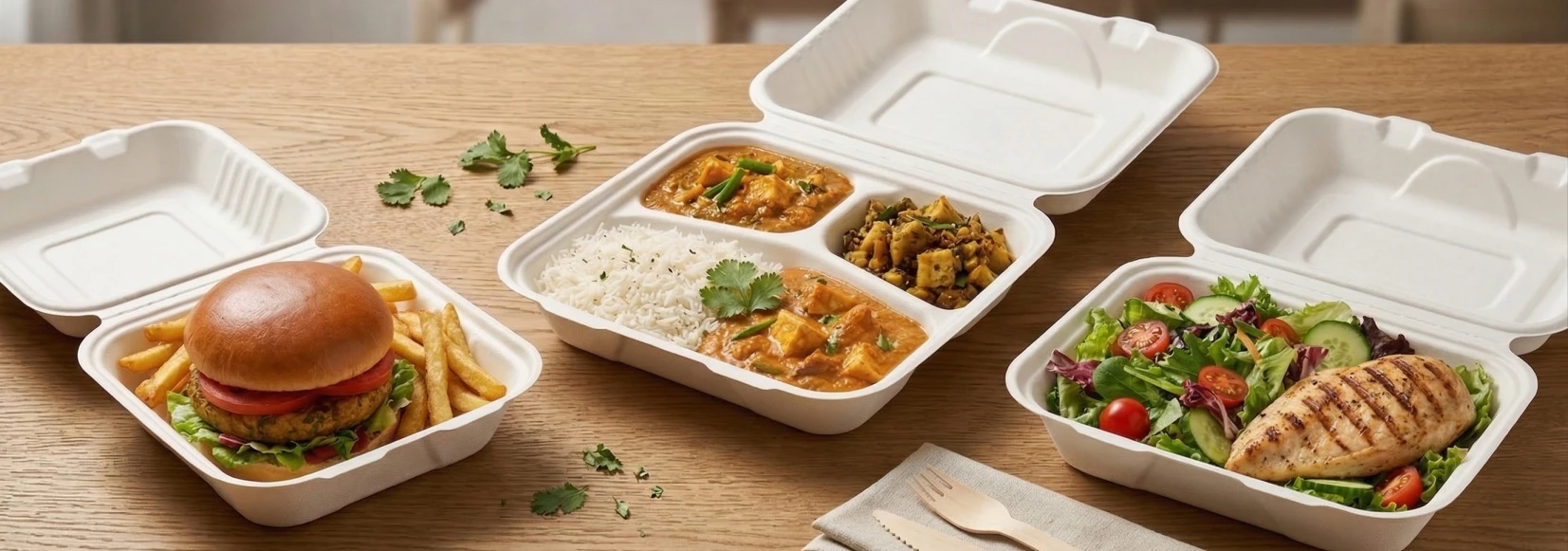
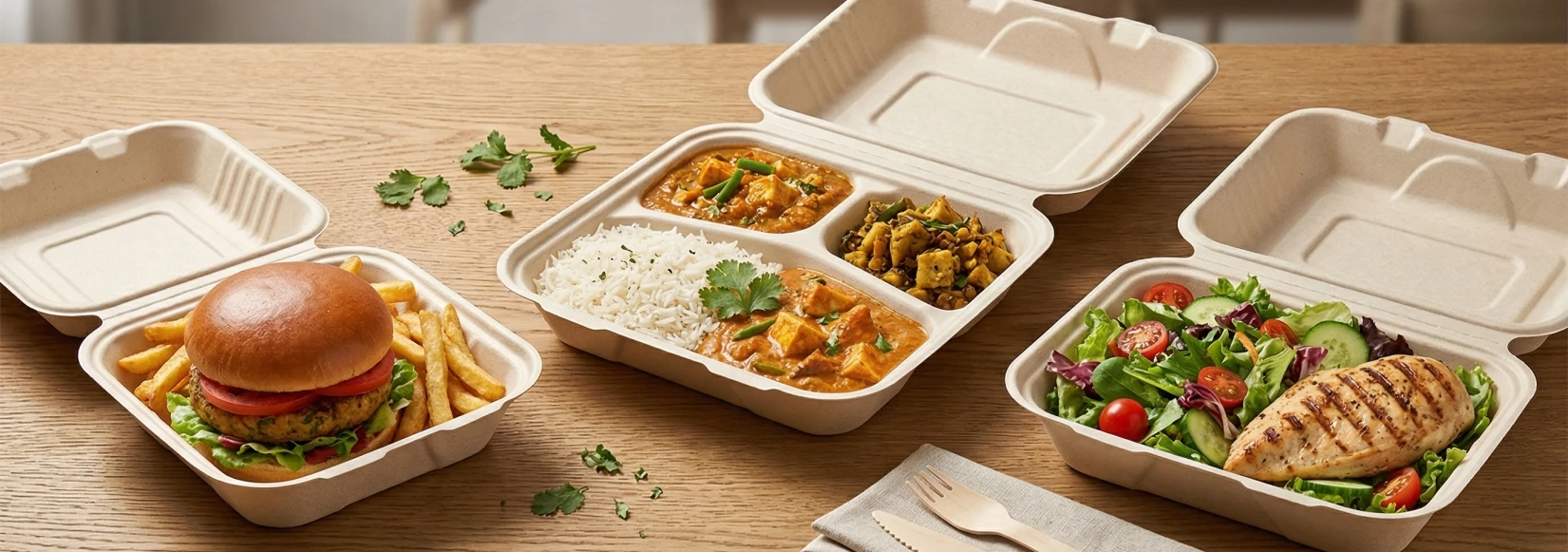
- In-room dining: 9×9 kraft clamshells with embossed property branding
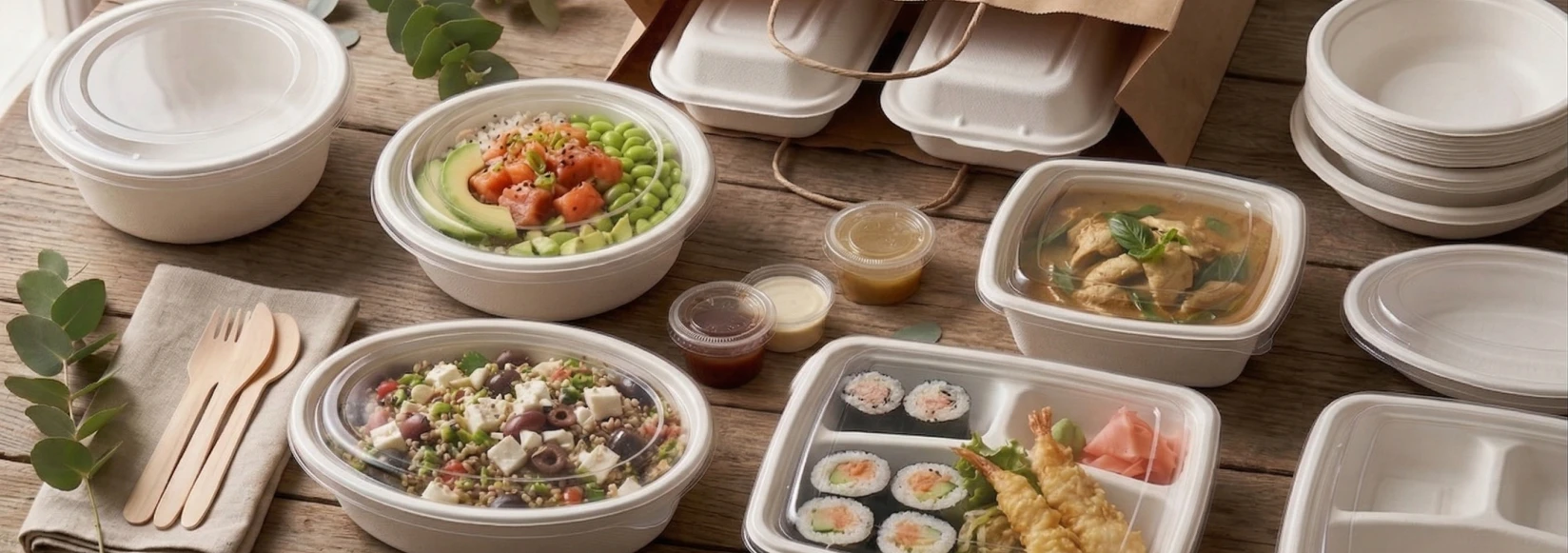
- Breakfast: 12 oz kraft bowls for porridge, cereal, fruit
Operational findings:
- Stack height per case 12% lower than plastic equivalent (more cases to store but lighter)
- Banquet sommelier feedback: kraft “looks more thoughtful” than white plastic
- One issue: kraft bagasse darkens slightly when warm food sits >2 hours, addressed by faster service rotation
Phase 2 (30 days): KSA properties
4 properties in Riyadh and Jeddah added with halal-safe declaration prominently placed in supplier documentation. No format changes needed; Ecofy’s standard kraft bagasse meets halal requirements without certification gaps.
Phase 3 (45 days): Qatar properties
4 properties in Doha, including the group’s flagship property hosting major conference business. Custom embossing with property logo deployed on banquet plates and clamshells.
Results
| Metric | Before (Plastic) | After (Kraft Bagasse) |
|---|---|---|
| Material cost (USD per piece, weighted avg) | $0.18 | $0.22 (+22%) |
| Plastic packaging waste (tonnes/year, group total) | ~140 t | ~12 t (residual lid components) |
| ESG scoring (internal corporate metric, 1-100) | 62 | 84 |
| Guest sustainability satisfaction (post-stay survey) | 7.2/10 | 8.6/10 |
| Time to procurement compliance signoff | N/A | 3.5 months total rollout |
The 22% material cost increase exceeded the 20% cap by a small margin. The group accepted it given:
- Avoided exposure to UAE/Saudi sustainability fines (estimated AED 850k annually across 12 properties)
- Brand-positioning improvement measured in guest satisfaction (+1.4 points)
- ESG scoring lift (62 → 84) which materially improved standing with corporate parents
Lessons for hotel-group rollouts
- Test both white and kraft variants in pilot. Kraft costs 5-8% more but delivers materially better guest perception in premium contexts. White is fine for value-segment properties.
- Custom embossing matters more in hospitality than QSR. Hotel guests notice and remember branded plates and clamshells. Tooling investment pays back through brand consistency.
- Logistics consolidation is where the savings hide. A single supplier shipping container loads to a regional distribution centre (Dubai for the UAE / KSA / Qatar arc) cuts inland freight costs significantly vs per-property shipments.
- Halal documentation should be in every PO, not just for KSA. Several international corporate parents now require halal-safe sourcing across their global supply chain.
- Phase by region, not by property tier. UAE first, then KSA, then Qatar worked because each region has slightly different regulatory and logistics profiles. Mixing properties from different countries in the same phase complicates customs and documentation.
Want guides like this in your Google results?
Add Ecofy as a preferred source. Google will surface our compliance standards and trade-data guides more often when you search packaging rules, including in AI Overviews. Takes one click and you can remove it any time.