BRCGS Packaging Materials Grade A Compliance Guide
BRCGS Grade A Packaging Materials standard explained for procurement teams. Audit scope, what buyers should request, common gaps.
On this page
Sourcing in bulk?
Tell us your products and quantity
We supply distributors and brands in 30+ countries, and reply with pricing, lead time and shipping.
Short answer: BRCGS Packaging Materials is a widely recognised audit standard for food-contact packaging. Grades run AA, A, B, C, D, and a + suffix means the audit was unannounced. The standard covers how a site manufactures, not what the product is, so it says nothing about compostability or food-contact status. Buyers should request the current certificate, grade, audit date and scope, since a certificate covers named sites and named product categories only.
The BRC Global Standard for Packaging Materials (BRCGS Packaging) is one of the most widely recognised audit standards for food-contact packaging supplied to retail and foodservice markets. Many large retailers and foodservice buyers require a recognised GFSI-benchmarked certification from packaging suppliers, and BRCGS Packaging is a common way to meet that, though the specific requirement varies by customer.
What BRCGS Packaging actually covers
BRCGS Packaging is a manufacturing-facility standard. It audits the conditions under which packaging is produced, not the product specification. The current Issue 7 (published October 2024, with all audits conducted against it from 28 April 2025) notably expanded certification eligibility to single-use disposable foodservice products such as compostable tableware. It covers these core requirement areas:
- Senior management commitment: leadership accountability for product safety and quality
- Hazard and risk management: HACCP-style hazard analysis applied to packaging
- Product safety and quality management: documented systems, controls, traceability
- Site standards: building condition, equipment, layout, hygiene
- Product control: design, development, supplier approval, foreign-body management
- Process control: operational controls, calibration, in-process inspection
- Personnel: training, hygiene, protective clothing
- High-care production zones: controls for higher-risk packaging
What Grade A means specifically
BRCGS grades run AA (highest), A, B, C and D, and a + suffix means the audit was unannounced (A+, B+ and so on). So Grade A and Grade A+ are the same grade achieved under different audit conditions, and plain Grade A does not by itself indicate an unannounced audit. Suppliers sometimes blur this, so read the suffix rather than the letter alone.
Two further things a buyer should know:
- Audit frequency follows the grade. AA, A and B are audited every 12 months; C and D every 6 months. A certificate is valid for 12 months.
- Unannounced audits are not optional. Under the scheme, a site must have at least one in every three audits unannounced, within a four-month window before its re-audit falls due. So a site holding plain A today will have been, or shortly will be, audited unannounced as part of the normal cycle.
For procurement teams, an A grade means the site cleared the audit with only minor non-conformities, and the scope and audit date on the certificate matter as much as the letter.
Who BRCGS Grade A applies to
A recognised packaging certification is commonly required, or strongly preferred, by:
- UK and EU retailers running private-label foodservice packaging programmes
- QSR chains with global sourcing programmes
- Hospitality groups with corporate ESG commitments
- Foodservice distributors aggregating packaging for retail or foodservice
Requirements are set by the individual customer, not by the standard, so confirm what your buyer actually specifies rather than assuming BRCGS is universally mandatory.
What auditors check during a BRCGS audit
A BRCGS Packaging audit is an on-site visit, with duration set by site size and scope, covering:
- Documentation review (procedures, records, traceability tests)
- Site walk-through (cleanliness, layout, equipment condition, pest control)
- Process observation (production runs, in-process inspection, packaging line)
- Personnel interviews (operators, supervisors, technical team)
- Random product traceability test (auditor picks a finished SKU and traces it back to raw material lot)
- HACCP plan review and verification
What documentation buyers should request
When evaluating a BRCGS-certified supplier, request the following:
- Current BRCGS certificate with grade, audit date, and expiry
- Audit report summary (suppliers typically share the executive summary; full reports are confidential)
- Scope of certification: which products and production lines are covered
- Most recent surveillance audit results
- Corrective action records for any non-conformities raised in the previous audit
Common BRCGS gaps to watch for
Even certified suppliers can have gaps that matter for specific buyer requirements:
- Scope mismatches: A facility may be certified for one product category but not the SKUs you’re buying. Always check scope.
- Expired certificates: certificates are valid for 12 months. Confirm current status before raising a PO.
- Lower grades: A B-grade BRCGS facility is still certified but signals areas of weakness. Evaluate whether the gaps matter for your application.
- Announced vs unannounced: a plain A grade may come from an announced audit; A+ is the unannounced equivalent. Read the suffix, not just the letter.
Ecofy’s BRCGS Grade A status
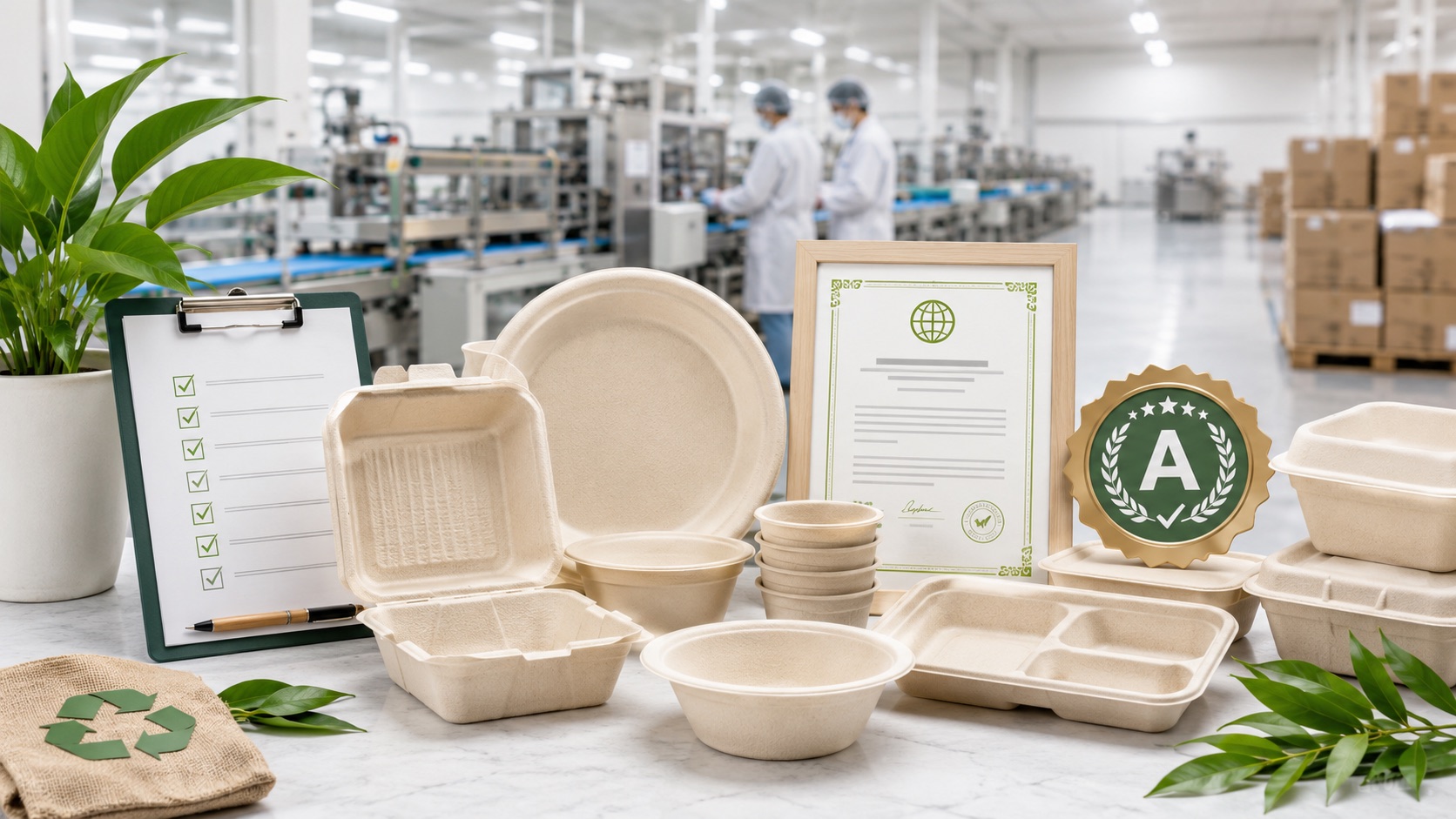
Ecofy operates its 150,000 sq ft Chhatrapati Sambhajinagar (Aurangabad) facility to BRCGS Packaging Materials Grade A standard, covering its full range of BRCGS Grade A certified bagasse plates, molded fiber bowls, compostable meal trays, and bagasse clamshell containers. The facility was designed from the ground up around BRCGS requirements rather than retrofitted to meet them, which materially simplifies audit-readiness.
Buyers can request our current BRCGS certificate, audit summary, and scope documentation as part of standard supplier evaluation, including the audit date and whether that audit was announced or unannounced. We also welcome buyer-conducted facility audits in addition to the third-party BRCGS audits; most of our major customers have visited the plant at least once.
Sources. Standard and certification scheme: BRCGS Packaging Materials and the Issue 7 interpretation guideline. Grading, audit frequency and the unannounced-audit requirement cross-checked against certification-body documentation from SGS and BSI. Verified 14 August 2026.
Want guides like this in your Google results?
Add Ecofy as a preferred source. Google will surface our compliance standards and trade-data guides more often when you search packaging rules, including in AI Overviews. Takes one click and you can remove it any time.