Why Compliant Is No Longer One Label in Packaging Sourcing
EU PFAS limits, the Single-Use Plastics Directive and the US state patchwork mean one product can be compliant in one market and unsaleable in another.

On this page
Sourcing in bulk?
Tell us your products and quantity
We supply distributors and brands in 30+ countries, and reply with pricing, lead time and shipping.
Two regulatory forces are reshaping where food packaging is bought from, and they are doing it faster than most procurement cycles can absorb.
The compliance wall of 2026
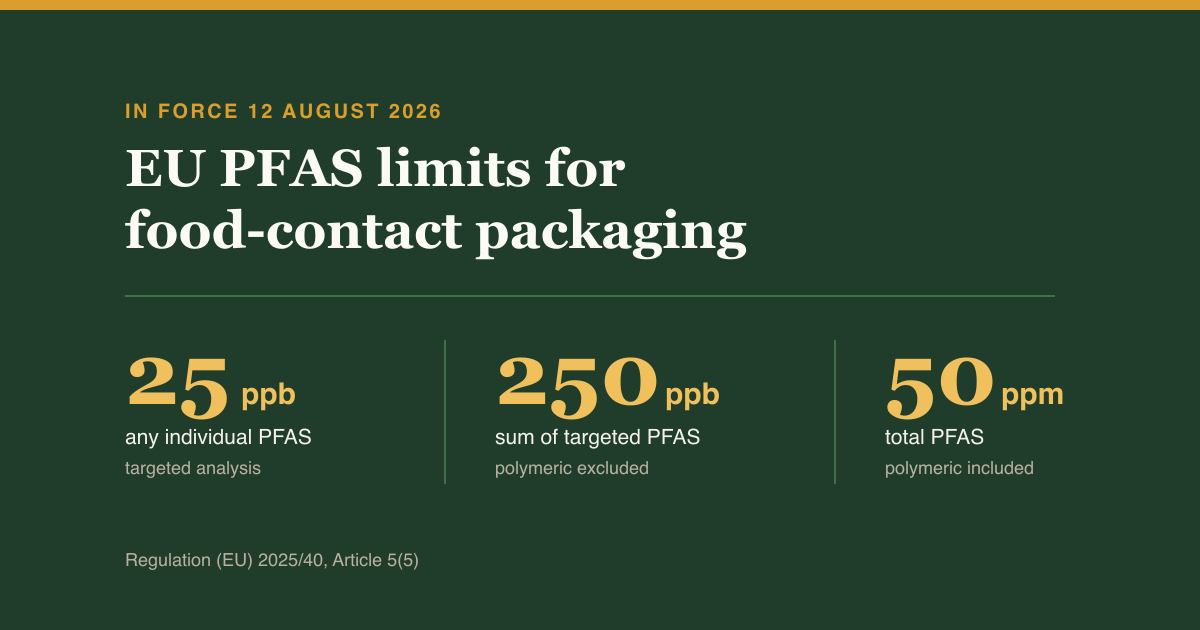
The clearest deadline sits in Europe. The EU Packaging and Packaging Waste Regulation, Regulation (EU) 2025/40, applies from 12 August 2026 and restricts PFAS in food-contact packaging placed on the EU market.
There is no grandfathering. Stock manufactured before the deadline still cannot be sold into the EU afterwards if it breaches the thresholds. That is the provision most likely to catch an importer holding inventory.
It also sits on top of an existing restriction rather than replacing it. The EU Single-Use Plastics Directive has, since July 2021, prohibited expanded polystyrene food and beverage containers along with single-use plastic plates and cutlery across member states.
The United States has no single rule, which is harder
There is no federal standard to plan against. Instead there is a patchwork:
- New York: intentionally added PFAS in food packaging banned since the end of 2022
- California: since the start of 2023
- Colorado, Oregon, Rhode Island, Minnesota: following on their own timelines
- Maine: rules for plant-fibre packaging due in 2026
At federal level, the FDA announced in February 2024 that grease-proofing substances containing PFAS are no longer sold for food-contact use in the US market. That was a voluntary market phase-out, not a hard ban, a distinction worth keeping straight when a supplier cites it as evidence.
Why this breaks the old sourcing model
The practical problem is that “compliant” is no longer a single, portable label.
A fibre clamshell that satisfies one US state can fail another’s total organic fluorine trigger. A product that cleared customs last year can breach the EU’s limits this August. States differ not only on thresholds but on the test basis itself: some restrict intentionally added PFAS, others set a measured limit.
For an importer serving several markets from one warehouse, the safe planning assumption is now the strictest applicable standard, not the average one.
What that changes in practice
Sourcing decisions that used to turn on unit price now turn on which regimes a supplier can actually evidence, and on whether the same specification can serve every destination.
Our compliance checker tracks requirements by market, and the PFAS-free bagasse tableware guide covers what testing evidence should accompany a claim.
This analysis was written by Ecofy and published by Global Trade Magazine, a US trade publication for importers, exporters and supply chain professionals. The full piece is here: How Plastic and PFAS Rules Are Redrawing Food-Packaging Sourcing.
Questions on documentation for a specific destination market can go to our export team.
Want guides like this in your Google results?
Add Ecofy as a preferred source. Google will surface our compliance standards and trade-data guides more often when you search packaging rules, including in AI Overviews. Takes one click and you can remove it any time.