EPR Fees and PFAS Limits Are Re-Sorting Compostable Packaging
EU PFAS limits test compostable packaging on chemistry, UK EPR fee modulation tests it on recovery, and fibre and compostable plastics are scored in separate categories.
On this page
Sourcing in bulk?
Tell us your products and quantity
We supply distributors and brands in 30+ countries, and reply with pricing, lead time and shipping.
Two pieces of 2026 policy are changing what the word “compostable” is worth in procurement, and they work from opposite directions.
PFAS limits test the claim on chemistry
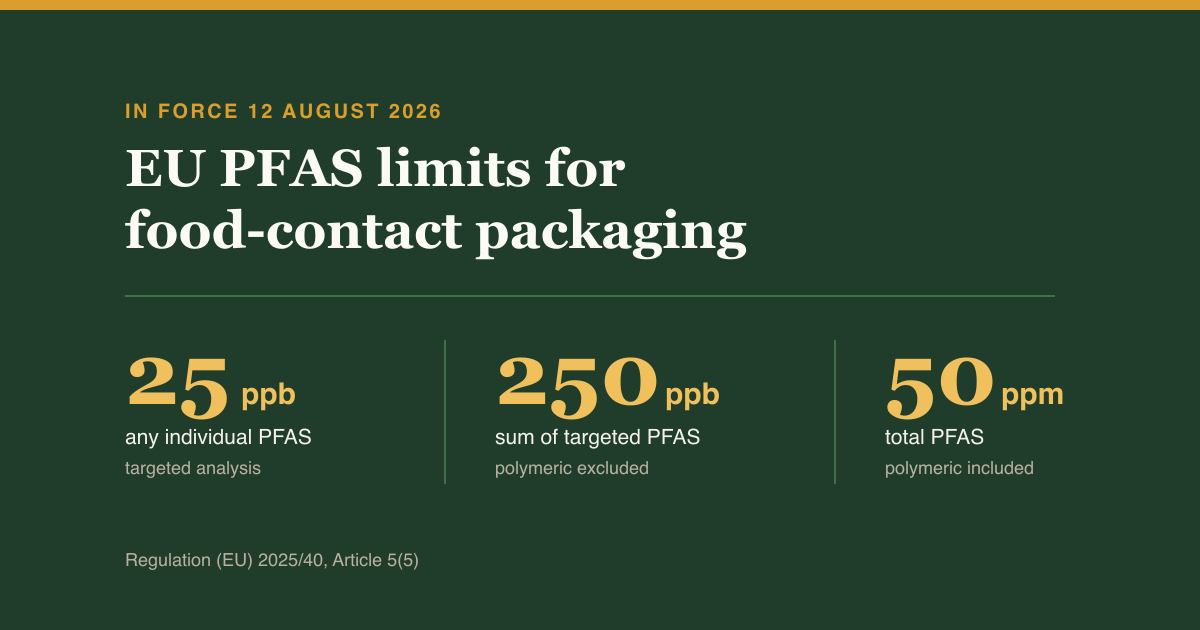
From 12 August 2026 the EU Packaging and Packaging Waste Regulation restricts PFAS in food-contact packaging at 25 micrograms per kilogram for any individual PFAS and 250 for the sum, by targeted analysis. There is no grandfathering, so stock manufactured before the deadline is not exempt.
This lands hardest on materials assumed to be the clean choice. PFAS has long been used as a grease barrier in moulded fibre and coated paper, so a product can be genuinely compostable and still carry PFAS. Compostability and PFAS-free are separate claims, proven by separate tests.
The UK is moving the same way. In February 2026 the government published its first national PFAS plan, which includes considering a UK REACH restriction on PFAS in consumer articles, food packaging among them.
EPR fee modulation tests it on recovery
Under the UK packaging Extended Producer Responsibility scheme, producer fees are modulated by the Recyclability Assessment Methodology, the traffic-light system scoring how recyclable a material is in practice.
Compostable and biodegradable plastics, PLA and starch-based formats in particular, are almost universally rated red, the least recyclable category. They are not collected or reprocessed in mainstream recycling, and are treated as a contaminant when they appear in it. Red does not mean a discount. It means the highest fees, rising as modulation phases in.
The category split most buyers miss
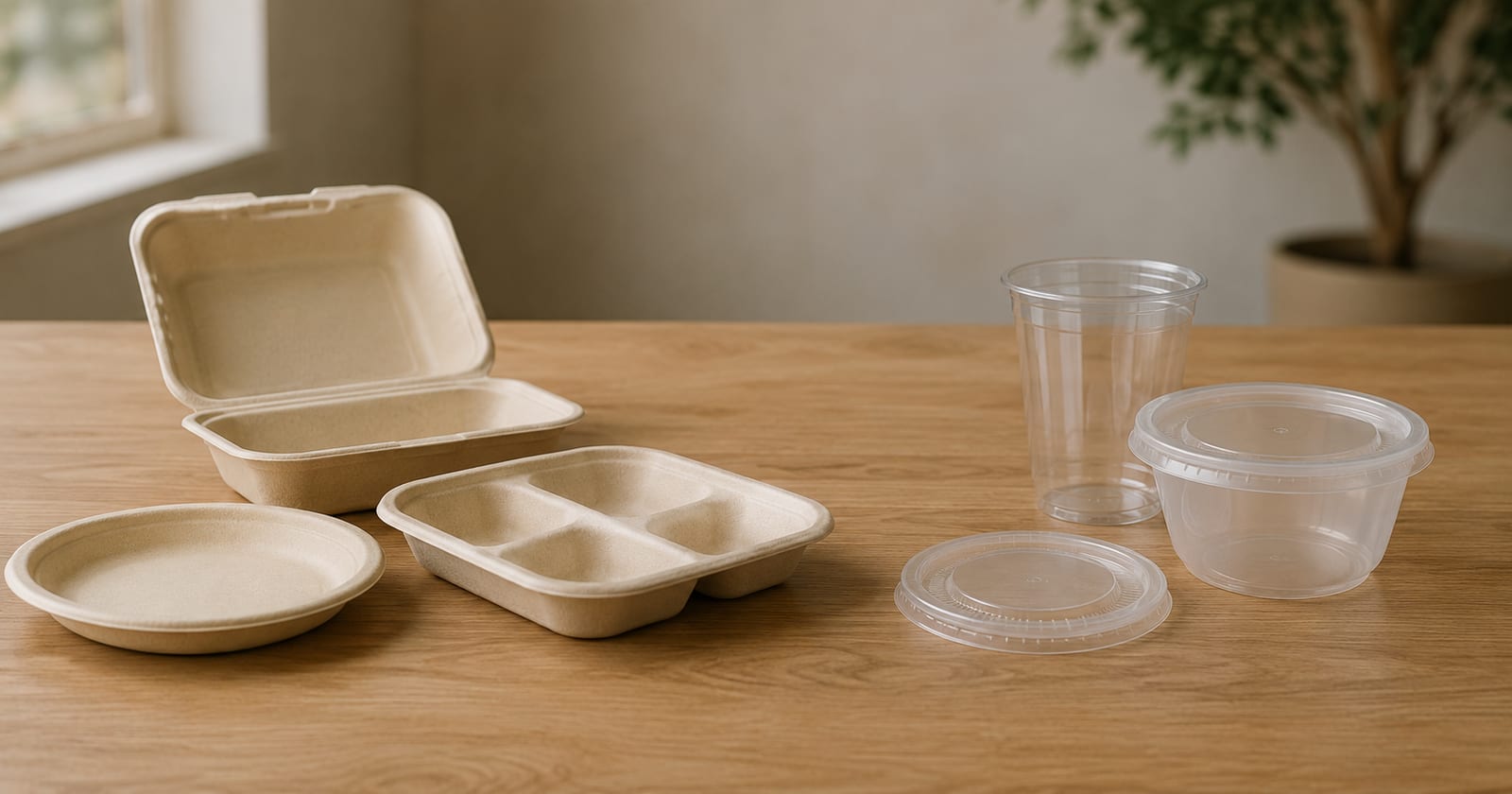
Fibre-based materials are assessed as paper and board. Compostable plastics are assessed as plastics.
Two products can both be described as compostable and be scored in entirely different categories, with materially different fee outcomes.
The methodology is a blunt instrument and regulators acknowledge it. The treatment of compostables is under review, with a view to better recognising genuinely compostable materials where the collection infrastructure to process them exists. The direction of travel, though, is set.
What it means in practice
Both rules judge a material on what the recovery system can actually do with it, rather than on what it was designed to be. Two questions follow for anyone specifying packaging:
- Which category does this material fall into under EPR? Fibre and compostable plastic are not interchangeable here.
- Can PFAS status be evidenced separately from compostability? A compostability certificate says nothing about PFAS content.
Further detail on the documentation side is in our guides to PFAS-free bagasse tableware and the EU Packaging and Packaging Waste Regulation.
This analysis was written by Ecofy and published by Resource Media, an independent publisher covering resource use and the circular economy. The full piece is here: Not all compostables are equal: how 2026 EPR fees and PFAS limits are re-sorting foodservice packaging.
Questions on documentation for a specific market can go to our export team.
Want guides like this in your Google results?
Add Ecofy as a preferred source. Google will surface our compliance standards and trade-data guides more often when you search packaging rules, including in AI Overviews. Takes one click and you can remove it any time.