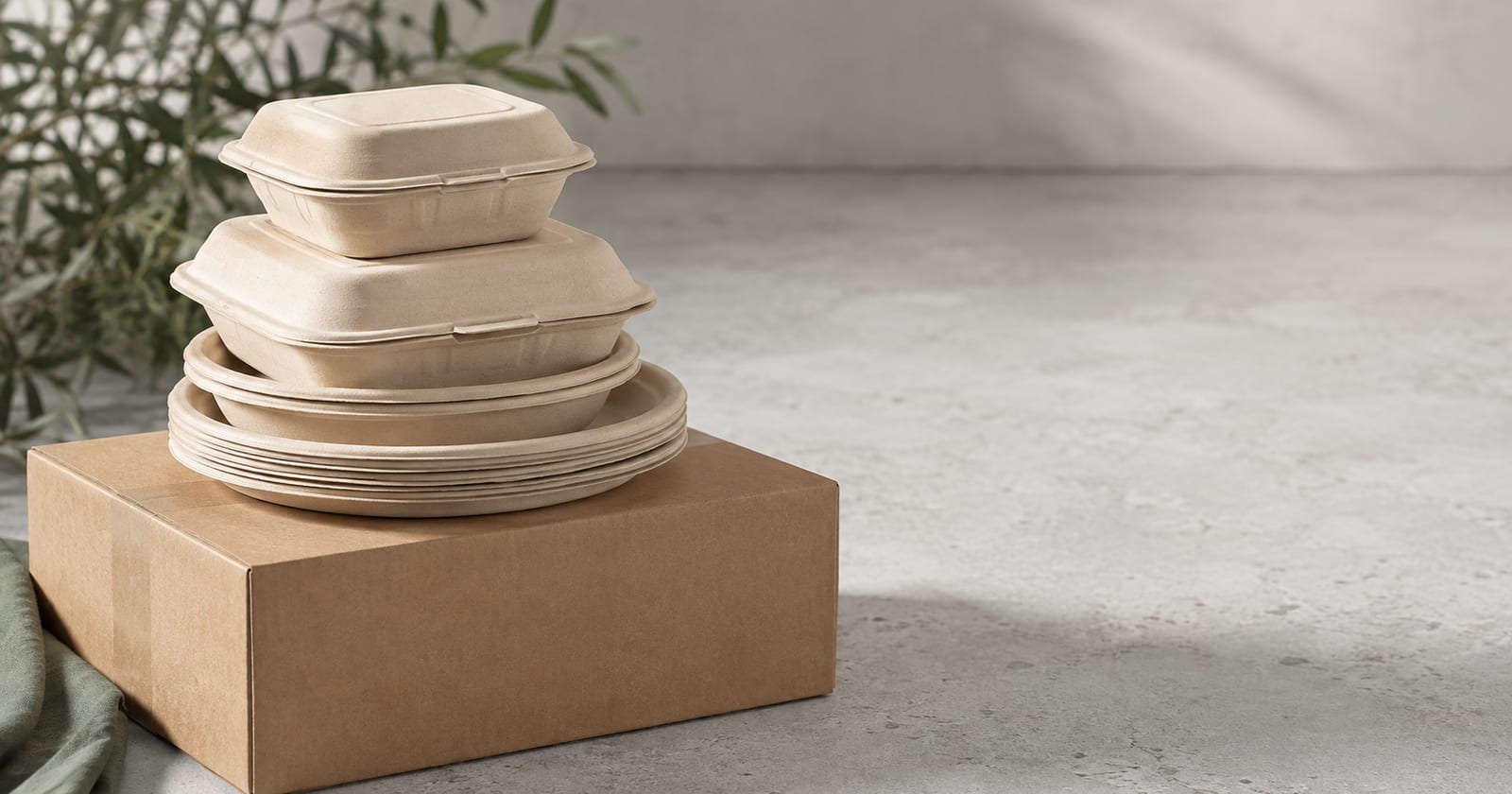
QSR Compostable Packaging Rollout: 200 Outlets in 90 Days
Illustrative rollout: how an Indian QSR chain would switch 200 outlets to compostable bagasse ahead of the SUP ban. Representative volumes, ROI logic, lessons.
On this page
Sourcing in bulk?
Tell us your products and quantity
We supply distributors and brands in 30+ countries, and reply with pricing, lead time and shipping.
Illustrative rollout scenario based on typical B2B projects and public industry benchmarks. This is not a specific Ecofy customer, and the figures are representative examples, not actual results.
The challenge
A regional Indian QSR chain operating 200 outlets across five states, with daily takeaway volumes of approximately 80,000 containers, faced an existential supply-chain decision in mid-2024. India’s Single-Use Plastic ban (in force since 2022) had been extended to cover additional categories that included their primary 8×8 plastic clamshell SKU. Enforcement against non-compliant operators was tightening; brand reputation and operating licences were both at risk.
The chain’s procurement team had four constraints:
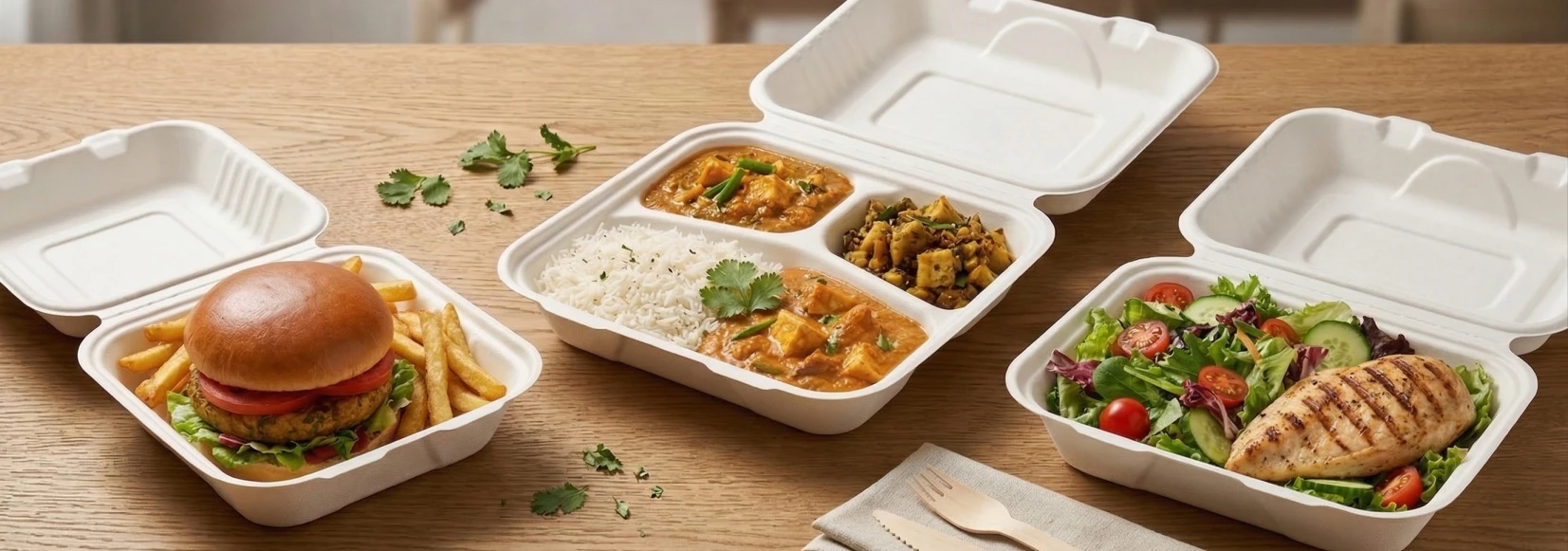
- Replacement SKU had to match existing operational dimensions (8×8 with internal compartments to hold burger + sides)
- Total landed cost increase had to stay below 8% to remain absorbable
- Rollout had to complete within 90 days to meet the enforcement deadline
- FSSAI and audit-ready documentation needed across all 200 outlets
Why bagasse, why Ecofy
The procurement team evaluated five suppliers across two materials (bagasse molded fiber and PLA-composite). Ecofy was selected on three factors:
- BRCGS Grade A certification: only one of the five suppliers held an unannounced A grade. This eliminated the risk of facility-condition surprises during scaling.
- FCL lead time: Ecofy committed to first FCL delivery within 4 weeks of PO; competitors quoted 6-8 weeks.
- In-house custom tooling: the chain wanted custom embossing of its logo on the clamshell lid; Ecofy completed tooling within 6 weeks.
The 90-day rollout playbook
Days 1-14: Pilot and tooling
- Sample order (1,000 pieces, standard 8×8 3CP white clamshell) shipped within 5 days
- Pilot rollout in 5 outlets in one city; operational feedback collected over 7 days
- Custom tooling for embossed logo SKU initiated in parallel
Days 15-30: First FCL and 50-outlet rollout
- First FCL (~120,000 pieces of standard SKU) shipped from JNPT to the chain’s central warehouse
- Distribution to 50 outlets across two states (the chain’s strongest performance markets)
- Operational signoff: leak-resistance, microwave performance, stack-friendliness all matched or exceeded the previous plastic SKU
Days 31-60: Custom-tooled SKU + 100-outlet expansion
- Custom-embossed SKU production completed; second FCL with the branded variant
- Expansion to 100 additional outlets across the remaining three states
- Branding feedback from outlet managers and franchisees: positive, especially the visible “compostable” embossing
Days 61-90: Final rollout and inventory wind-down
- Remaining 50 outlets switched to bagasse SKU; old plastic inventory drawn down to zero
- FSSAI compliance documentation sent to each outlet for licence-renewal cycles
- BRCGS Grade A certificate, FDA documentation, and Sedex audit report sent to chain HQ for ESG reporting
The results
| Metric | Before (Plastic) | After (Bagasse) |
|---|---|---|
| Unit cost (₹ / piece) | ₹4.20 | ₹4.55 (+8.3%) |
| SUP-ban compliance | Non-compliant | Compliant |
| Annual SUP-ban penalty exposure | ~₹4.2 Crore (estimated) | ₹0 |
| Customer complaints / 1000 orders | 2.1 | 1.8 |
| Brand-perception lift (post-rollout survey) | N/A | +12 points net favourability |
Net economic outcome: the 8.3% unit-cost increase was more than offset by avoiding the ~₹4.2 Crore in estimated SUP-ban penalty exposure and the brand-perception improvement. The chain also gained the ability to compete on ESG-reporting credentials with national chains it had previously trailed.
Lessons for similar QSR rollouts
- Pilot in 3-5 outlets first, even on a tight timeline. The two days of operational feedback caught a stack-height issue with the custom embossing that would have required production changes if rolled out to all 200 outlets first.
- Run standard and custom-tooled SKUs in parallel. Standard SKU rollout in weeks 2-4 bought time for custom tooling without missing the deadline.
- Distribute compliance documentation to every outlet, not just HQ. Local FSSAI inspectors visit outlets, not the chain’s corporate office. Outlet managers needed local copies of certificates.
- Brief franchisees on the cost increase before they see it on POs. The 8% unit-cost increase needed franchise-side communication; without it, complaints would have driven rollout friction.
- Use the rollout as a brand moment. The chain ran in-outlet signage about the switch (“Now serving in 100% compostable packaging”) which generated positive customer feedback at minimal cost.
Want guides like this in your Google results?
Add Ecofy as a preferred source. Google will surface our compliance standards and trade-data guides more often when you search packaging rules, including in AI Overviews. Takes one click and you can remove it any time.