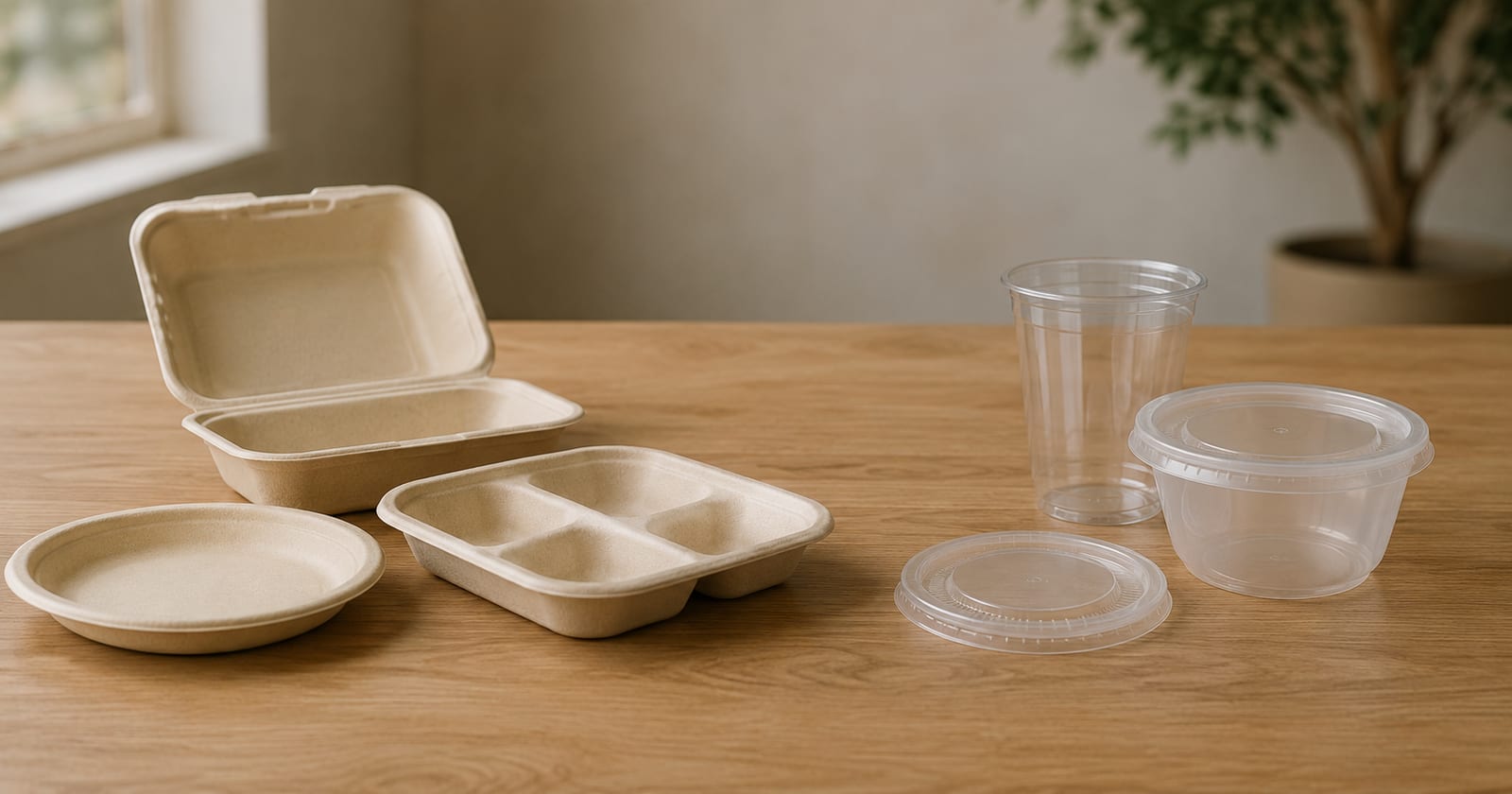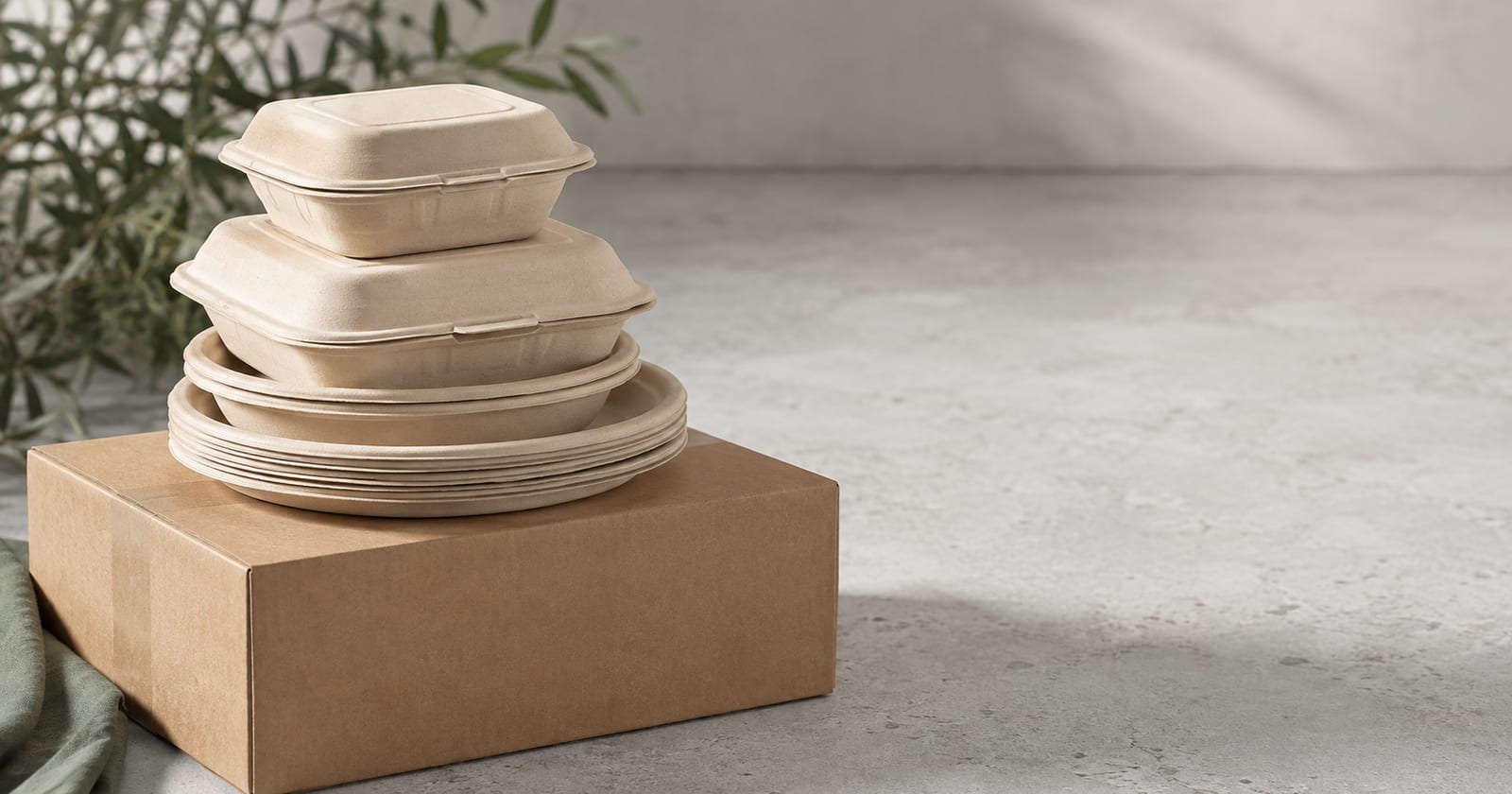
Bagasse vs PLA: Compostable Material Comparison
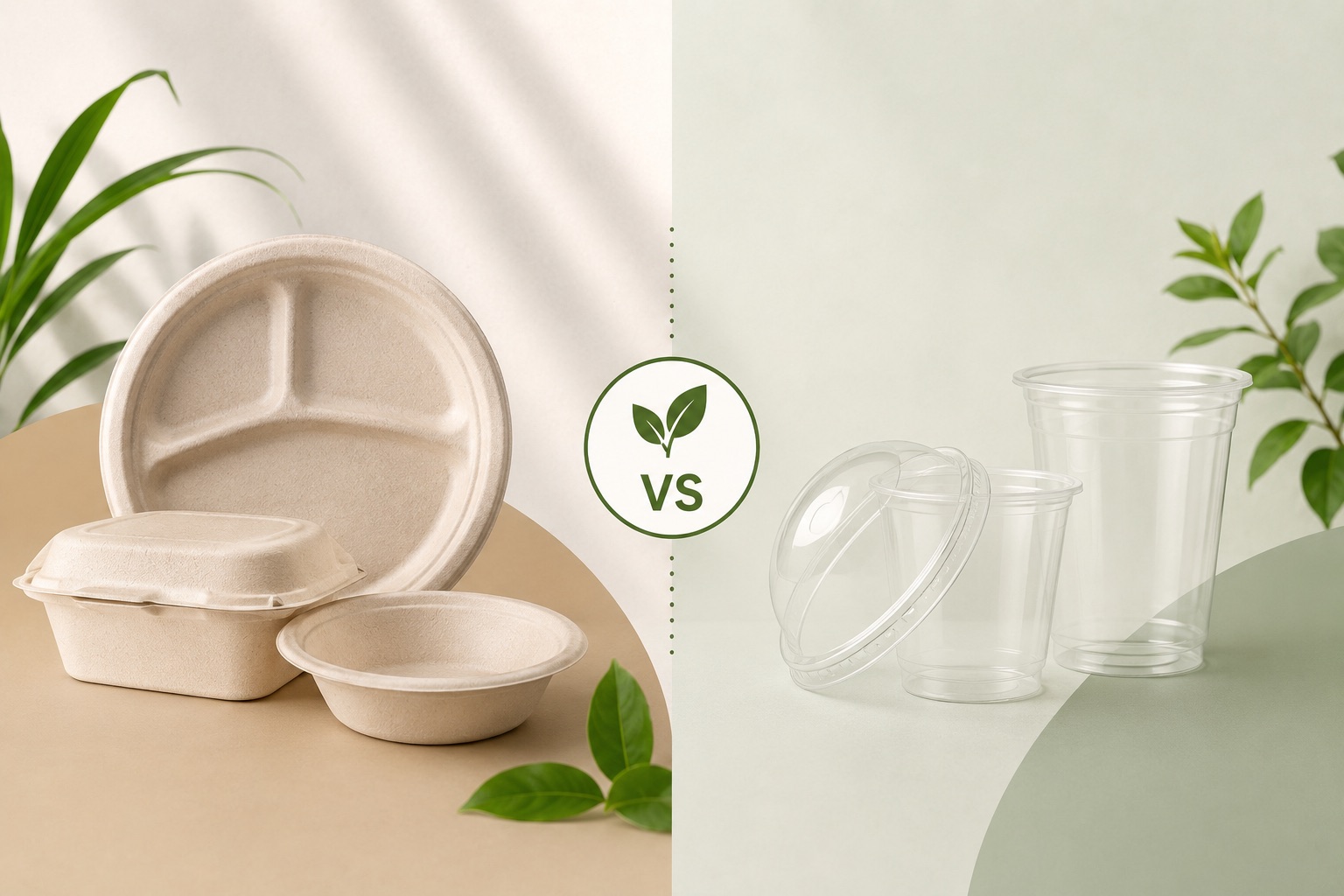
Side-by-side: oil resistance, hot food, microwave, composting time, certification, cost. Which compostable material wins for QSR, hotel, café operations.
On this page
Sourcing in bulk?
Tell us your products and quantity
We supply distributors and brands in 30+ countries, and reply with pricing, lead time and shipping.
TL;DR: For hot, oily, or microwave-reheated foodservice items, bagasse beats PLA. It holds hot liquids above 100°C, is microwave-safe to 220°C, and costs roughly 25 to 40% less at container-load volumes. Choose PLA only when you need transparency (clear cold cups, salad domes). Most operators run both: bagasse for the bulk of the menu, PLA for clear packaging only.
Bagasse and PLA (polylactic acid) are the two dominant compostable packaging materials in 2026 foodservice. Both meet EN 13432 and ASTM D6400 standards, though the two are not interchangeable and the test thresholds differ on heavy metals and fluorine. Both are commercially available at container-load volumes. The decision between them, however, hinges on six performance and economic factors that procurement teams should evaluate explicitly.
1. Material composition and origin
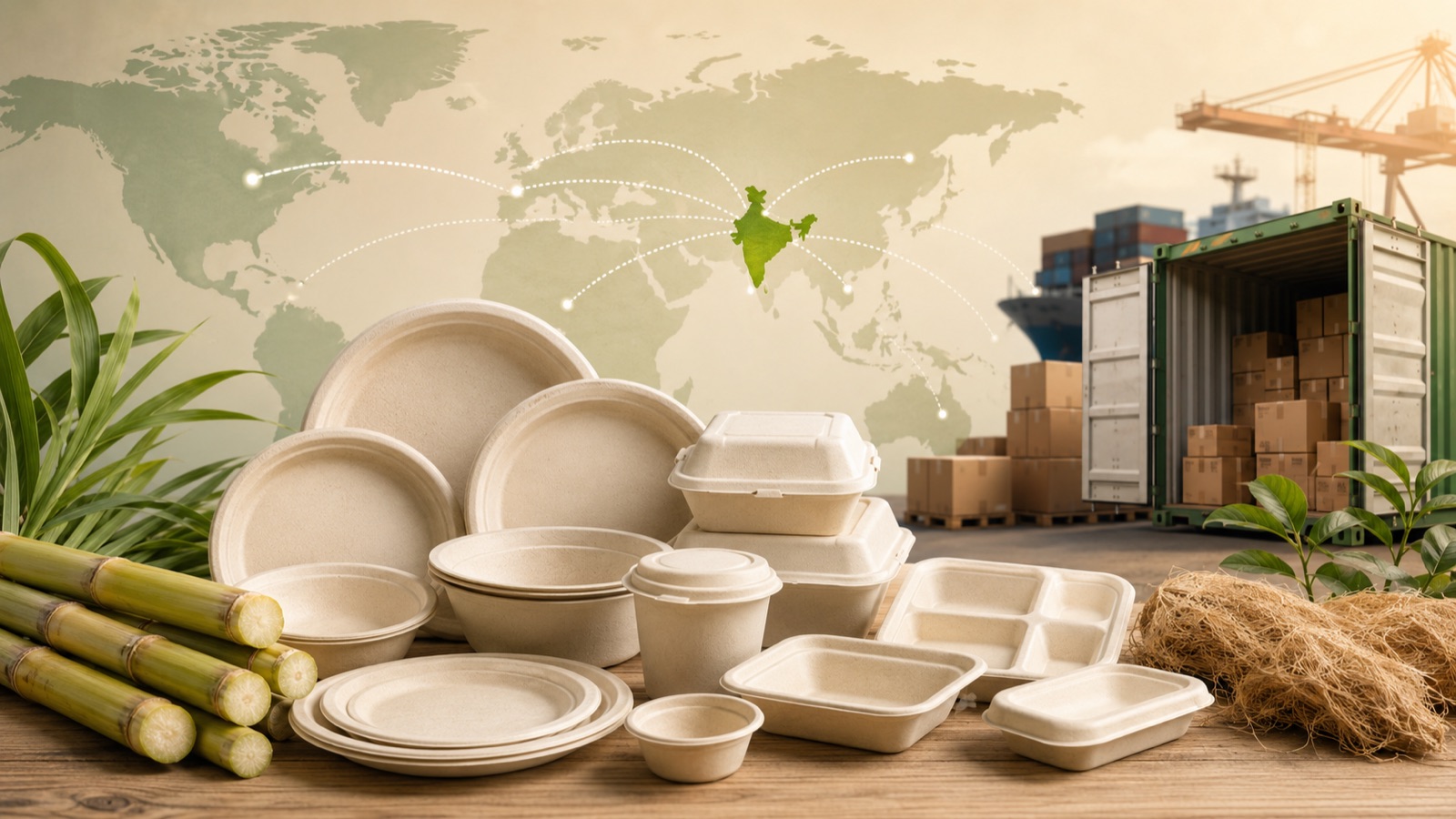
Bagasse is the dry pulpy residue left after sugarcane stalks are crushed for juice. It is an agricultural waste stream, not a primary crop. India and Brazil are the largest sugarcane producers; bagasse manufacturing concentrates near sugar mills.
PLA is a bioplastic polymer typically derived from corn starch (in the U.S.) or sugarcane (in some Asian production). It requires significant industrial processing: fermentation of starch to lactic acid, then polymerization. PLA is a primary-crop input rather than a waste-stream output.
2. Performance under foodservice conditions
| Performance Metric | Bagasse | PLA |
|---|---|---|
| Oil resistance | Excellent (no breakdown with hot oily food) | Moderate (softens with prolonged hot oil contact) |
| Hot liquid (soup, curry) holding | Excellent up to 100°C+ | Limited; PLA softens above 60°C |
| Microwave reheating | Microwave-safe to 220°C | Not microwave-safe (deforms) |
| Cold food / freezer | Excellent | Excellent |
| Structural strength under load | Excellent (heavy-duty for delivery) | Moderate |
| Visual aesthetic | Natural beige (white) or brown (kraft) | Crystal clear (transparent) |
The structural conclusion: bagasse outperforms PLA on hot food and microwave use; PLA outperforms bagasse on visual transparency. For most QSR, hotel, and institutional applications, bagasse is the operationally superior material. For specific applications requiring see-through packaging (clear cold cups, salad domes), PLA remains the better fit.
3. Composting performance
Both materials meet EN 13432 and ASTM D6400. In practice, the composting profiles differ:
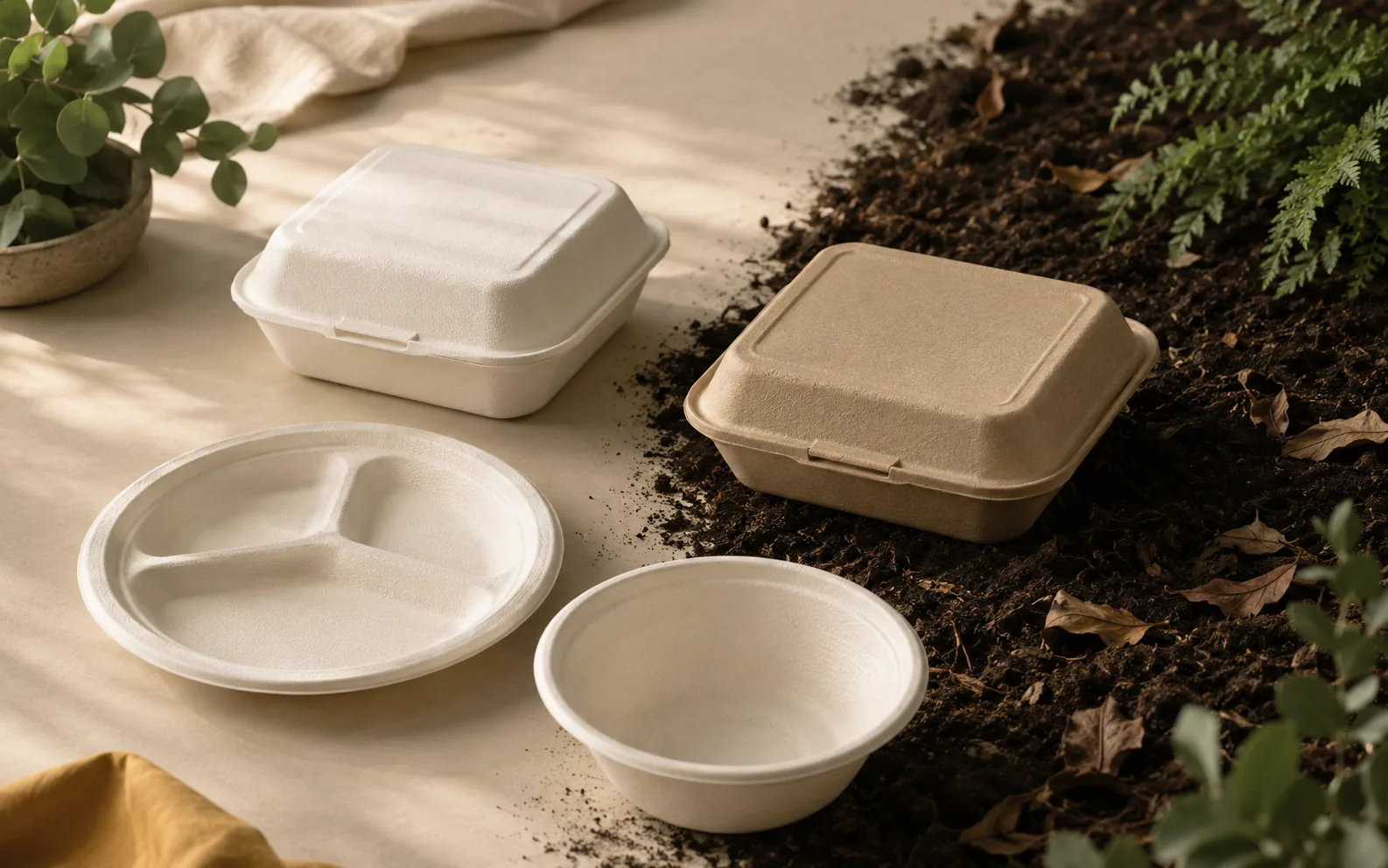
- Bagasse: Breaks down in industrial composting within 60-90 days. Some bagasse formulations are also home-compostable (TÜV Austria OK Compost HOME).
- PLA: Breaks down in industrial composting within 90-180 days. PLA is not home-compostable in typical conditions; it requires the elevated temperatures (~58°C) of industrial composting.
For markets with limited industrial composting infrastructure, bagasse has a meaningful environmental advantage: even when not formally composted, it biodegrades faster than PLA in landfill or natural conditions.
4. Certification and regulatory acceptance
Both materials hold:
- EN 13432 (European compostability)
- ASTM D6400 (U.S. compostability)
- FDA food-contact compliance (when made from food-grade material)
- EU Packaging Regulation 2025 compliant
One regulatory difference that surprises buyers: the UK Plastic Packaging Tax has no compostability exemption at all. HMRC’s definition of plastic expressly includes biodegradable, compostable and oxo-degradable polymers, so PLA is taxable at £228.82 per tonne wherever recycled content is below 30%, EN 13432 certificate or not. Unmodified cellulose fibre is not treated as plastic, so bagasse falls outside the tax entirely with no claim to file and no documentation to defend.
5. Total landed cost
At full-container-load (FCL) volumes for export:
| Cost Factor | Bagasse | PLA |
|---|---|---|
| Unit cost (FOB India, USD) | $0.04-$0.12 per piece (typical SKU range) | $0.06-$0.18 per piece |
| Freight (FCL, India to UK) | ~$3,500-$5,000 per 40’ container | Same |
| UK Plastic Tax exposure | Outside scope (not a plastic) | Taxable at £228.82/tonne below 30% recycled content; EN 13432 makes no difference |
| Custom tooling cost | $3,000-$10,000 per shape | $15,000-$40,000 (PLA injection moulds) |
For most foodservice applications at container-load volumes, bagasse is 25-40% cheaper than PLA on total landed cost. The gap widens when custom tooling is required.
6. Strategic considerations for sourcing teams
When to specify bagasse:
- Hot food, oily food, or microwave-reheated menu items
- Heavy-duty structural requirements (delivery, takeaway)
- Cost-sensitive volume programmes
- Markets with limited industrial composting (where home-compostable is a benefit)
- Custom-shape SKUs where tooling cost matters
When to specify PLA:
- Cold food applications requiring transparency (salad domes, cold cup lids, clear bowls)
- Brand programmes built around visual clarity
- Markets with mature industrial composting infrastructure (German Biotonne, Italian organics collection)
The hybrid path most operators take
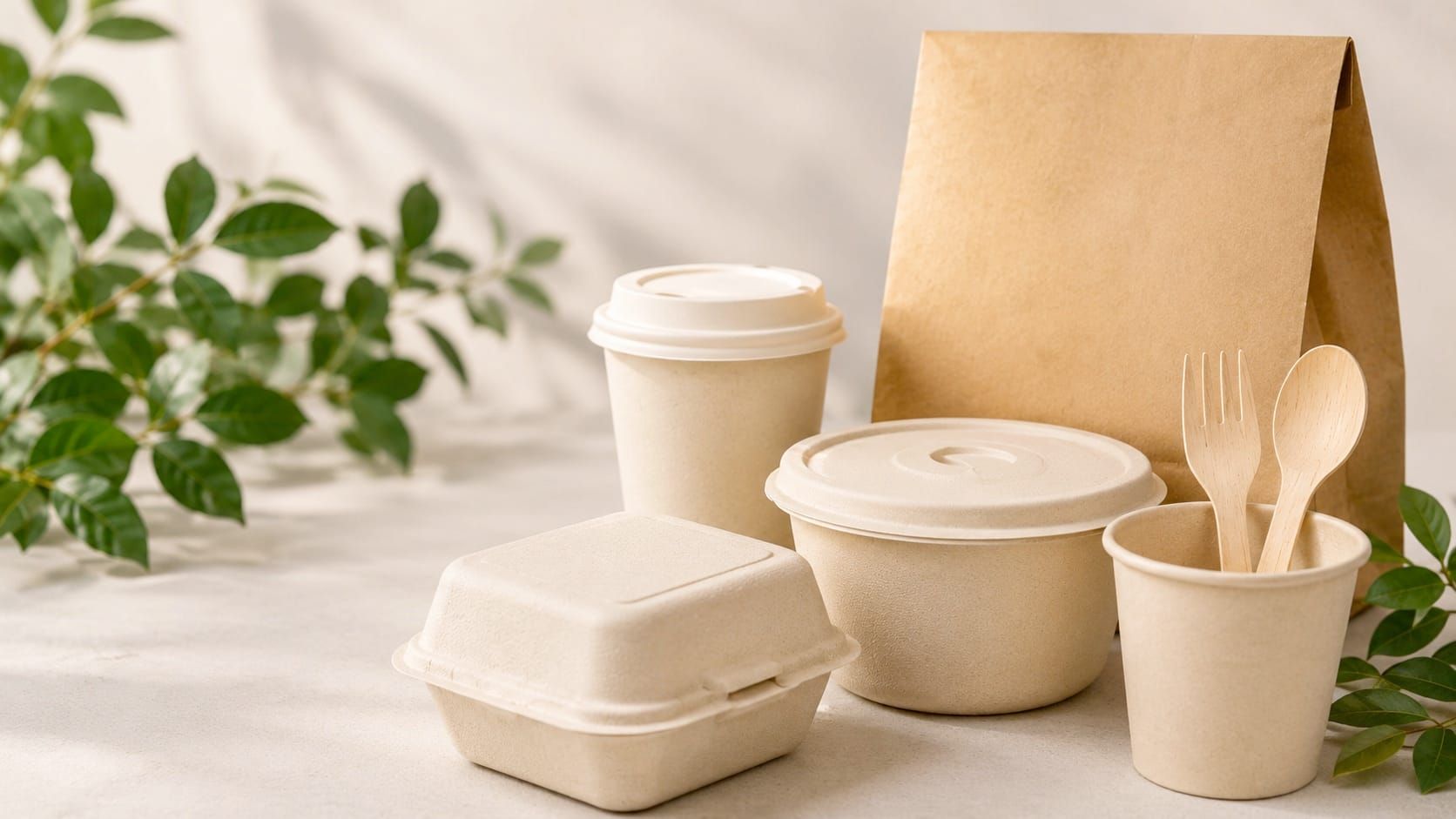
In practice, 2026’s most common foodservice packaging programme uses both materials: bagasse for the bulk of the menu (bagasse clamshell containers, compostable bagasse bowls, bagasse plates, trays), PLA only for specific clear-packaging applications (salad domes, cold drink cups). This hybrid approach optimizes performance, cost, and visual presentation simultaneously.
Ecofy supplies the bagasse side of this programme: 40+ SKUs across compostable plates, molded fiber bowls, compostable meal trays, takeaway containers, PET lids (recyclable, not compostable), and clamshells. For PLA SKUs, we maintain partnerships with vetted PLA manufacturers and can recommend supplier matches.
Sources. Compostability: TÜV Austria OK compost INDUSTRIAL, TÜV Austria OK compost HOME, and BPI, ASTM compostability standards. Moulded fibre is tested to ASTM D6868 rather than D6400, which applies to plastics. UK tax treatment: HMRC, packaging subject to Plastic Packaging Tax, which states that plastics “include polymers which are: biodegradable, compostable, oxo-degradable”, so PLA is inside the charge while unmodified cellulose fibre is outside it. Cost figures are Ecofy’s own container-load pricing experience, not a published benchmark. Verified 14 August 2026.
Want guides like this in your Google results?
Add Ecofy as a preferred source. Google will surface our compliance standards and trade-data guides more often when you search packaging rules, including in AI Overviews. Takes one click and you can remove it any time.