FDA 21 CFR 176.170 Explained: Importer's Guide
What 21 CFR 176.170 requires, what a test report must show, and the documents US customs expects. For compostable packaging importers.
On this page
Sourcing in bulk?
Tell us your products and quantity
We supply distributors and brands in 30+ countries, and reply with pricing, lead time and shipping.
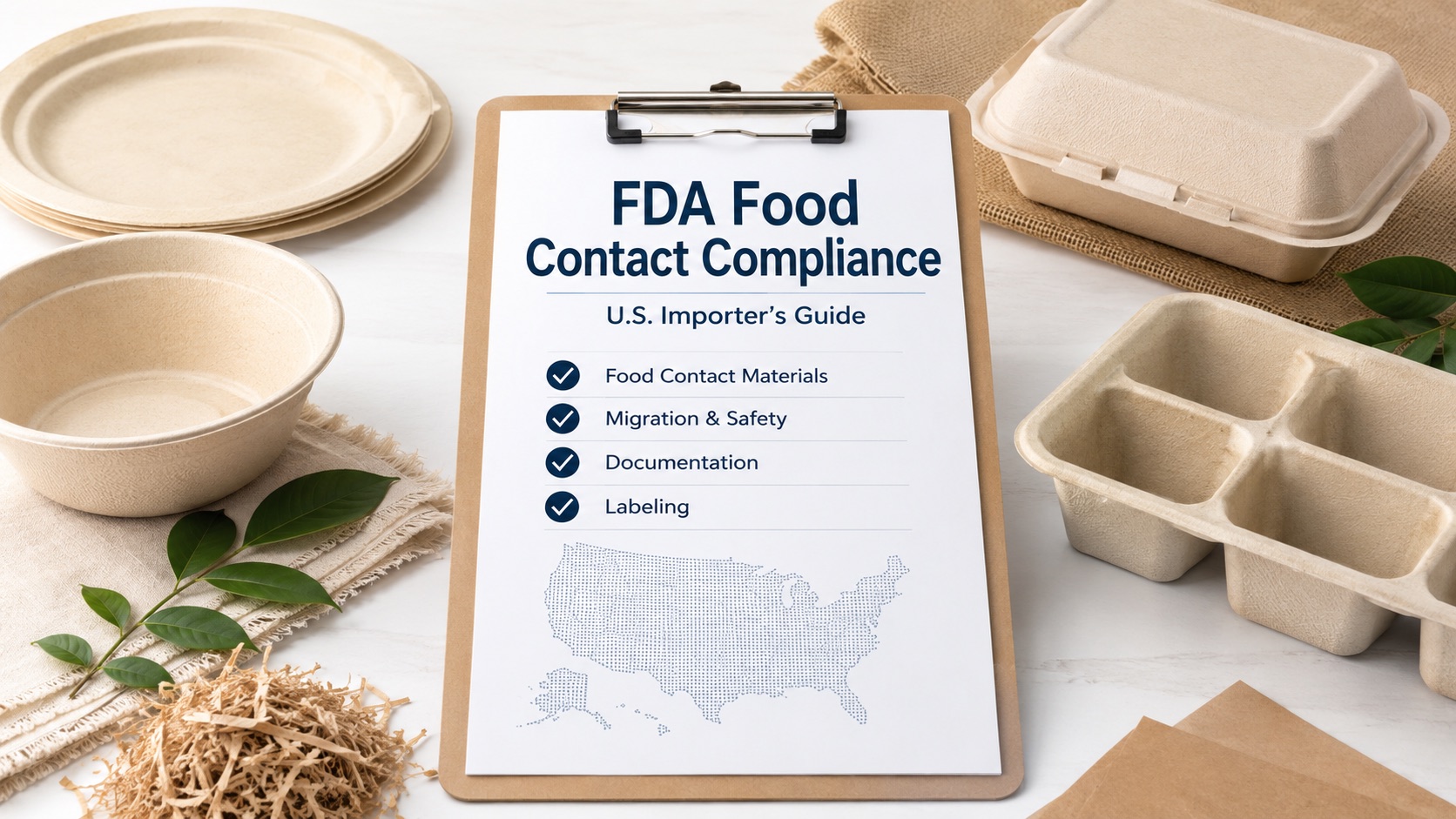
Short answer: Food packaging sold in the United States must comply with FDA rules under 21 CFR, and for molded fiber the relevant part is 21 CFR 176.170. There is no product approval. Compliance is demonstrated through migration testing, so importers should hold a Letter of Compliance and third-party test reports.
Any packaging in contact with food sold in the United States must comply with U.S. Food and Drug Administration (FDA) regulations under 21 CFR (Code of Federal Regulations). For importers of bagasse and molded fiber packaging, the specific requirements differ from those for plastic packaging, and the documentation burden falls on the importer, not the manufacturer.
The regulatory framework
A substance used in food-contact packaging is lawful in the United States if it is covered by one of several routes: an authorizing regulation in 21 CFR, an effective Food Contact Notification (FCN), a food additive petition, a prior-sanctioned use, a Threshold of Regulation exemption, or a determination that the use is Generally Recognized as Safe (GRAS).
For molded fiber the relevant route is an authorizing regulation. 21 CFR 176.170, “Components of paper and paperboard in contact with aqueous and fatty foods”, sits in Part 176, Indirect Food Additives: Paper and Paperboard Components. Its opening words are the ones that matter:
“Substances identified in this section may be safely used as components of the uncoated or coated food-contact surface of paper and paperboard intended for use in producing, manufacturing, packaging, processing, preparing, treating, packing, transporting, or holding aqueous and fatty foods, subject to the provisions of this section.”
So compliance means the components are permitted and the finished article meets the extractives limit below. This is a food-additive regulation, not a GRAS determination, and the two should not be described interchangeably.
Dry foods are handled elsewhere. Components in contact with dry food of the type identified as Type VIII in Table 1 fall under 21 CFR 176.180 instead, and Type VIII requires no end test.
What 21 CFR 176.170 actually requires
The operative test is in paragraph (c). The food-contact surface, in the finished form in which it will contact food, extracted with the solvent characterizing the food type under the time and temperature conditions characterizing its intended use:
“shall yield net chloroform-soluble extractives (corrected for wax, petrolatum, mineral oil and zinc extractives as zinc oleate) not to exceed 0.5 milligram per square inch of food-contact surface”
That figure is the number a laboratory reports against, and it is the one to look for on a test certificate.
There is also an exemption worth knowing. Under paragraph (a), a product is exempt from the extractives limitations where the food-contact surface consists entirely of substances identified in paragraphs (a)(1) to (5), provided manufacturing records can demonstrate it.
Alongside that, the regulation requires suitable-grade materials, only permitted components, and good manufacturing practice.
Documentation buyers should request
For FDA compliance, importers should obtain from suppliers:
- Letter of Compliance: Statement from the manufacturer confirming the product meets 21 CFR 176.170 (or applicable section) for the intended food-contact use
- Material composition declaration: Listing all components and their percentages
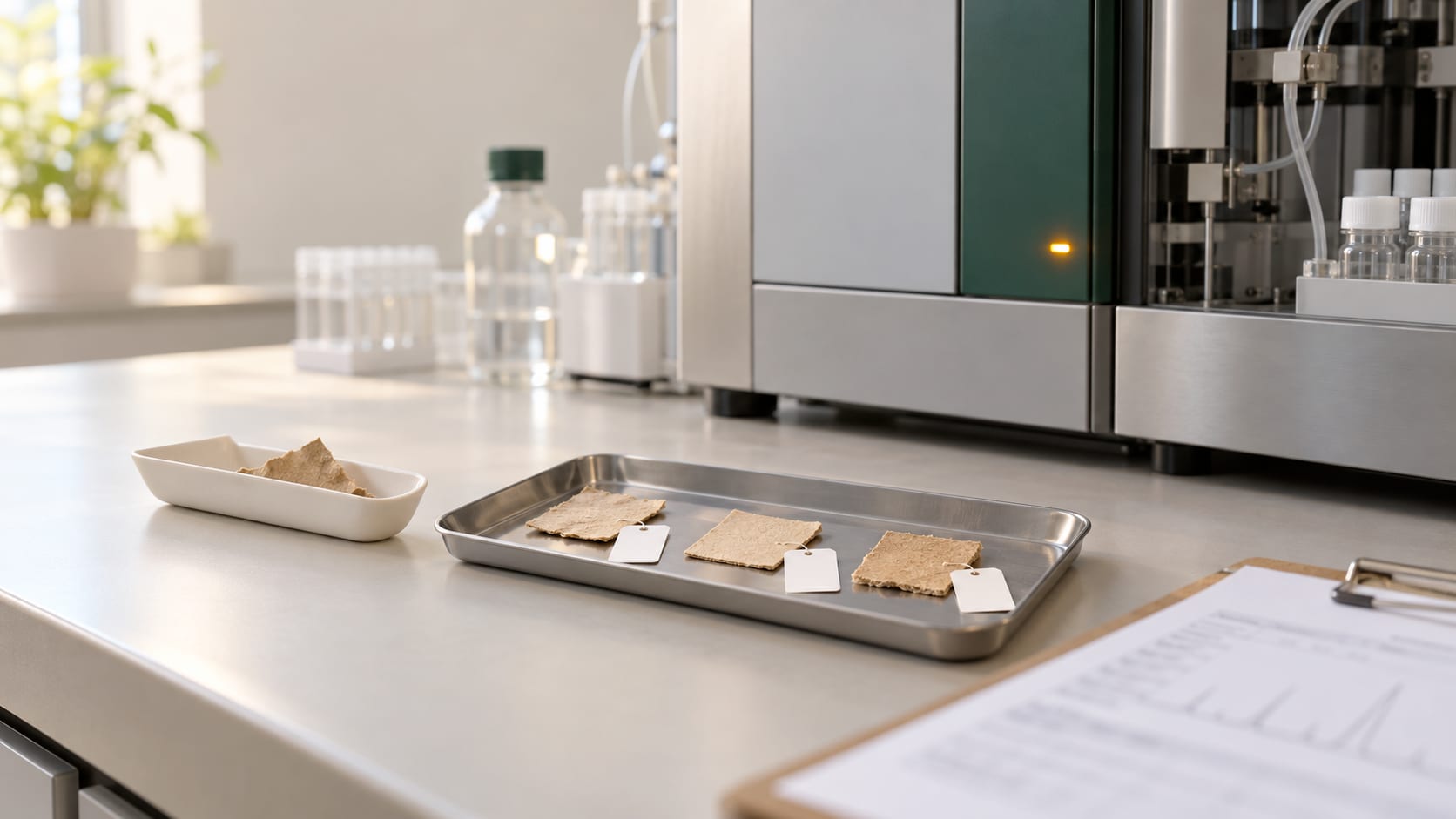
- Migration test results: Lab analysis showing migration levels are within FDA limits for relevant food simulants (water, oil, acidic, ethanol)
- Independent third-party test reports: SGS, Intertek, or similar lab confirmation
- Manufacturer GMP certification: BRCGS, ISO 22000, or equivalent
Migration testing requirements
Migration testing measures whether substances transfer from the packaging to food. 21 CFR 176.170 specifies four food-simulating solvents, and only four:
| Solvent | Simulates |
|---|---|
| Water | non-acid and acid aqueous foods |
| Heptane | foods containing free oil or fat |
| 8 percent alcohol | beverages up to 8% alcohol |
| 50 percent alcohol | beverages above 8% alcohol |
A common error in supplier documentation is to quote 3% acetic acid, which is an EU simulant under Regulation (EU) 10/2011, not an FDA one. Acid aqueous foods (Type II) are tested with water under 176.170.
Time and temperature are not generic either. They are set by condition of use, lettered A to H in Table 2, and expressed in Fahrenheit:
| Condition of use | Example condition |
|---|---|
| A. High temperature heat-sterilised (over 212°F) | 250°F, 2 hr |
| B. Boiling water sterilised | 212°F, 30 min |
| C. Hot filled or pasteurised above 150°F | fill boiling, cool to 100°F |
| D. Hot filled or pasteurised below 150°F | 150°F, 2 hr |
| E. Room temperature filled and stored | 120°F, 24 hr |
| F. Refrigerated storage | 70°F, 48 hr |
| G. Frozen storage | 70°F, 24 hr |
| H. Frozen or refrigerated, reheated in container | 212°F, 30 min |
Food types are numbered I to IX in Table 1, so a certificate should identify both the food type and the condition of use, not just say “passed migration testing”. One technical note from the regulation: heptane extractability results must be divided by a factor of five when arriving at extractability for a food product containing water.
Match the certificate to your real application. A report run at condition F, refrigerated storage, tells a buyer nothing useful about hot soup served in a bowl, which sits at condition C or D.
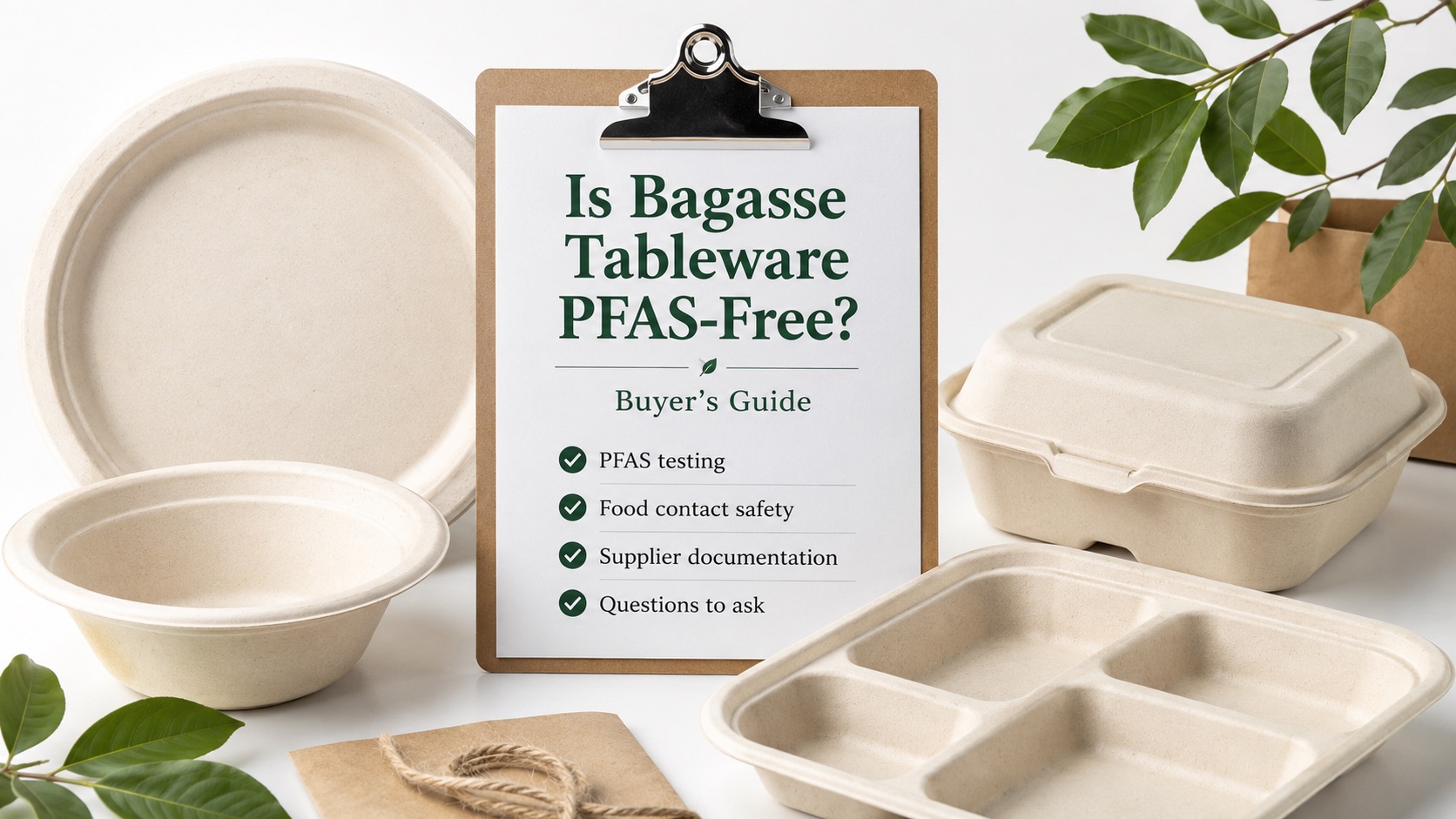
Bagasse molded fiber plates and bowls are an inert plant fibre and typically test well within the 0.5 mg per square inch limit. PFAS is a separate question and requires its own testing, covered below.
The PFAS consideration
PFAS (per- and polyfluoroalkyl substances) have been used in molded fiber food packaging as grease-resistance additives.
At federal level there is no ban. In February 2024 the FDA confirmed that grease-proofing substances containing PFAS are no longer sold for food-contact use in the United States, but that was a voluntary market phase-out, not a prohibition. The distinction matters when a supplier cites it as evidence of compliance.
State law is where the enforceable limits are, and California’s applies directly to bagasse. AB 1200, the California Safer Food Packaging and Cookware Act of 2021, has since 1 January 2023 prohibited the distribution or sale in California of plant-based food packaging containing regulated PFAS. It is codified at California Health and Safety Code sections 109000 to 109014, and it covers paper and plant-fibre takeout containers, wrappers, plates, bowls, trays and straws.
Note the two-part test. Regulated PFAS means either PFAS intentionally added to serve a technical function, or PFAS present at 100 ppm or more measured as total organic fluorine. A supplier that only reports against a ppm threshold has answered half the question. A declaration should address intentional addition as well.
Maine runs two separate regimes: a prohibition on PFAS-containing food-contact materials that took effect in 2020, and LD 1503 (Public Law 2021 c. 477), which phases PFAS out of all products sold in Maine by 1 January 2030. Other states including Colorado, Oregon, Rhode Island, Minnesota and New York have their own timelines and their own tests.
See our PFAS-free verification guide for how buyers confirm a supplier is genuinely PFAS-free.
A compliant bagasse supplier must:
- Use PFAS-free formulations explicitly
- Provide independent test results confirming PFAS levels below detection limits
- Update material composition declarations to reflect PFAS-free status
Buyers should request a PFAS declaration as part of standard supplier documentation, regardless of state.
FDA inspection at port of entry
FDA reviews entries of imported food-contact materials and may sample or detain a shipment. In our experience the documentation problems that cause friction are:
- Missing or invalid Letter of Compliance
- Migration test results expired or not covering the specific SKU
- PFAS testing absent or inadequate
- Material composition declaration inconsistent with shipment manifest
Importers should pre-clear documentation with their customs broker and have current Letter of Compliance and migration test reports available before goods arrive at port. For the full end-to-end process, see our guide on how to import bagasse tableware from India.
Duty status is a separate question
Food-contact compliance and duty liability are assessed separately at the US border. A shipment can be fully FDA compliant and still carry antidumping duty, or carry no trade remedy duty and still be detained on documentation. If you buy molded fiber tableware from China or Vietnam, see the US import duty on molded fiber tableware guide alongside this one.
Multi-market documentation strategy
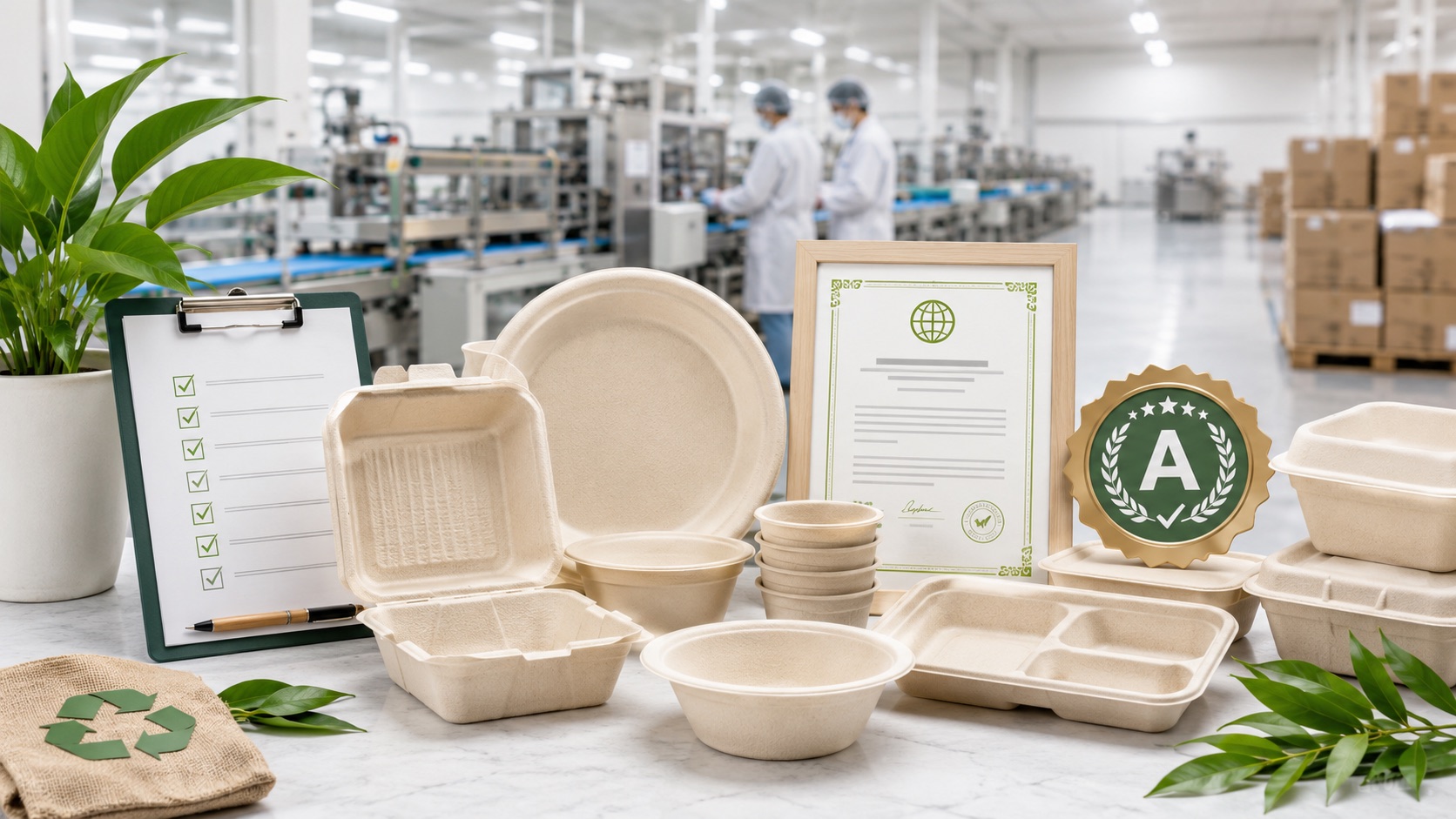
For chains importing into the U.S. and other markets, hold the following documentation set as standard:
- FDA 21 CFR 176.170 Letter of Compliance (U.S.)
- EN 13432 compostability certificate (EU and UK)
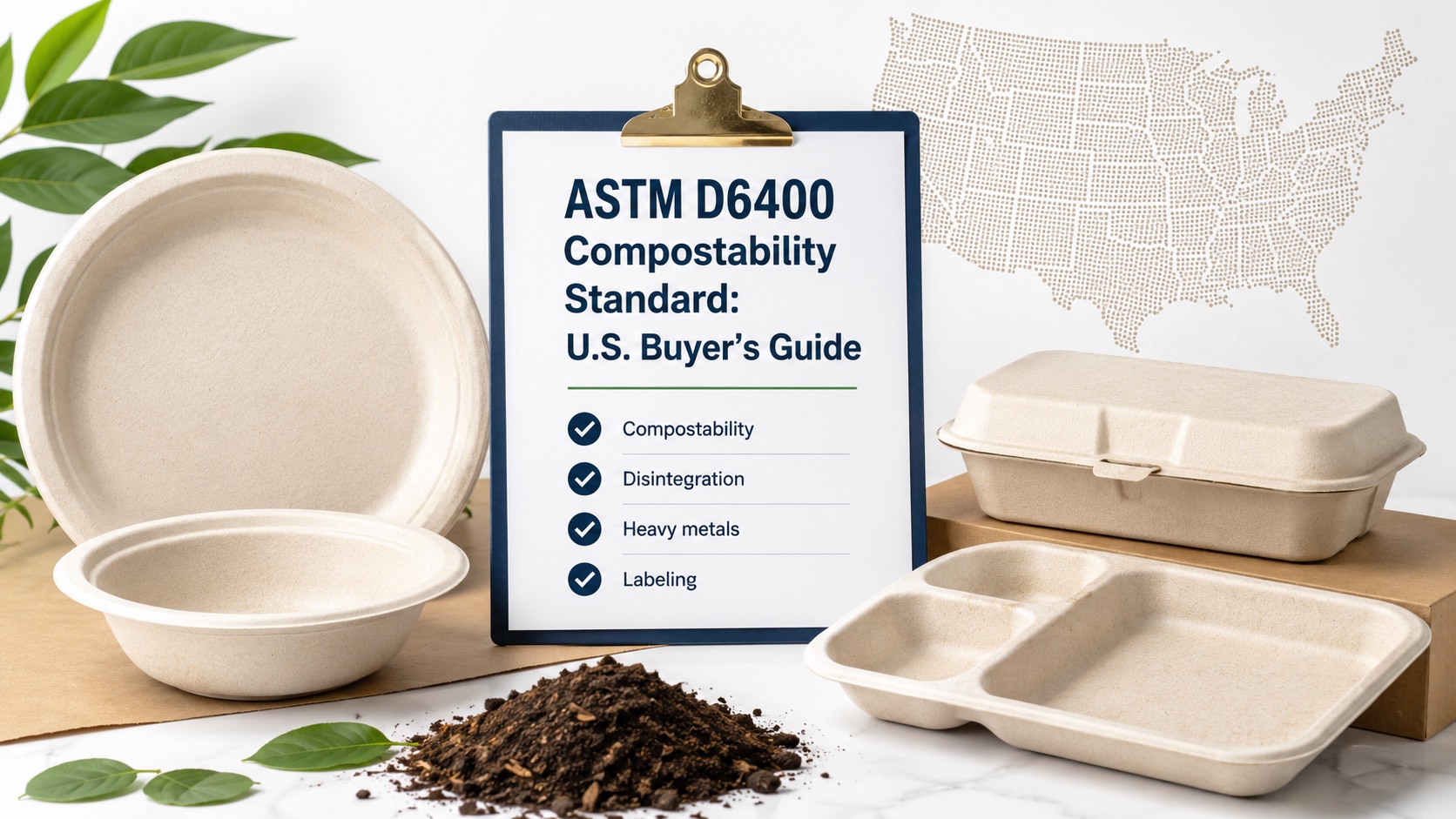
- ASTM D6400 / BPI certificate (U.S. compostability)
- FSSAI registration (if importing from India to other markets)
- BRCGS Packaging Materials A or A+ (universal)
- Third-party lab test reports (SGS, Intertek)
- PFAS-free declaration
- Sedex SMETA audit (ESG)
Ecofy’s FDA position
Ecofy’s bagasse molded fiber FDA-compliant plates, bowls, and compostable food trays are supplied against 21 CFR 176.170 with migration test reports covering the applicable food types and conditions of use. We provide a Letter of Compliance, migration test reports (SGS / Intertek), a PFAS-free declaration, and a BRCGS Grade A Letter of Conformity with every shipment to U.S. customers. Our QR-coded shipment documentation allows customs brokers to verify all certificates digitally, reducing port-of-entry friction.
Sources. Regulation text: 21 CFR 176.170 on eCFR and 21 CFR 176.180 for dry foods. PFAS phase-out: FDA, market phase-out of grease-proofing substances containing PFAS. State law: California AB 1200 and Maine DEP, PFAS in Products. Regulation text verified against the eCFR on 14 August 2026.
Want guides like this in your Google results?
Add Ecofy as a preferred source. Google will surface our compliance standards and trade-data guides more often when you search packaging rules, including in AI Overviews. Takes one click and you can remove it any time.