PFAS Testing Methods for Food Packaging Explained
Which PFAS test methods apply to solid food packaging, what total organic fluorine measures, and the six things to require on a test report.
On this page
Sourcing in bulk?
Tell us your products and quantity
We supply distributors and brands in 30+ countries, and reply with pricing, lead time and shipping.
Buyers are increasingly told a packaging item is PFAS-free. Far fewer are told how that was established, and the documentation that arrives with a quotation often names a method that does not apply to the article being sold.
This page sets out what is actually measured, which standards do and do not apply to a fibre article, why two laboratories can disagree on the same material, and what to require on a report before you accept it.
PFAS-free is not a measurement
Per- and polyfluoroalkyl substances number in the thousands. Targeted analysis by liquid chromatography with mass spectrometry identifies named compounds, so it finds what the method looks for and is silent on everything else. A clean targeted panel does not demonstrate the absence of PFAS.
Regulators work around this with a proxy. Rather than chasing individual compounds, they measure fluorine, on the reasoning that organically bound fluorine above a low background indicates deliberate fluorochemical treatment.
Two measurands matter:
Total fluorine (TF) is all fluorine present, organic and inorganic together. It is the simpler measurement and the more conservative screen, because natural and processing-derived inorganic fluoride counts towards the result.
Total organic fluorine (TOF) attempts to isolate the organically bound fraction. It is the measurand named in regulation, and it is the harder number to produce reliably.
There is no harmonised standard method for paper and board
This is the part buyers are rarely told, and it explains most of what follows.
Several well-known combustion ion chromatography standards exist, but the widely cited ones are written for other matrices. ASTM D7359 covers total fluorine, chlorine and sulfur in aromatic hydrocarbons, a petrochemical method with a working range of 0.10 to 10 mg/kg. EN 17681 is a textiles standard, its first part an alkaline extract analysed by liquid chromatography with tandem mass spectrometry. Neither was written for a moulded fibre plate, and both appear on packaging documentation anyway.
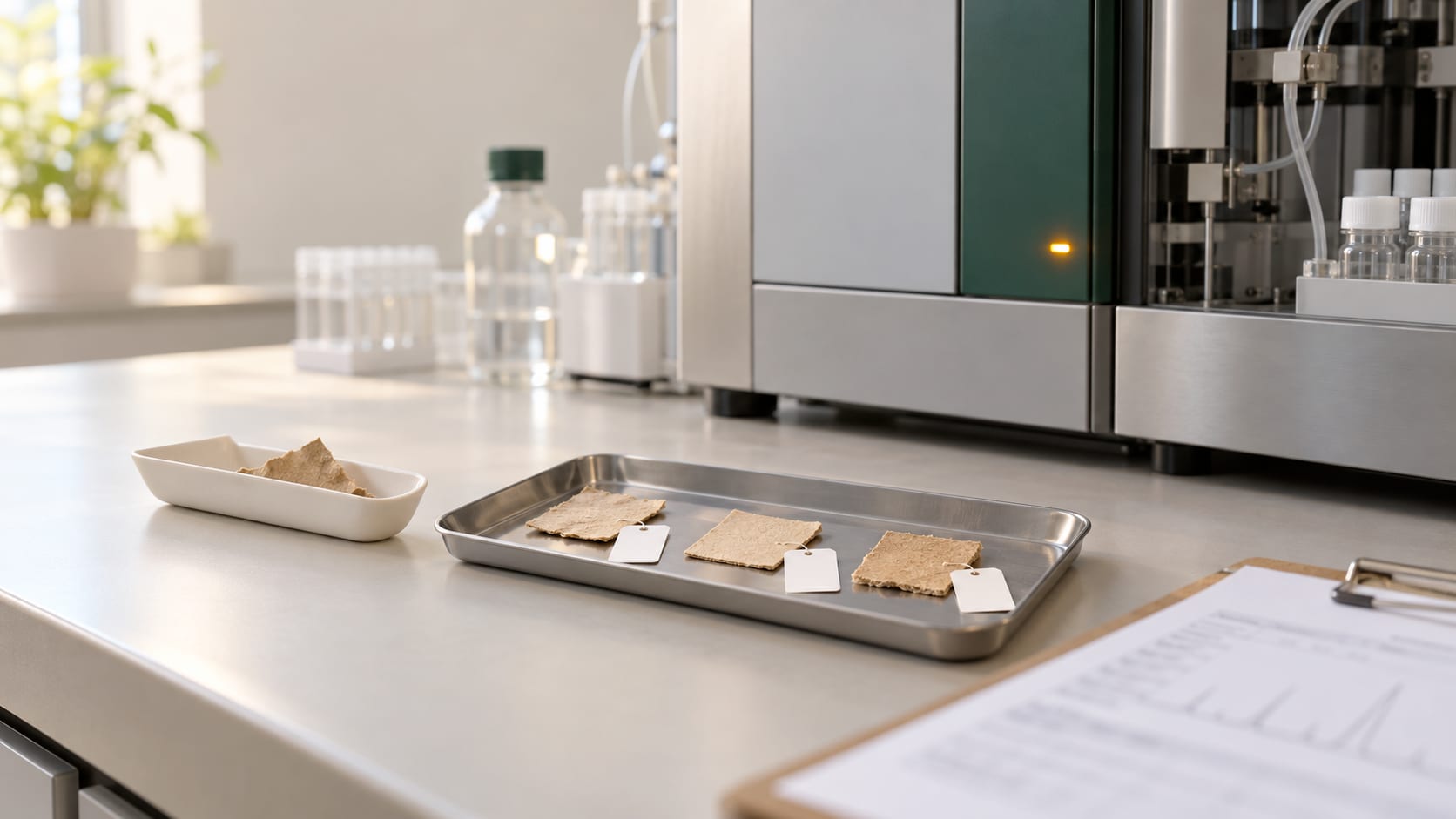
What laboratories actually do for paper and board is measure fluorine twice and subtract:
| Step | Measured | How |
|---|---|---|
| 1 | Total fluorine (TF) | The combusted sample, by combustion ion chromatography |
| 2 | Total inorganic fluorine (TIF) | Extracted from the sample, then measured |
| 3 | Total organic fluorine (TOF) | Calculated as TF minus TIF. Not measured directly |
Alongside this, targeted PFAS analysis by liquid chromatography with tandem mass spectrometry identifies and quantifies named compounds. It is precise about what it looks for and silent about everything else, which is why it cannot support a PFAS-free claim on its own.
So TOF, the number regulation actually names, is a difference between two measurements rather than a reading from an instrument. That is the root of the reliability problem in the next section.
The method that does not apply, and keeps appearing anyway
EPA Method 1621 is for water. Published in January 2024, it determines adsorbable organic fluorine in aqueous matrices by combustion ion chromatography. The procedure passes roughly 100 mL of sample through granular activated carbon columns, rinses them with sodium nitrate to remove inorganic fluoride, then combusts the carbon above 1,000 °C. It was validated on wastewater.
A moulded fibre plate is not an aqueous matrix and cannot be put through that procedure. When EPA 1621 appears on documentation for a solid packaging article, the method name has come from somewhere other than the laboratory that ran the work. It is worth asking about, because it usually indicates the rest of the document deserves a second look.
Why two laboratories disagree on the same material
Total organic fluorine is not measured directly. It is inferred, by removing inorganic fluorine and measuring what remains. That pre-treatment step is the single largest influence on the final number, and it is not standardised.
The aqueous extraction normally used to strip inorganic fluoride is incomplete. Fluoride that stays behind is counted as organic, which pushes the reported TOF upward. Mineral fillers common in paper manufacturing make this worse. Published work on reliable TOF measurement in food packaging identifies pre-treatment as the primary source of variance and calls openly for harmonised methodology.
The practical consequence for a buyer is specific. A TOF figure is only comparable against another figure produced the same way. Two reports from different laboratories, on the same material, run to different preparation conditions, are not comparable, and neither is necessarily wrong.
Two 100 ppm limits, and they are not the same test
The figure 100 ppm appears in two places that buyers routinely treat as interchangeable. They are not.
California, AB 1200, in force since 1 January 2023. It prohibits regulated PFAS in food packaging substantially comprised of paper, paperboard or other materials originally derived from plant fibres, which expressly covers bagasse clamshells and moulded pulp trays. Regulated PFAS means either PFAS intentionally added, or PFAS present at or above 100 ppm measured as total organic fluorine. Note the first limb: intentional addition fails regardless of the number.
BPI compostability certification, in force since 1 January 2020. BPI voted the limit in during November 2017. It requires no intentionally added fluorinated chemicals and a test result at or below 100 ppm total fluorine.
The measurand is the difference that matters. Total fluorine counts inorganic fluorine too, so BPI’s limit is the harder of the two to pass. A material can clear California’s 100 ppm TOF and still exceed BPI’s 100 ppm TF, because naturally occurring and processing-derived fluoride is included in the second figure and excluded from the first. A supplier quoting “under 100 ppm” without saying which measurand has told you almost nothing.
Both work as screens rather than safety limits. Deliberate fluorochemical grease-proofing typically produces results an order of magnitude above either, so a result near the limit of quantification and a result at 90 ppm mean very different things even though both pass.
Six things to require on the report
- The measurand, named. Total fluorine or total organic fluorine. Not “PFAS”.
- The method, named in full, including whether it is a published standard or the laboratory’s own validated procedure. For paper and board it is usually the latter, and that is acceptable as long as it is stated.
- The limit of quantification. A non-detect is meaningless without it. This is the most commonly missing field.
- The sample preparation, including how inorganic fluorine was removed.
- The article numbers the sample represents, and the date of manufacture.
- The laboratory’s name and accreditation scope, so the scope can be checked against the work.
A report carrying all six can be compared against another supplier’s. A report missing the third and fourth cannot be compared against anything.
Where this sits alongside the other requirements
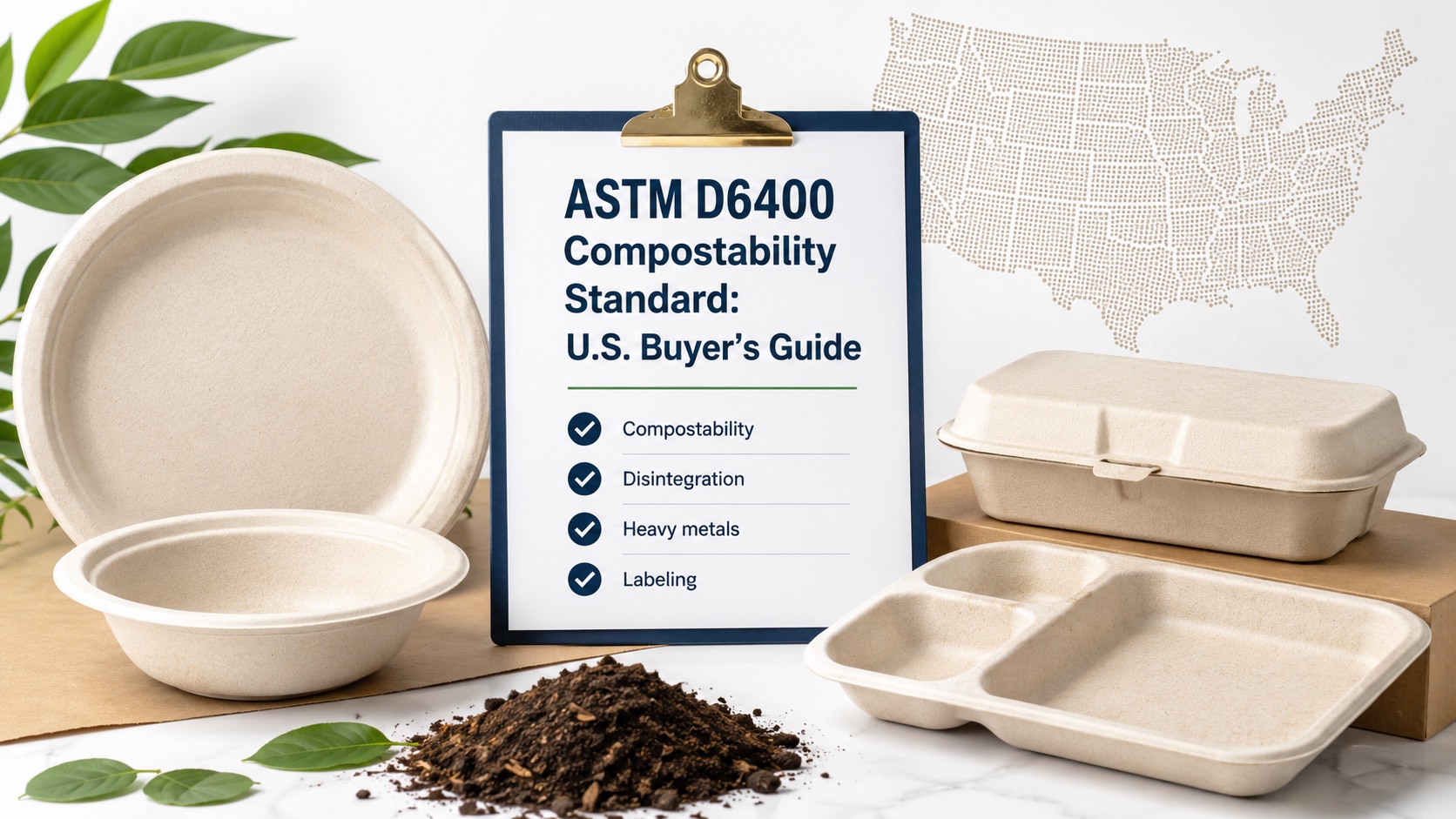
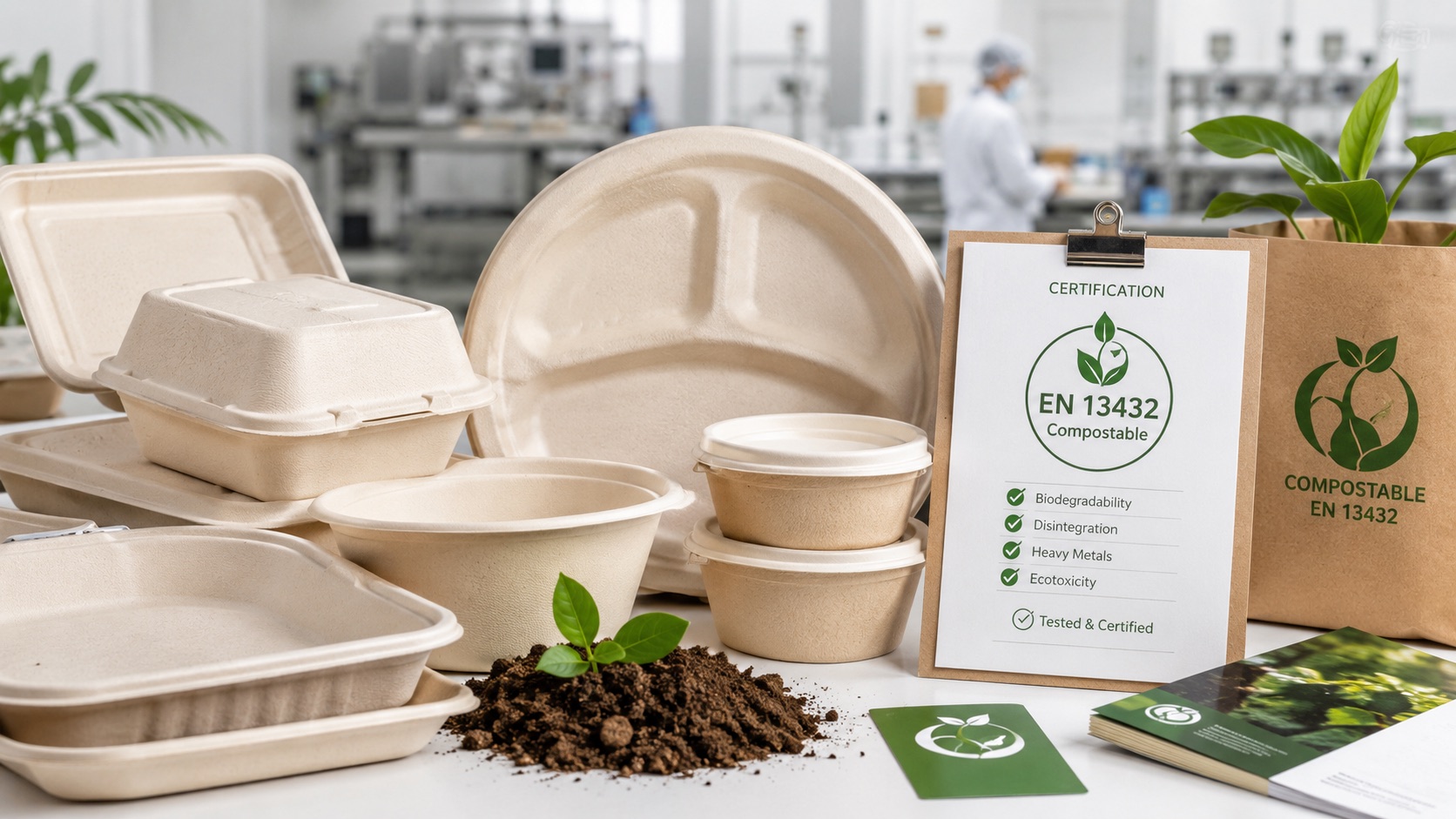
Fluorine testing answers one question. It does not establish food-contact suitability, which in the United States runs through 21 CFR 176.170, nor compostability, which runs through ASTM D6400 in the US and EN 13432 in Europe. A certificate satisfying one of these says nothing about the others.
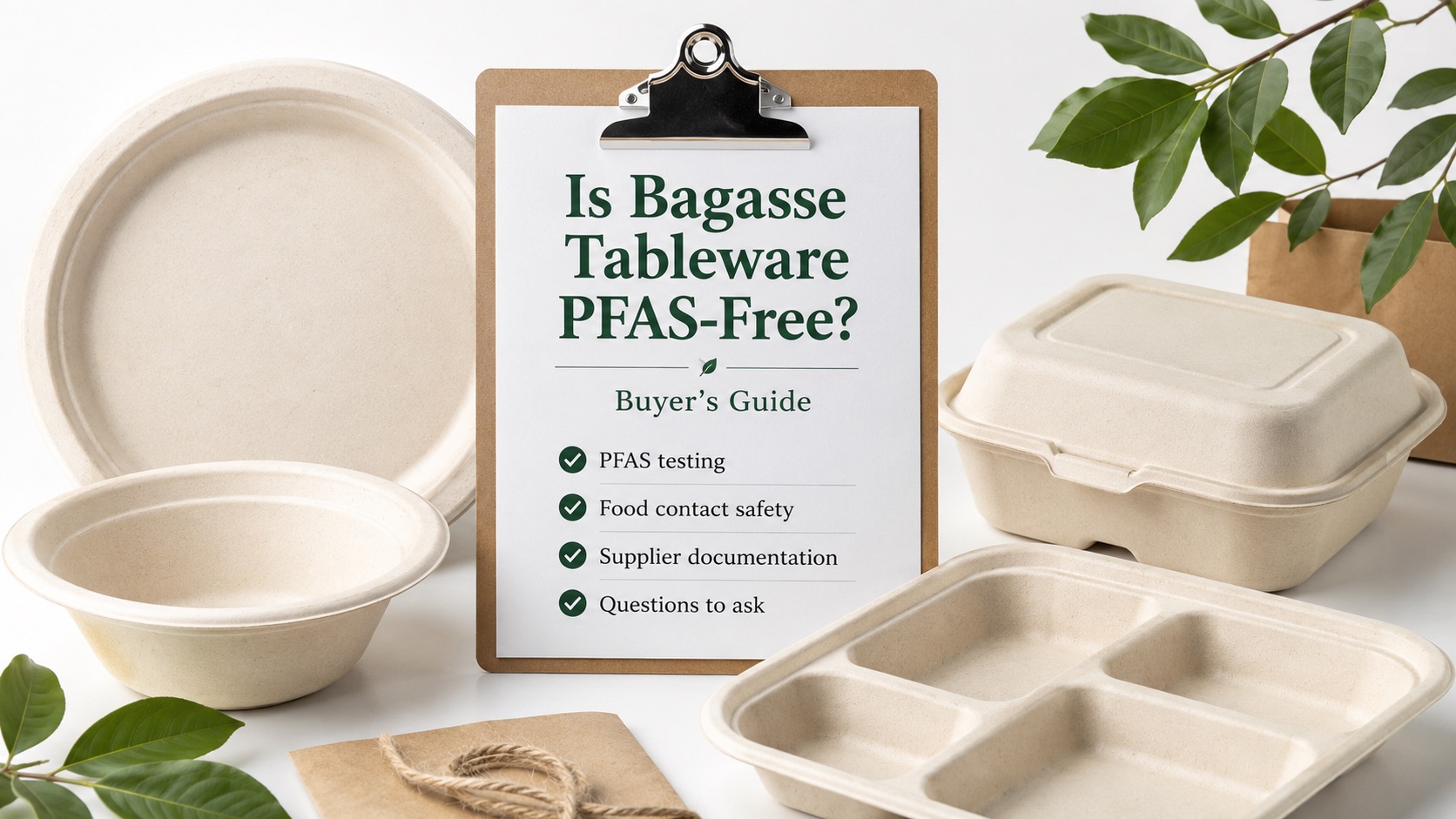
For how the PFAS question applies to moulded fibre specifically, and the state-by-state position, see our guide to PFAS-free bagasse tableware. For the documents Ecofy supplies with a quotation, see our certifications.
Sources
- US EPA, CWA analytical methods for PFAS, for the scope and matrix of Method 1621
- California Health and Safety Code section 109000, for the total organic fluorine limit
- BPI commercial compostability certification, for the 100 ppm total fluorine requirement
- Journal of AOAC International, on combustion ion chromatography for total organic fluorine in food contact materials
- Assessing reliable measurements of total organic fluorine in food packaging materials, on pre-treatment as the dominant source of variance
- Ion selective electrode method for total fluorine and total organic fluorine in packaging substrates
Want guides like this in your Google results?
Add Ecofy as a preferred source. Google will surface our compliance standards and trade-data guides more often when you search packaging rules, including in AI Overviews. Takes one click and you can remove it any time.