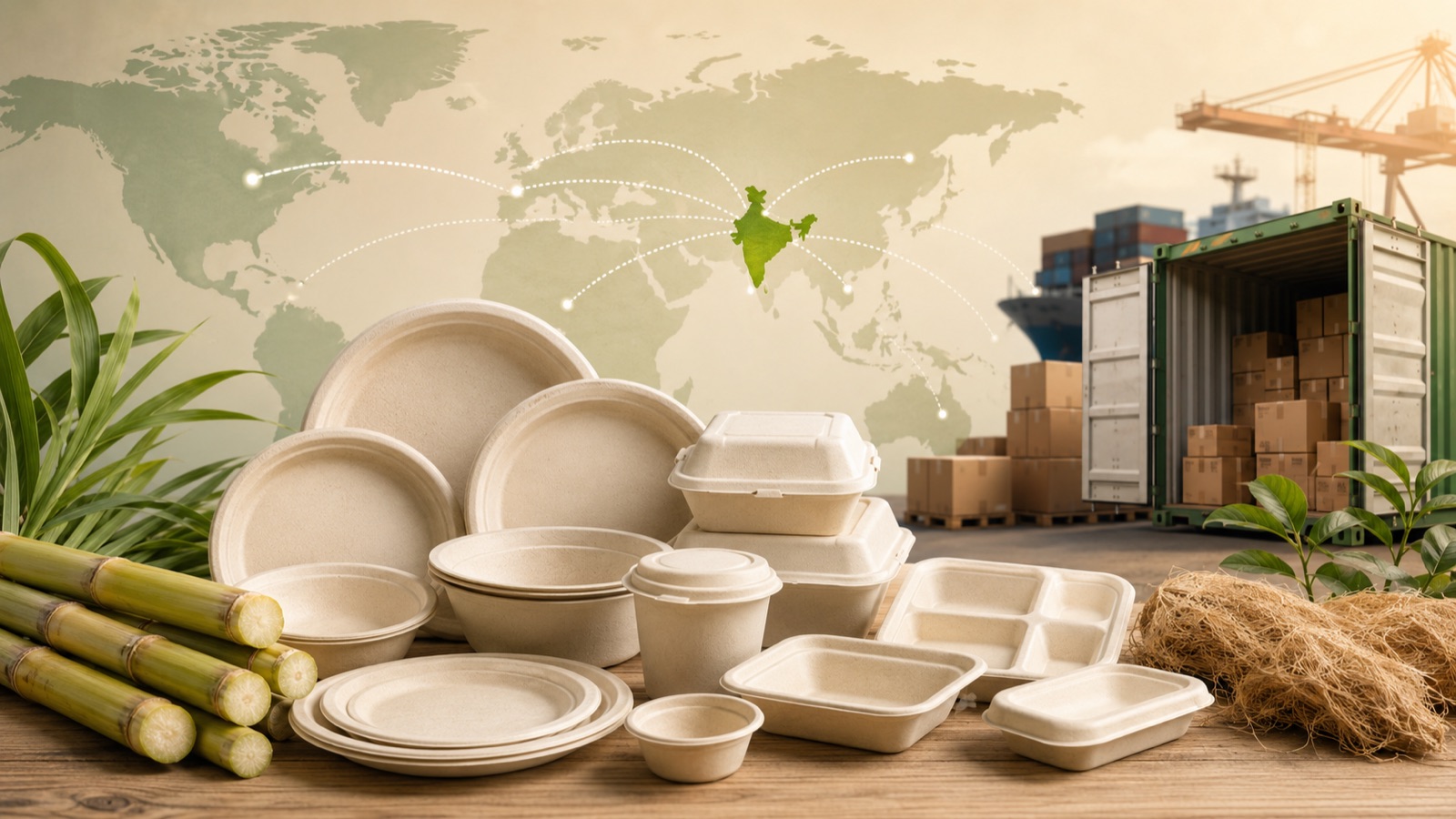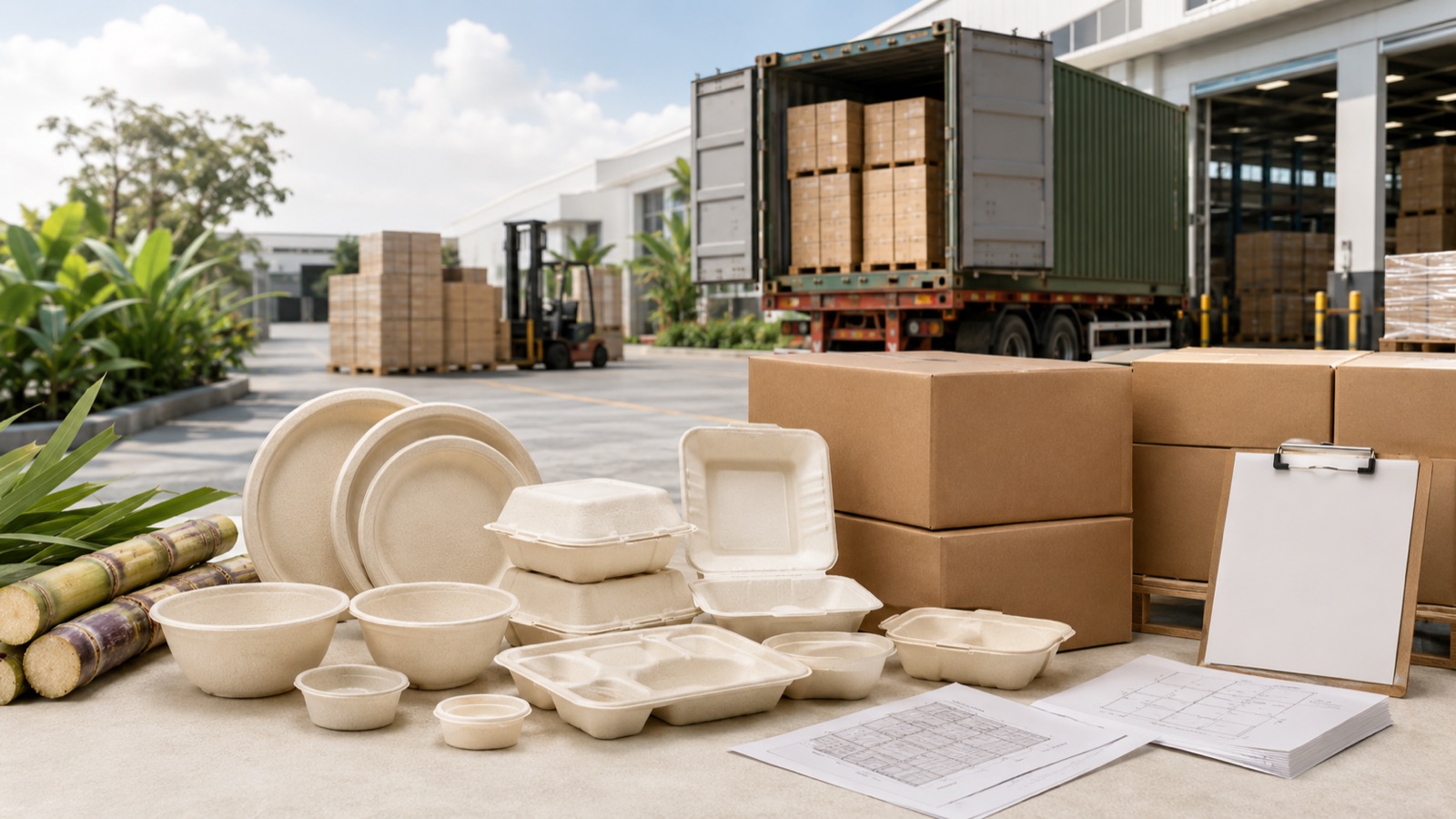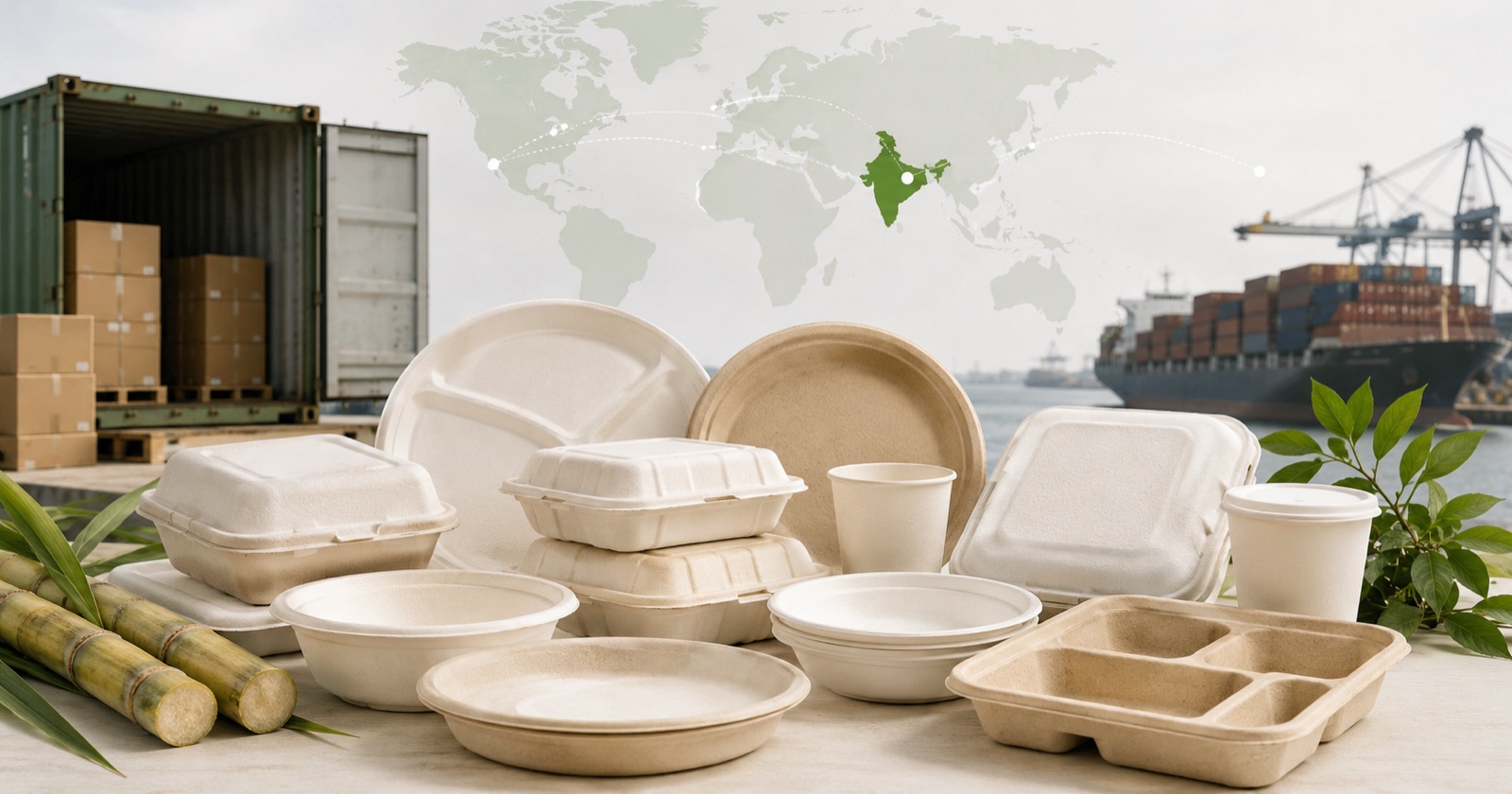
FOB vs CIF vs DDP: Which Incoterm for Importing Bagasse Tableware from India
FOB vs CIF vs DDP explained for buyers importing compostable bagasse tableware from India: who pays for what, and which Incoterm suits your first order.
On this page
Sourcing in bulk?
Tell us your products and quantity
We supply distributors and brands in 30+ countries, and reply with pricing, lead time and shipping.
Quick answer: FOB, CIF and DDP set how far the seller’s job reaches. Under FOB the seller loads the goods on the ship in India and you take over. CIF adds sea freight and insurance to your port. DDP delivers to your door with duty paid. For a first order, DDP is simplest; FOB gives experienced buyers the most control and lowest cost.
If you are importing compostable bagasse tableware from a moulded fibre packaging supplier in India, the Incoterm you agree in your purchase order matters as much as the unit price. It decides who arranges the shipping, who insures the goods at sea, who clears customs, and who pays the import duty. Pick the wrong one for your situation and a cheap-looking quote can become an expensive, stressful shipment. This guide explains FOB, CIF and DDP in plain terms for a tableware buyer, shows who pays for what, and helps you choose the right term for your first order or your hundredth.
Key takeaways
- The Incoterm sets the handover point, not the product. It defines where the seller’s responsibility ends and yours begins.
- FOB = seller loads the goods on the ship in India; you handle freight, insurance, customs and delivery.
- CIF = seller adds sea freight and insurance to your destination port; you still handle customs, duty and final delivery.
- DDP = seller delivers to your door with customs cleared and duty paid; you do almost nothing.
- First order? DDP is usually the safest. Experienced with a good forwarder? FOB gives the most control and usually the best cost.
- Tableware ships by volume, not weight, so freight is a real cost lever, which is why control over shipping (FOB) matters for bulky compostable products.
Why the Incoterm you choose matters
An Incoterm, short for International Commercial Term (also called a shipping or delivery term), is a standard three-letter trade rule published by the International Chamber of Commerce that both parties reference so there is no ambiguity about who does what. The current set is Incoterms 2020. Several terms exist, but FOB, CIF and DDP cover almost every compostable tableware import from India, so this guide focuses on the three that matter to you. For a compostable tableware order, the term you agree answers four practical questions:
- Who books and pays the ocean freight?
- Who insures the goods while they are at sea?
- Who clears the goods through customs in your country?
- Who pays the import duty and destination charges?
The unit price on two quotes is not comparable until you know the Incoterm behind each. A low FOB price and a higher DDP price can land at the same total cost once freight, insurance, duty and clearance are added, so always compare on a like-for-like basis.
FOB, CIF and DDP defined, in a tableware-import context
FOB (Free On Board)
Under FOB, the supplier’s price covers the goods, export packing, inland transport to the Indian port, export clearance and loading onto the vessel, at which point the bill of lading is issued. The moment the container is on board at a port such as Nhava Sheva (JNPT) or Mundra, responsibility passes to you. You arrange and pay for the sea freight, marine insurance, destination port charges, customs clearance, duty and final delivery.
FOB suits buyers who have a freight forwarder they trust and want to control cost and routing. Because compostable tableware is light and bulky, and freight is charged on volume, shopping your own freight rates under FOB is often where the biggest savings sit.
CIF (Cost, Insurance and Freight)
CIF is FOB plus two things the seller adds: the main sea freight to your named destination port, and marine insurance for the voyage. The risk of loss or damage still transfers to you once the goods are loaded in India, the same handover point as FOB, even though the seller has arranged and paid the freight and insurance to the arrival port. Cost and risk are not the same thing: CIF shifts the cost of the ocean leg to the seller, not the risk. From that port onward, customs clearance, duty and final delivery are yours.
CIF suits a buyer who wants the supplier to handle the ocean leg but who has a customs broker and prefers to control clearance and the final mile.
DDP (Delivered Duty Paid)
DDP is the most hands-off term for a buyer. The supplier arranges everything: export from India, sea freight, insurance, import customs clearance in your country, import duty, and delivery to your address. You receive the goods with nothing left to do. It places the maximum obligation on the seller, which is why DDP quotes carry a margin for that risk and effort. This matters more since January 2026 for US buyers, because trade remedy duties on Chinese and Vietnamese molded fiber stack on top of the normal tariff. Check which origins carry US trade remedy duties before agreeing a DDP price.
DDP suits first-time importers, buyers without a customs broker, and anyone who values door-to-door simplicity over squeezing the last few percent from freight.
Who pays for what: FOB vs CIF vs DDP
| Stage | FOB | CIF | DDP |
|---|---|---|---|
| Goods, export packing, inland to Indian port | Seller | Seller | Seller |
| Export clearance and loading in India | Seller | Seller | Seller |
| Ocean freight to destination port | Buyer | Seller | Seller |
| Marine insurance | Buyer | Seller | Seller |
| Destination port charges | Buyer | Buyer | Seller |
| Import customs clearance | Buyer | Buyer | Seller |
| Import duty and taxes | Buyer | Buyer | Seller |
| Final delivery to your door | Buyer | Buyer | Seller |
The pattern is simple: FOB gives you the most control and the most work, DDP gives you the least of both, and CIF sits in between.
Which Incoterm should you choose?
- First import from India, no customs broker: choose DDP. You get a single door-to-door price and carry the least risk while you learn how a compostable tableware shipment actually moves.
- You have a customs broker but want the supplier to handle the ocean leg: choose CIF. You control clearance and duty, the supplier handles freight and insurance.
- Experienced importer with a trusted freight forwarder: choose FOB. You control routing, shop your own freight rates on bulky-but-light cargo, and usually land the lowest total cost.
- You want to compare suppliers cleanly: ask each for the same Incoterm, ideally FOB, then add your own known freight and duty. Comparing one supplier’s FOB against another’s DDP tells you very little.
A common and sensible path is to run your first order or two on DDP for simplicity, then move to FOB once you have a forwarder and a feel for your landed cost.
Importing from India: what these terms mean in practice
Two details matter for tableware specifically.
First, the port. FOB and CIF prices from India are usually quoted from a named port, most often Nhava Sheva (JNPT) near Mumbai or Mundra in Gujarat. Confirm the port in your quote, because inland distance to it is built into the FOB price.
Second, volume over weight. Molded-fibre bagasse tableware is light and takes up space, so a container reaches its volume limit long before its weight limit. That has two consequences: freight is priced on the space you use, and you can fill one container with a mix of SKUs. Both make control over freight, which FOB gives you, a genuine cost lever. Plan the load around container volume rather than tonnage, which our MOQ, lead time and container planning guide works through with examples, and you can model a container load with the logistics estimator.
Ecofy quotes in FOB, CIF or DDP depending on what suits the buyer, ships factory-direct from a BRCGS Grade A plant in India, and has exported compostable tableware to more than 30 countries since 2020, so we can tell you which term tends to work best for your specific market and port.
Comparing quotes: an illustrative structure
You do not need exact figures to compare correctly, you need the structure. For any two quotes, build the total to your door:
- FOB total = FOB price + ocean freight + insurance + destination charges + customs clearance + duty + final delivery
- CIF total = CIF price + destination charges + customs clearance + duty + final delivery
- DDP total = the DDP price (everything is already inside it)
Get the DDP price and the FOB price from the same supplier for the same load, then fill in your own freight and duty for the FOB line. Whichever total is lower, at a level of effort you are comfortable with, is your answer. For a first order, a slightly higher DDP total can still be the right call for the certainty it buys.
Common Incoterm mistakes to avoid
- Comparing different terms head to head. A cheaper FOB is not cheaper than a DDP until you add freight and duty.
- Forgetting duty on FOB and CIF. Both leave import duty with you. Confirm your rate from the correct HS heading with a customs broker before you commit. Our import guide covers HS classification and documents.
- Assuming CIF insurance is generous. The default CIF insurance cover is minimum level. If your goods warrant more, arrange your own or specify the cover.
- Not naming the destination port on CIF. CIF is always to a named port; leaving it vague creates disputes.
- Choosing FOB with no freight forwarder. FOB only saves money if you can actually book competitive freight. Without a forwarder, DDP is usually better value in practice.
Ready to source?
Ecofy is a factory-direct manufacturer of compostable bagasse tableware, plates, bowls, trays, clamshells, takeaway containers and lids, exporting to over 30 countries since 2020 with FDA, BRCGS and PFAS-free documentation on request. We quote in FOB, CIF or DDP to match how you want to buy, and we can advise the term that fits your market.
Request a quote with your product mix and destination, or explore wholesale and B2B supply and our market pages for country-specific import notes. Before you order, the supplier vetting checklist helps you confirm you are buying from a real manufacturer.
Want guides like this in your Google results?
Add Ecofy as a preferred source. Google will surface our compliance standards and trade-data guides more often when you search packaging rules, including in AI Overviews. Takes one click and you can remove it any time.