Is Bagasse Compostable? What B2B Buyers Must Verify
Yes, bagasse is compostable and biodegradable. The standards it meets, how long it takes at home vs industrially, and what buyers should verify before ordering.
On this page
Sourcing in bulk?
Tell us your products and quantity
We supply distributors and brands in 30+ countries, and reply with pricing, lead time and shipping.
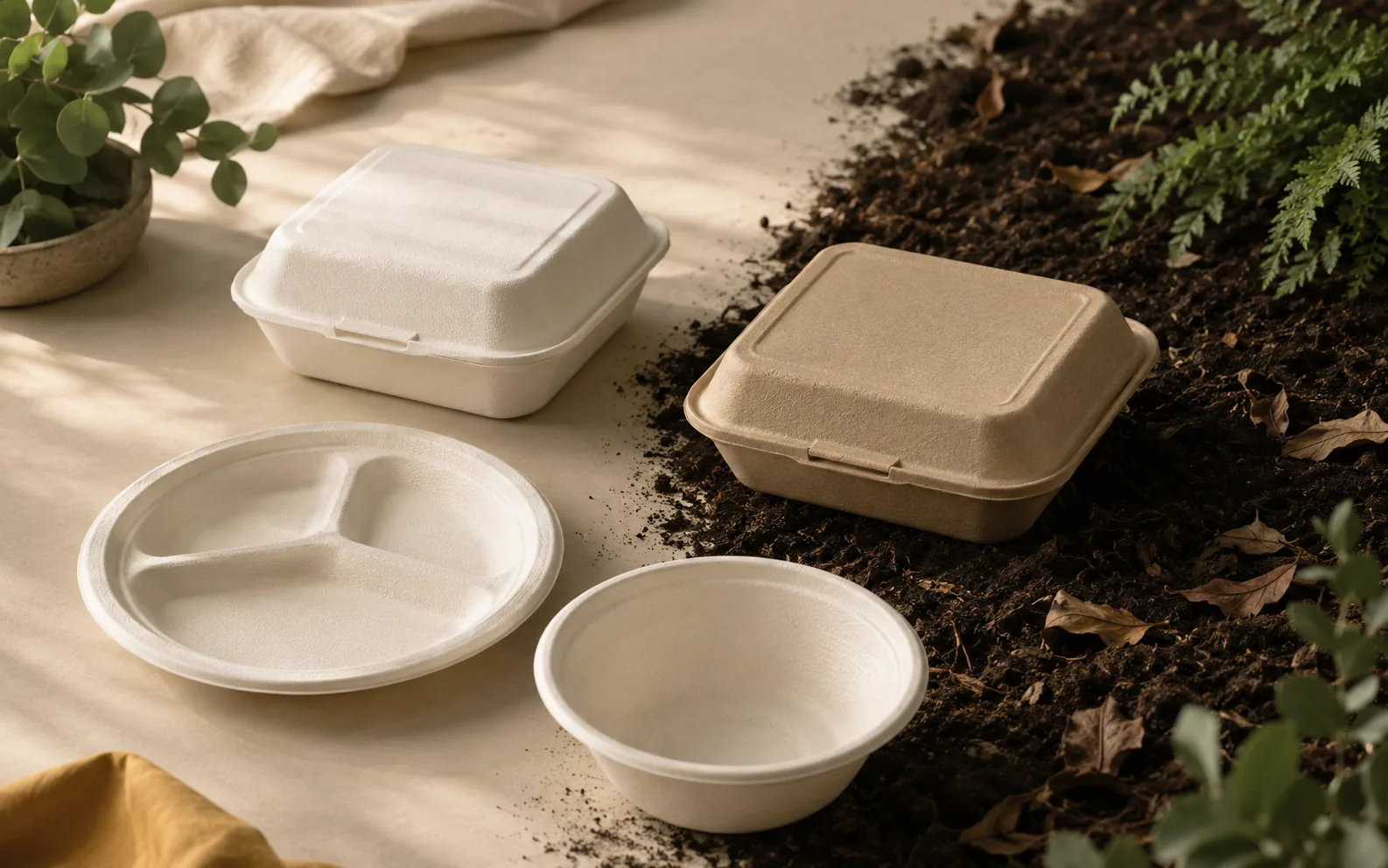
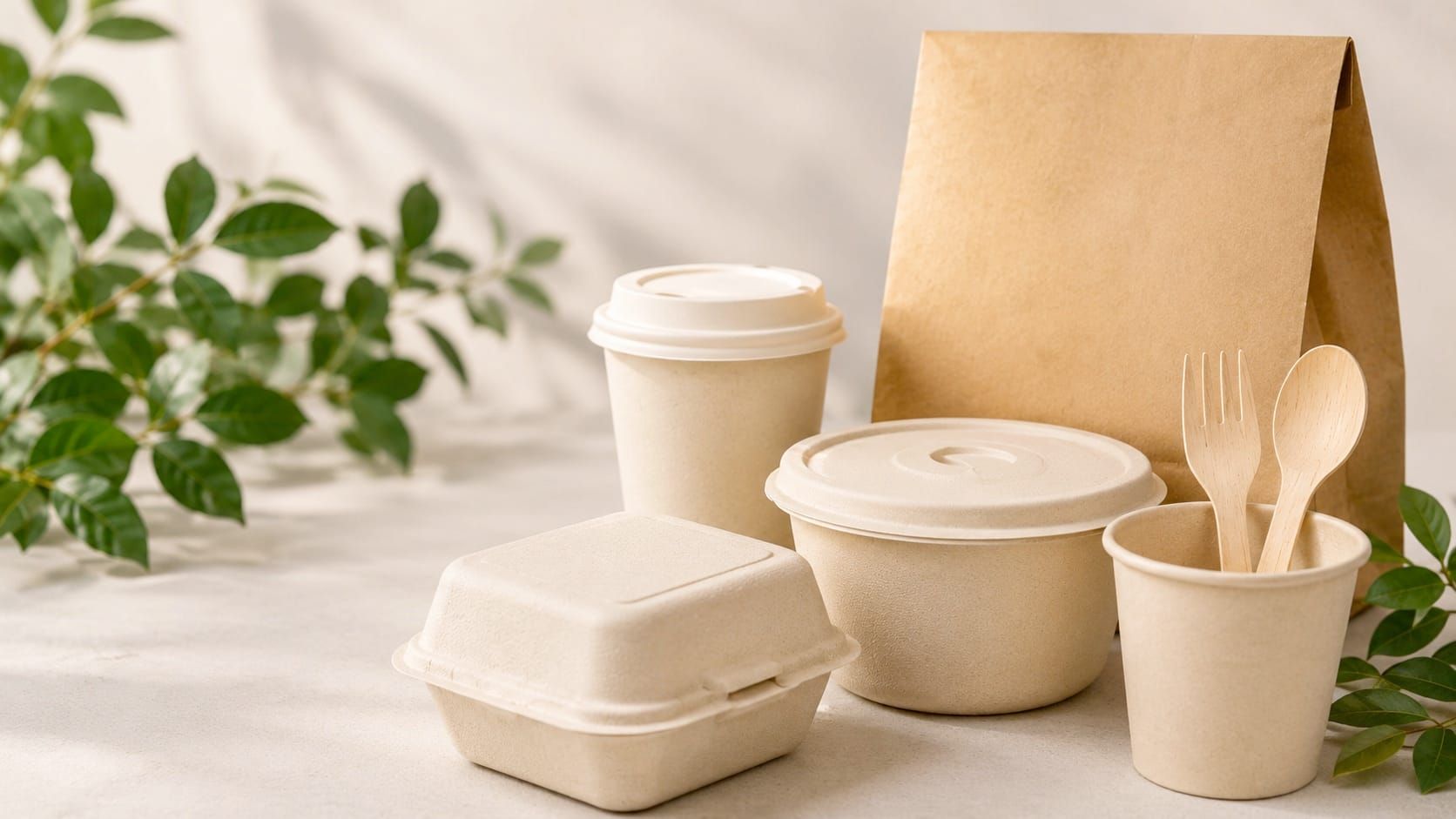
Yes. Bagasse, the fibre left after sugar is pressed from sugarcane, is both biodegradable and compostable. It is made of plant cellulose, so given the right conditions it breaks down fully into compost with no toxic residue. Bagasse is the fibre; molded fiber is the process that turns it into a plate or a clamshell. For a buyer, though, the useful question is not just whether it is compostable, but compostable under which standard, in how long, and in which facility, because that is what determines the claim you can make to your own customers and regulators.
The short answer
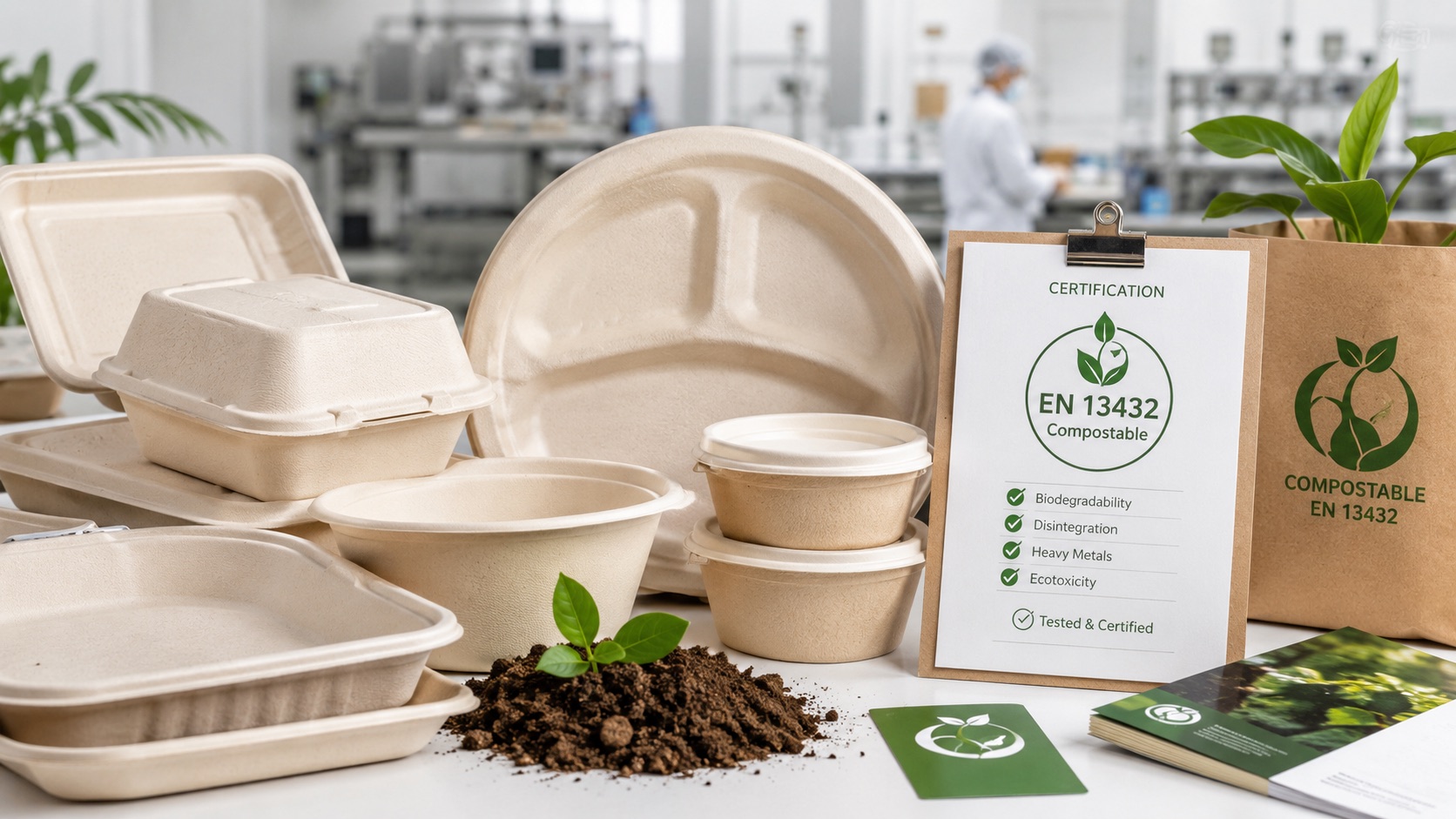
Uncoated bagasse tableware is certified compostable under the main global standards: EN 13432 in Europe, ASTM D6400 in North America, and AS 4736 in Australia. Certification means it disintegrates and biodegrades within a defined time under controlled composting conditions, and leaves compost free of harmful residues.
How long does bagasse take to decompose?
Timelines depend on the facility, not just the material:
- Industrial composting (around 60 degrees Celsius, controlled moisture and active microbes): typically 60 to 90 days.
- Home composting (ambient temperature): typically 90 to 180 days, and slower for thick items such as heavy bowls or cups.
The standards above are written for industrial conditions. A product certified to EN 13432 or ASTM D6400 is verified for industrial composting; home compostability is a separate, higher bar.
Compostable does not always mean home compostable
This is the distinction that trips up buyers. Two things change the answer:
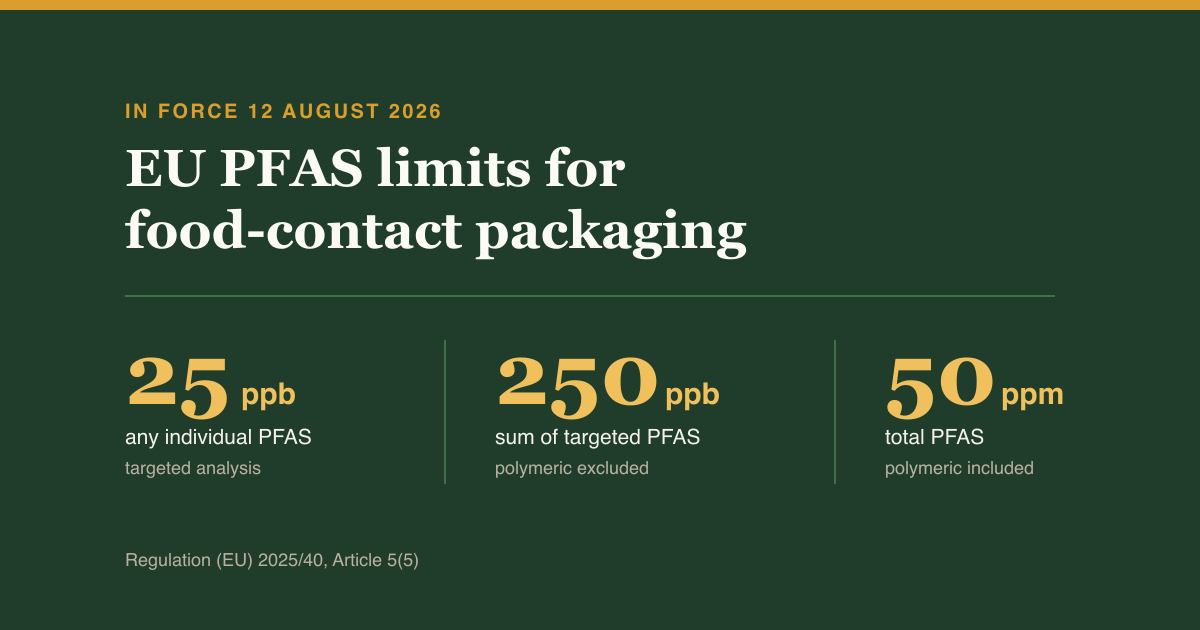
- Coatings. A PLA lining needs industrial heat to break down, and any PFAS coating should be avoided outright, since it can impede composting and is now restricted in many markets. Uncoated or PFAS-free bagasse composts most cleanly.
- Thickness. Thicker mouldings take longer, and in a slow home pile may not fully break down.
So “compostable” on a spec sheet is accurate, but you should confirm whether it means industrial or home, and whether any lining is involved.
Biodegradable vs compostable
They are not the same. Biodegradable means a material will eventually break down. Compostable is stricter: it must disintegrate and biodegrade within a set time and leave non-toxic compost, verified against a standard. When you buy, ask for compostable certification, not just a “biodegradable” claim.
What a B2B buyer should verify
Before you commit to bagasse tableware, confirm:
- The compostability standard it is certified to (EN 13432, ASTM D6400 or IS/ISO 17088) and a current test report.
- Whether the claim is industrial or home compostable.
- That it is PFAS-free, with supporting test data.
- Whether any coating or lining is used, and how that affects end of life.
For how bagasse stacks up against other materials, see bagasse vs PLA and our other material comparisons. Planning to buy in bulk? Start with the guide to sourcing compostable tableware from India.
Need verified compostable tableware?
Ecofy manufactures compostable bagasse tableware with verified compostability and PFAS-free test reports, and ships with export-ready documentation. Request a quote or order samples.
Sources. Compostability standards and certification: TÜV Austria OK compost INDUSTRIAL, TÜV Austria OK compost HOME for the home-composting route, DIN CERTCO industrial compostable products, and BPI, ASTM compostability standards for the US equivalent. Timeframes stated here reflect EN 13432 test conditions, under which disintegration is assessed at 12 weeks and biodegradation over six months; real-world breakdown depends on facility temperature, moisture and item thickness. Verified 14 August 2026.
Want guides like this in your Google results?
Add Ecofy as a preferred source. Google will surface our compliance standards and trade-data guides more often when you search packaging rules, including in AI Overviews. Takes one click and you can remove it any time.