What Is Molded Fiber? Types, Process and Materials
Molded fiber explained: the four IMFA types and their wall thicknesses, how pulp is formed into a product, which fibres are used, and what the material can do.
On this page
Sourcing in bulk?
Tell us your products and quantity
We supply distributors and brands in 30+ countries, and reply with pricing, lead time and shipping.
Molded fiber is cellulose pulp formed into a finished shape under heat and pressure. It is the process, not the material: the same process makes an egg carton, a plant pot, a phone insert and a foodservice plate, from fibres as different as recovered newsprint and sugarcane residue.
The term is written several ways and they all mean the same thing. Molded fiber and moulded fibre are US and UK spellings. Molded pulp and moulded pulp are the older names, still standard in protective packaging. Bagasse, bamboo and wheat straw are raw materials, not processes, so bagasse tableware is one kind of molded fiber product rather than an alternative to it.
The four types, and why wall thickness decides everything
The industry classifies molded fiber into four types by how the part is formed, a scheme the International Molded Fiber Association uses throughout its own education material. The wall thickness ranges below are those given in a TAPPI PEERS conference paper on molded pulp manufacture. The categories are not marketing labels; they describe genuinely different tooling and different machines.
| Type | Wall thickness | How it is formed | Typical products |
|---|---|---|---|
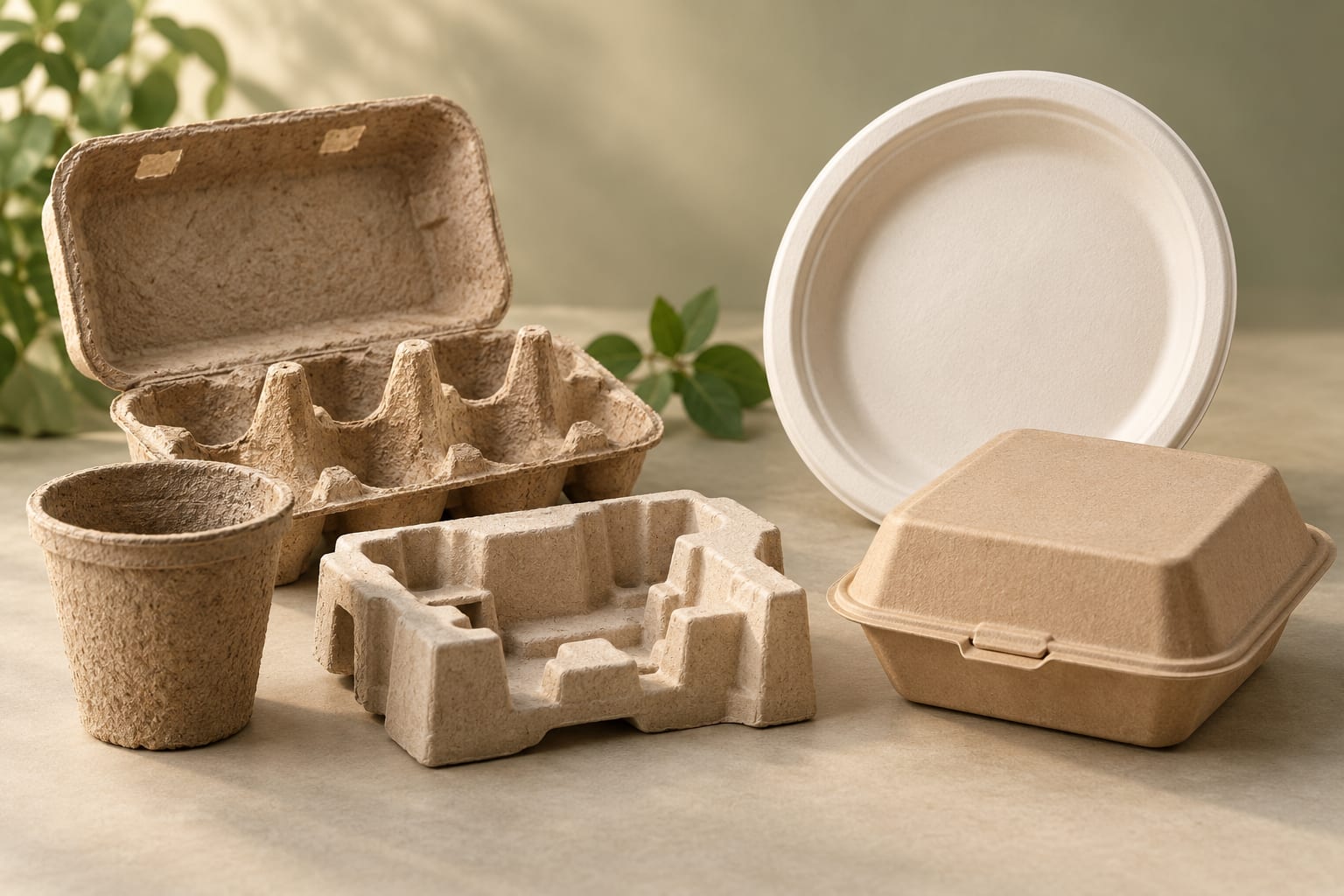
| Type 1 Thick wall | about 5 to 10 mm | A single mould. One face comes out relatively smooth, the other rough | Support packaging for heavy items, plant and nursery pots |
| Type 2 Transfer moulded | about 3 to 5 mm | One forming mould plus one transfer mould | Egg cartons and trays, electronics inserts, some tableware |
| Type 3 Thermoformed, thin wall | about 2 to 4 mm | Multiple heated moulds. Dried in the mould, no oven curing | Foodservice plates, bowls, trays, clamshells |
| Type 4 Processed | varies | A Type 2 or Type 3 product given a secondary process | After-pressed, die-cut, perforated, printed or coloured items |
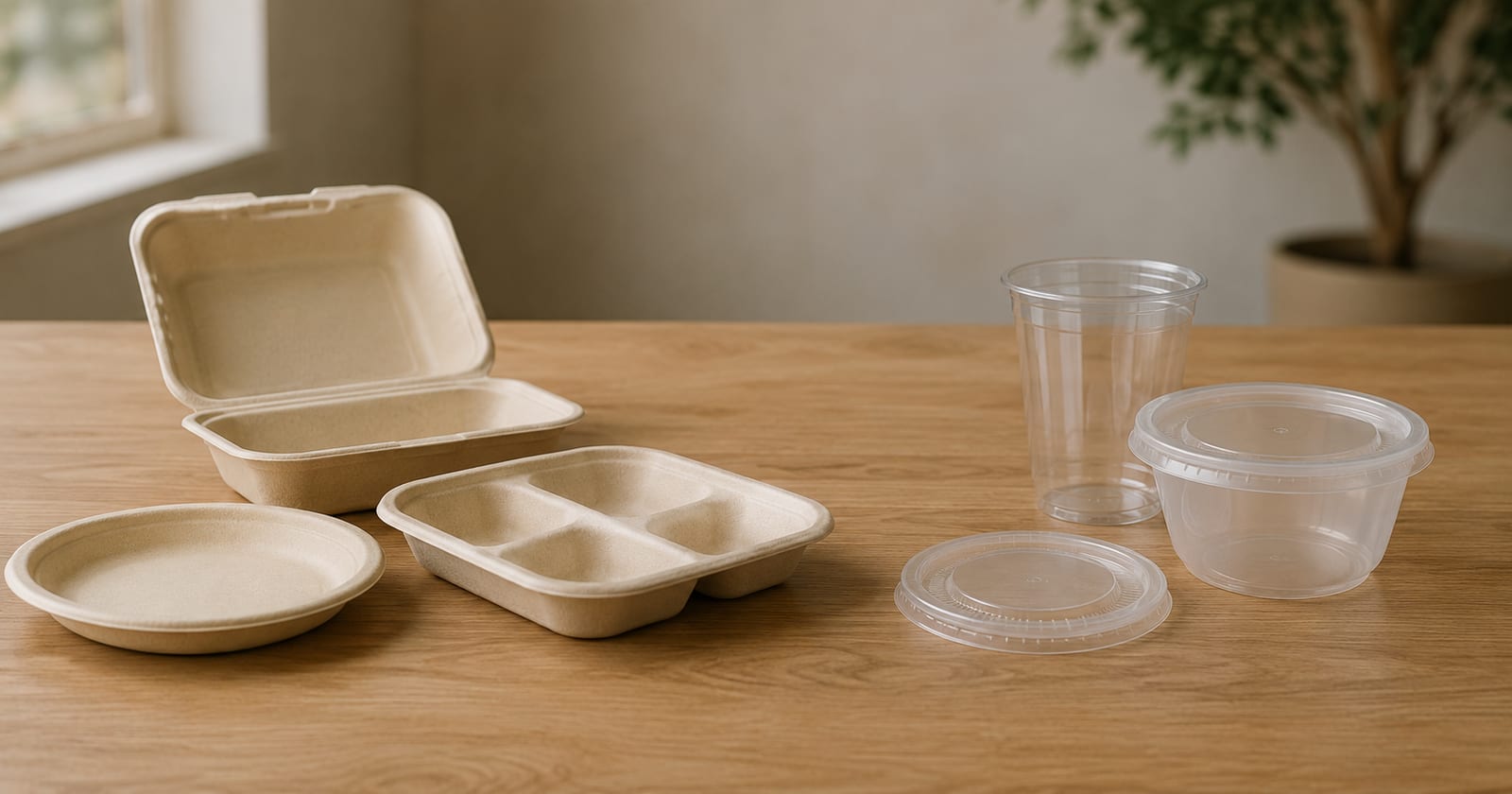
Foodservice tableware is almost always Type 3. That is why a plate is smooth on both faces and holds fine detail, while an egg carton is rough on one side. Type 3 is pressed in a heated mould, which drives the water off in the tool rather than in a separate oven, and the resulting wall is denser. The TAPPI paper puts it plainly: Type 3 products closely resemble thermoformed plastic, which is precisely why they work as a substitute for it.
Type 4 is worth understanding because it is often what a buyer is actually specifying without knowing the term. An after-pressed plate, a die-cut lid aperture, an embossed logo or a printed rim are all Type 4 operations applied to a Type 3 part.
How a molded fiber product is made
The sequence is the same across the industry. What differs between factories is the equipment at each stage and how tightly each is controlled.
Fibre preparation. The raw fibre arrives as baled pulp board, recovered paper or an agricultural residue such as bagasse. It is broken down in water in a pulper until the fibres separate into a slurry. Anything that will not form, such as grit or metal, is screened out here.
Stock preparation. The slurry is diluted to a working consistency and any additives are introduced. This is where wet-strength agents or sizing would be added if the product needs resistance to liquid or grease, and it is the stage that determines whether a finished item is uncoated or treated.
Forming. A mould shaped like the product, perforated and covered in a fine mesh, is dipped into the slurry or has slurry drawn through it under vacuum. Fibre deposits on the mesh in the thickness the vacuum and dwell time allow. The wet part at this point holds its shape but is mostly water.
Pressing and drying. This is where the types diverge. A Type 1 part is transferred wet and dried in an oven. A Type 3 part is pressed between heated moulds, so forming, pressing and drying happen in the same tool. The heat drives off moisture while the pressure sets the surface and the density. The tool itself, not the oven, determines the finish.
After-press and finishing. A secondary press can be applied for a smoother face or a tighter rim. Edges are trimmed, apertures are die-cut, and any printing or embossing is applied. These are the Type 4 operations.
Inspection. Finished parts are checked for dimension, weight and visual defects. Food-contact lines add foreign-body control before packing, because the process runs steel tooling against fibre.
Plant-specific figures to be added: pulp consistency at the forming station, hot-press temperature and dwell time, press tonnage by product size, and moisture content entering and leaving the press. These vary by line and by product and are being confirmed rather than estimated.
Which fibres are used
Any cellulose source that can be dispersed in water and will bond on drying can be formed. In practice the choice is between three families.
Recovered paper and board is the traditional feedstock for protective packaging and egg cartons. It is cheap and widely available, and it carries a recycled-content claim. Colour is grey to brown and varies with the input stream.
Virgin wood pulp gives consistent colour and strength, and is used where appearance or food contact matters. It costs more and carries no recycled claim.
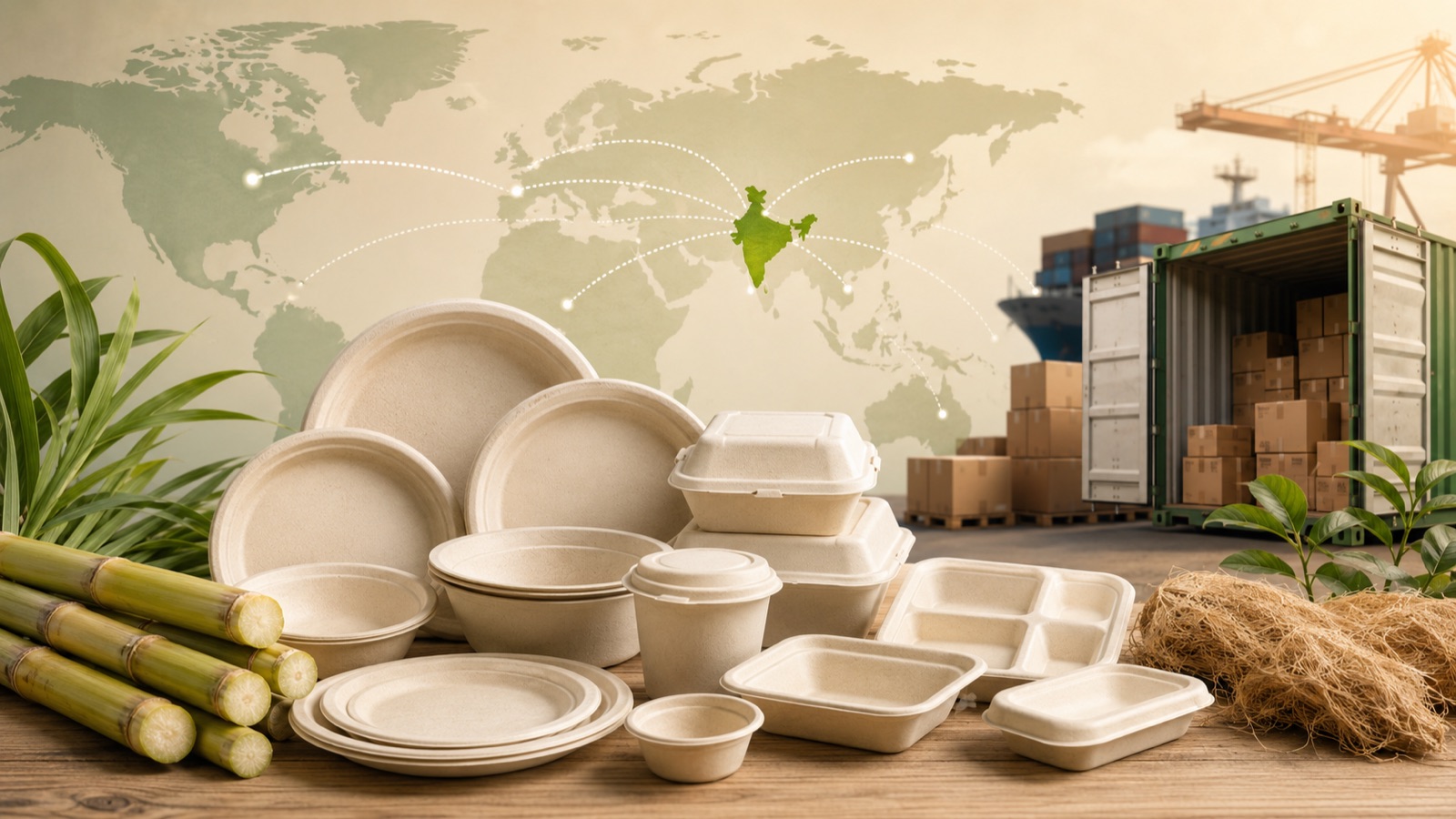
Agricultural residues such as sugarcane bagasse, bamboo and wheat straw are by-products of other industries. Bagasse is what remains after sugarcane is crushed for juice, which is why it is a residue rather than a crop grown for packaging. It forms well, takes a smooth finish and is the usual choice for Type 3 foodservice items.
The forming process does not change much between them. What changes is colour, the amount of refining the fibre needs, and which claims the finished product can carry.
What the material can and cannot do
Molded fiber is rigid, stackable, takes fine detail in a heated tool, and tolerates heat well enough for oven and microwave use in many formulations. It is formed to shape rather than cut from sheet, so a compartment tray or a hinged clamshell is a single piece with no assembly.
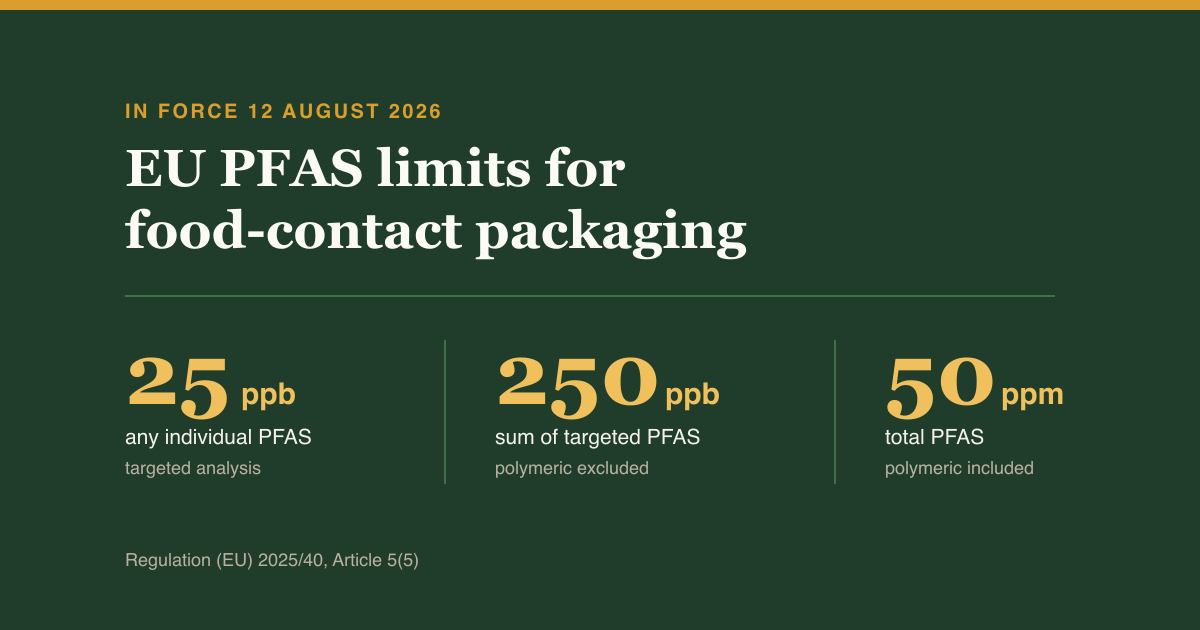
It is not inherently waterproof or grease-proof. Cellulose absorbs water. Resistance comes either from pressing the fibre densely enough to slow absorption, or from a coating or additive. That distinction matters more than it sounds, because it is where two separate compliance questions enter: some grease-proofing treatments have historically been fluorochemical, and some coatings are plastic films that change how the item is classified and whether it composts.
Those are properties of the treatment, not of the fibre. A product being molded fiber tells a buyer how it was formed. It says nothing on its own about whether it is coated, what it is coated with, or what it is certified to.
Related reading
- Is bagasse compostable? covers what certification actually tests
- EN 13432 and ASTM D6400 are the compostability standards referenced above
- PFAS testing methods covers the grease-proofing question and how it is measured
- Molded fiber import duties into the US for how these products are classified at the border
- US molded fiber import data and UK import data for where the supply is actually coming from
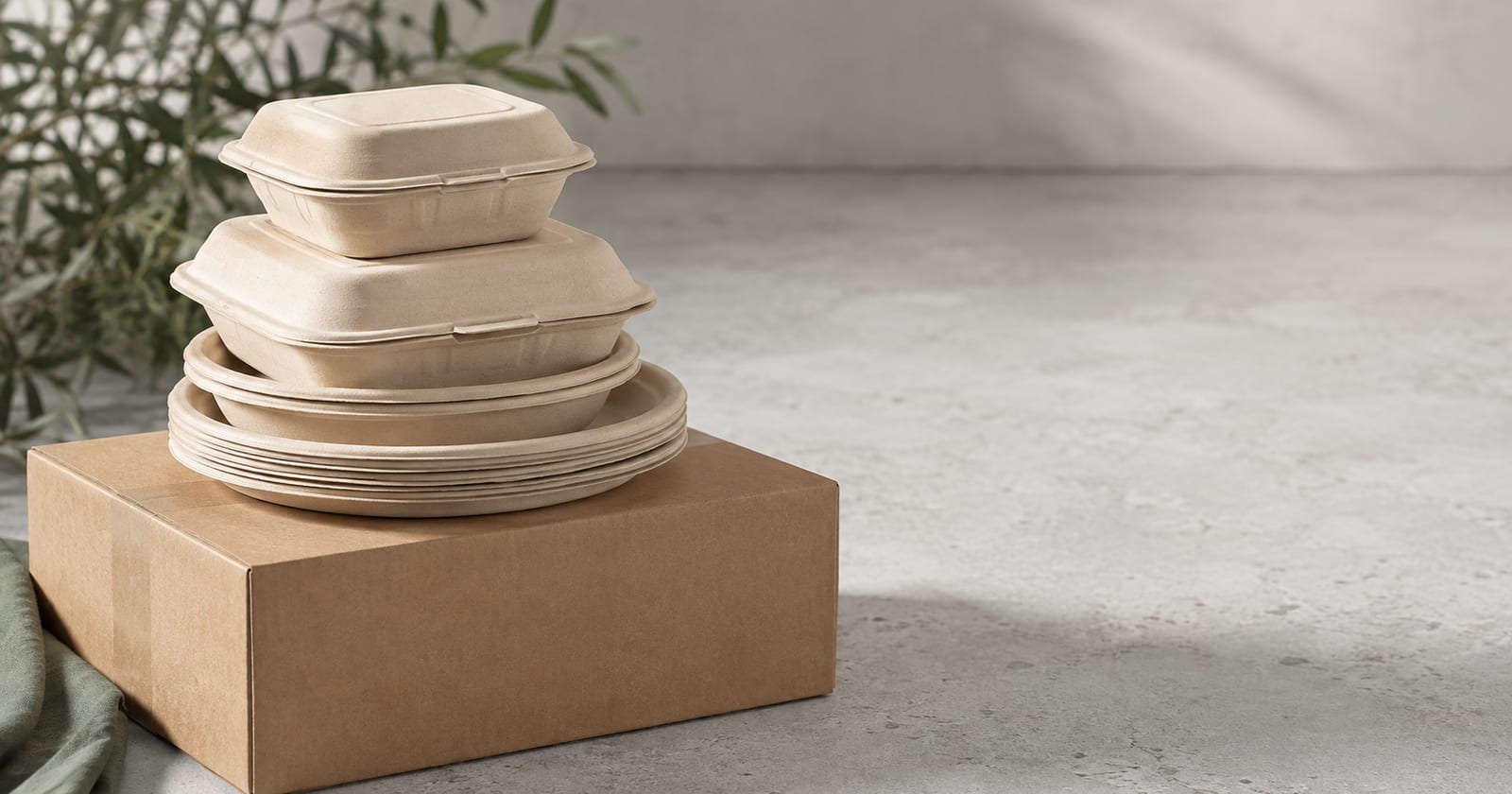
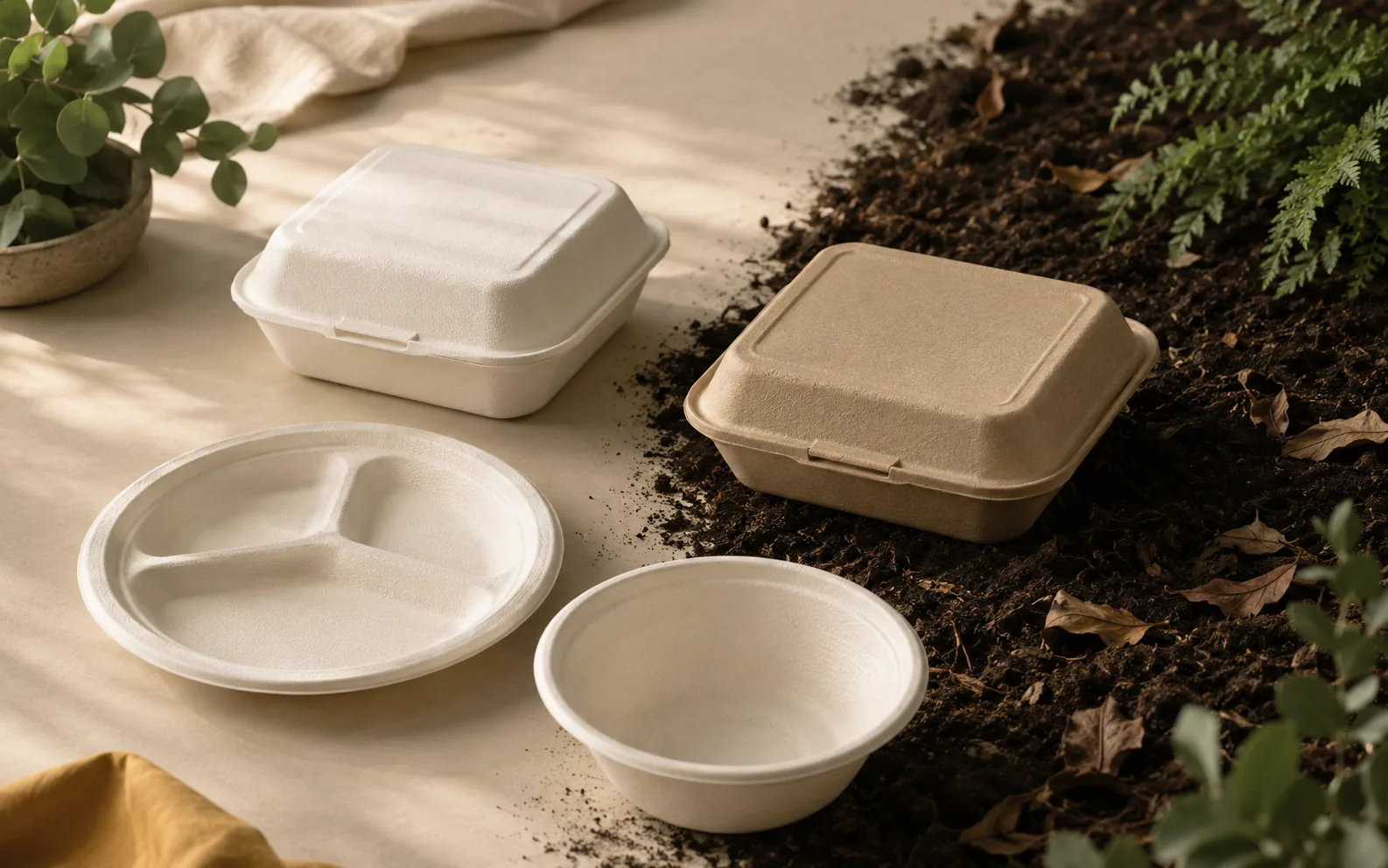
- Finished Type 3 formats in practice: compostable plates and bowls, hinged clamshells and compartment trays
Specifying molded fiber for a bulk order
Ecofy manufactures Type 3 molded fiber foodservice packaging from sugarcane bagasse, with compostability and PFAS test reports available per SKU. Request a quote or order samples.
Sources
- International Molded Fiber Association, Molded Fiber 101, for molded fiber as a process rather than a material, and for the four-type scheme
- Molded fiber and pulp products as green and sustainable alternatives to plastics: a mini review, Journal of Bioresources and Bioproducts, 2022, a review of the process and material families
- Mark Lewis, Nonwood Fibers in Molded Pulp Manufacture, TAPPI PEERS 2019, for the wall thickness range, forming method and drying route of each type, and for agricultural residue feedstocks
Want guides like this in your Google results?
Add Ecofy as a preferred source. Google will surface our compliance standards and trade-data guides more often when you search packaging rules, including in AI Overviews. Takes one click and you can remove it any time.