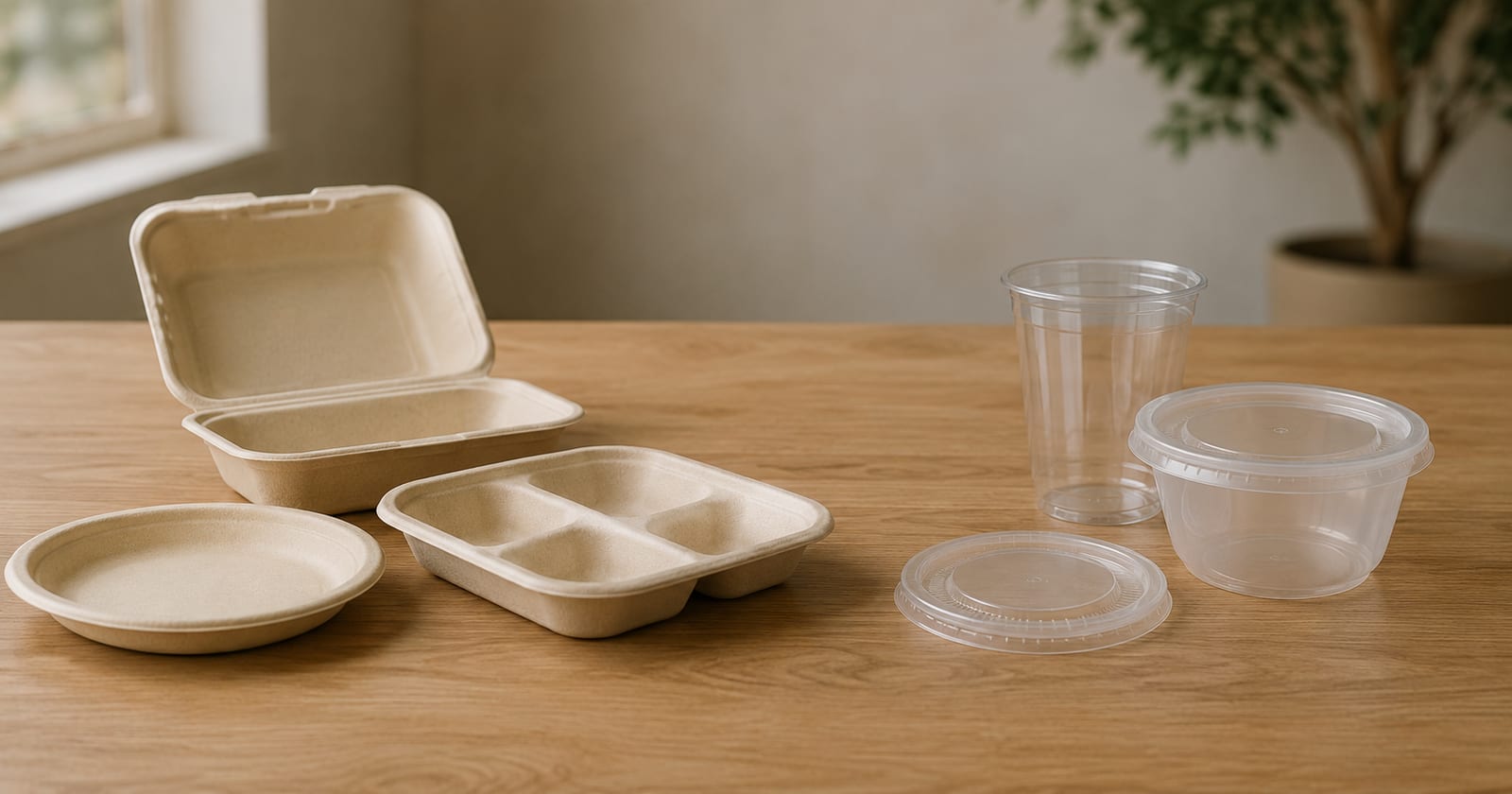
Bagasse vs Plastic Packaging: 2026 B2B Buyer's Guide
Neutral B2B comparison of compostable bagasse and conventional plastic foodservice packaging: performance, end-of-life, 2026 regulation and real cost.
On this page
Sourcing in bulk?
Tell us your products and quantity
We supply distributors and brands in 30+ countries, and reply with pricing, lead time and shipping.
TL;DR: Conventional plastic foodservice packaging is cheaper per unit and offers clarity, but 2026 regulation (single-use-plastic bans, foam bans, plastic taxes, PFAS rules) is turning it into a compliance liability in many markets, and it persists as microplastics. Bagasse, moulded from sugarcane fibre left after milling, is compostable, handles hot and wet foods well, and is compliant where plastic is restricted. For most hot-food, takeaway and regulated-market applications bagasse is now the more defensible B2B choice; plastic keeps an edge only where transparency or a specific barrier is essential. Verify PFAS-free regardless of material.
When a foodservice brand or distributor reviews packaging in 2026, the bagasse-versus-plastic decision is no longer only about sustainability preference. It is about compliance, performance and total cost. This guide compares the two neutrally for B2B buyers, so you can match the right material to your food, your market and your budget.
What Bagasse and Plastic Packaging Actually Are
Sugarcane bagasse (moulded fibre)
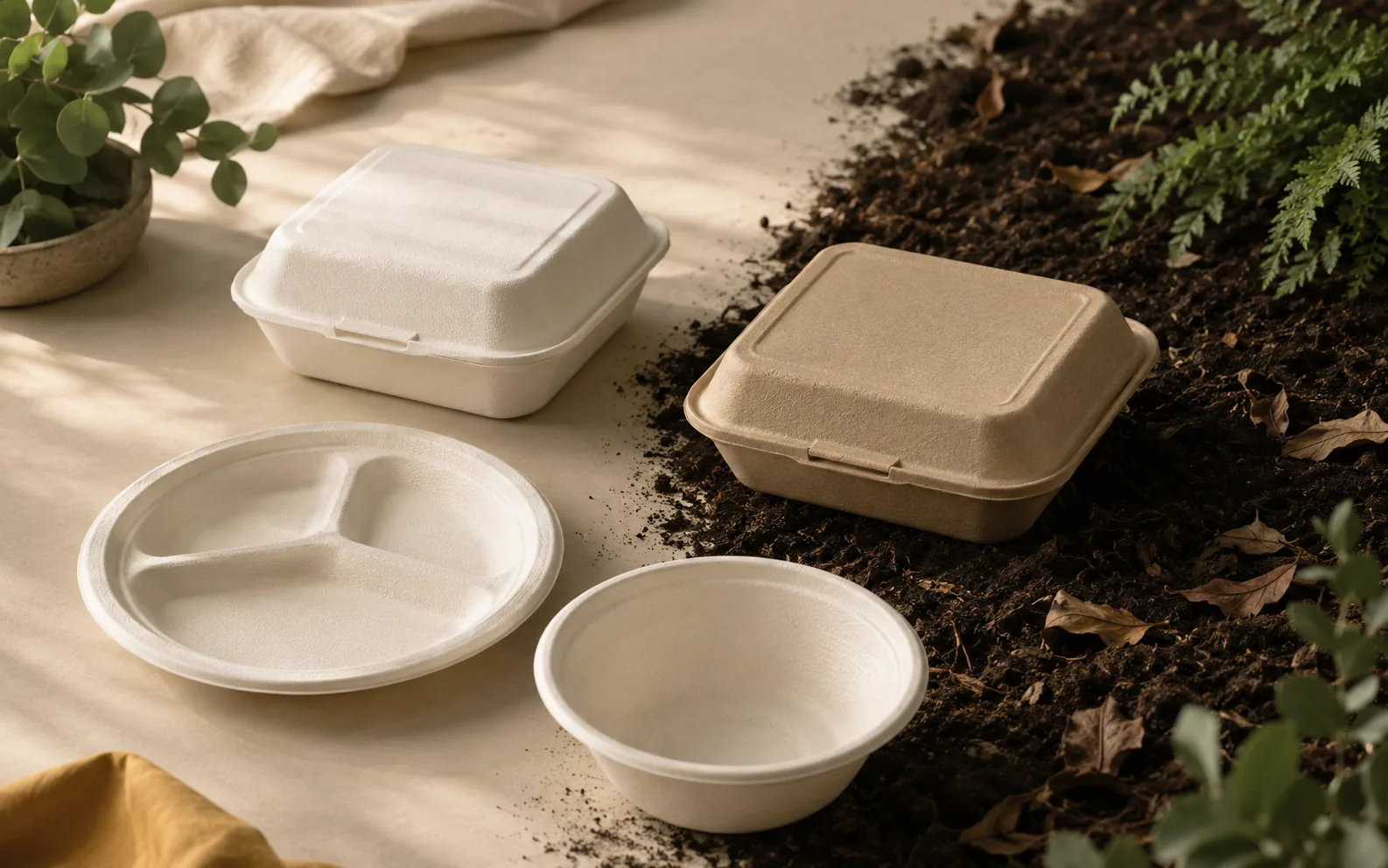
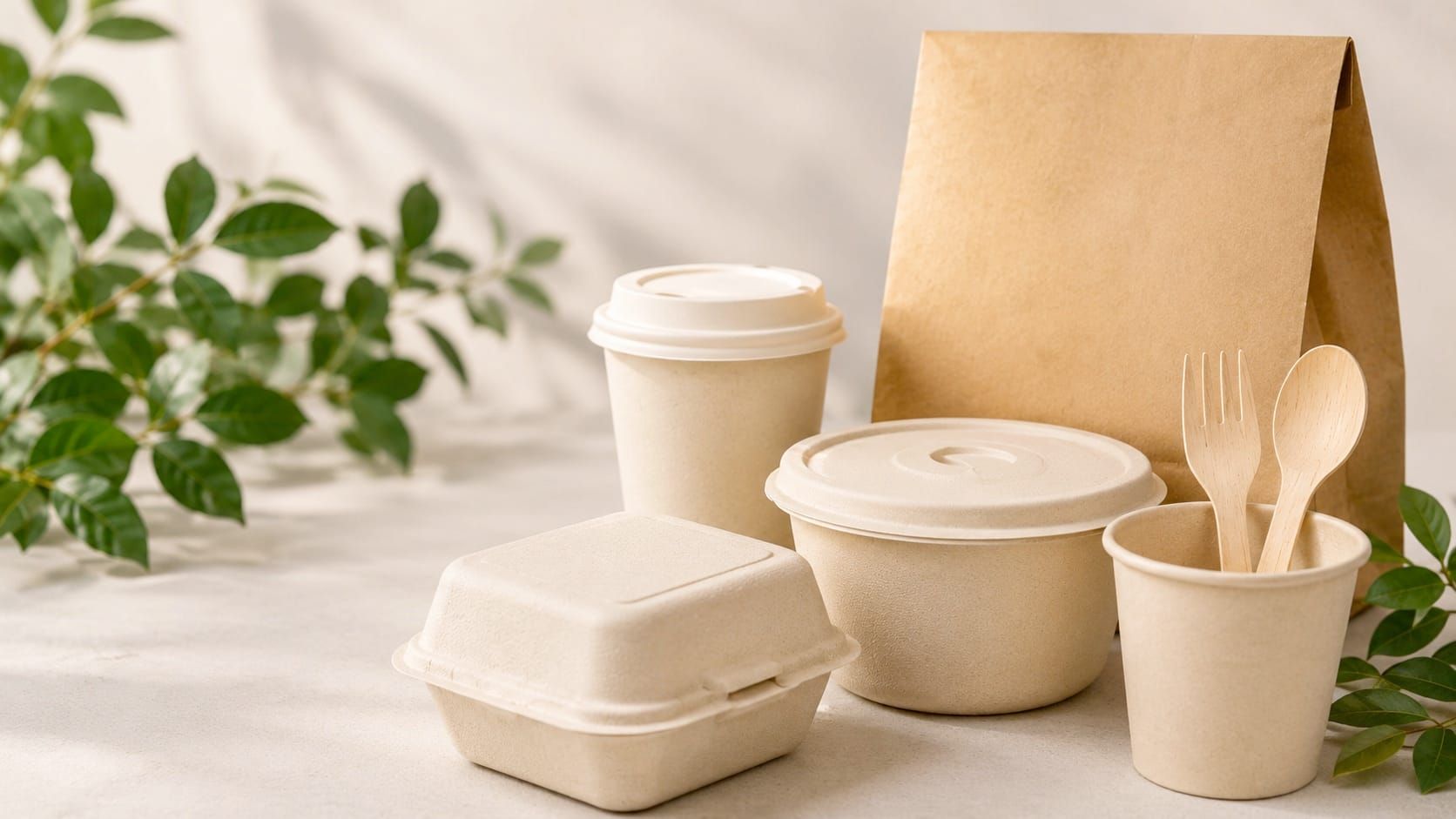
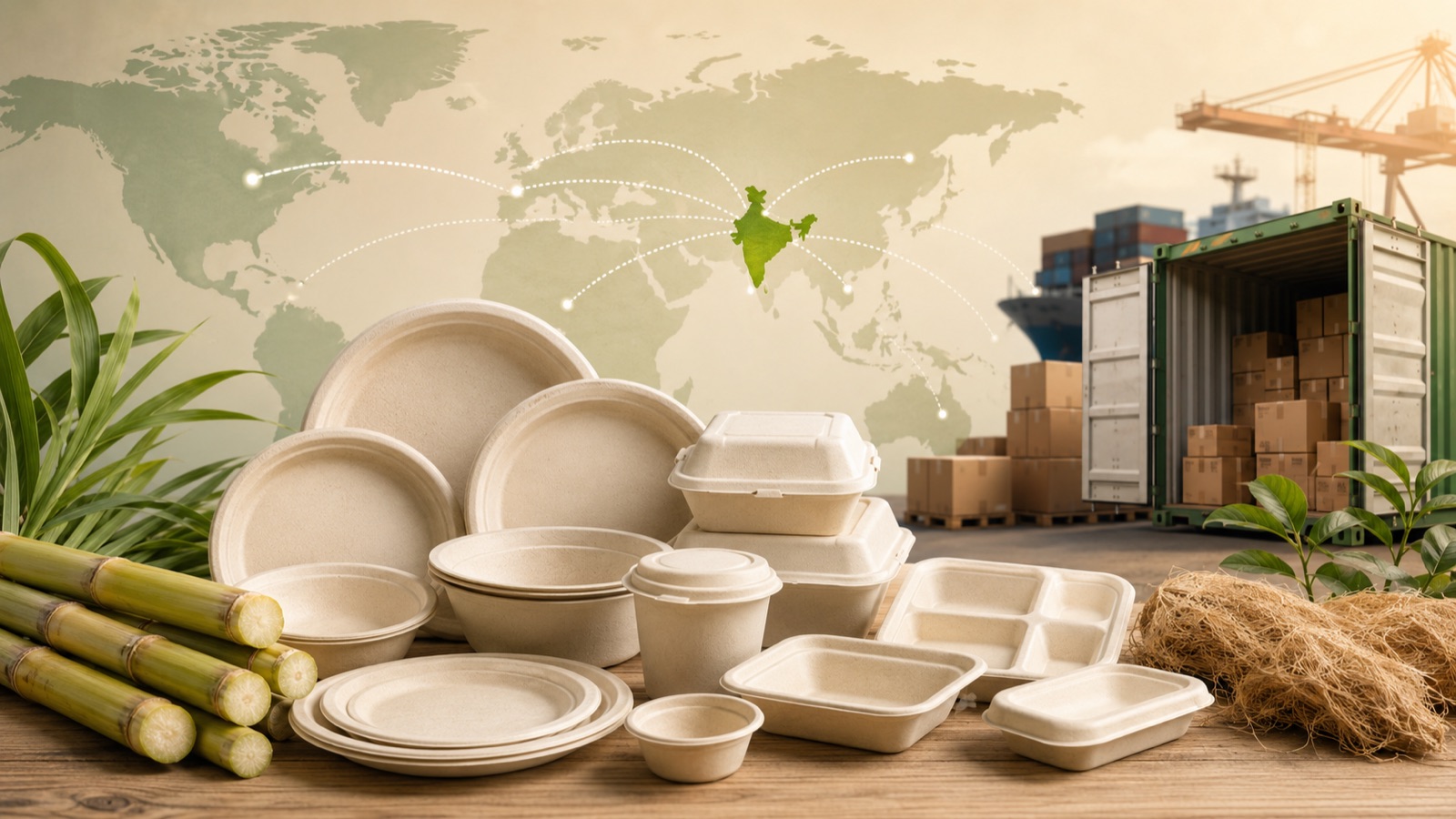
Bagasse is the fibrous residue left after sugarcane stalks are crushed for juice, a renewable agricultural by-product rather than a purpose-grown crop or fossil feedstock. It is pressed under heat and pressure into plates, bowls, clamshells, trays and cups, and it is compostable.
Conventional plastic (PS, PP, PET)
Conventional foodservice plastic means fossil-derived polymers: polystyrene (including expanded-polystyrene foam), polypropylene and PET. It is cheap and durable, but finite-sourced, non-biodegradable, and it fragments into microplastics over decades.
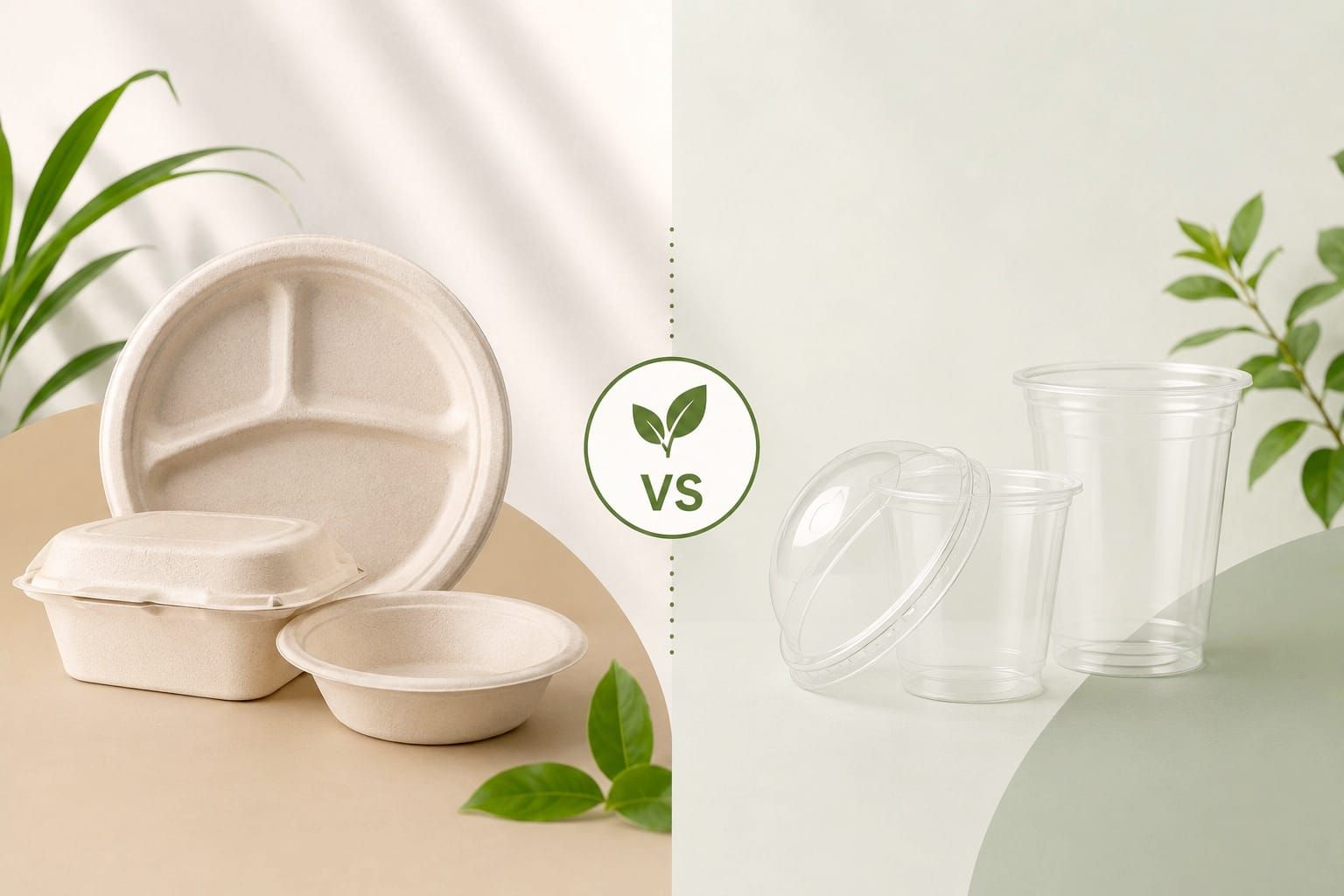
Bagasse vs Plastic at a Glance
| Criteria | Bagasse (moulded fibre) | Conventional plastic |
|---|---|---|
| Source | Renewable sugarcane by-product | Fossil-derived |
| Hot / oily food | Strong, rigid, grease-resistant | Varies; foam brittle, PET low-heat |
| Cold display / clarity | Opaque | Clear (PET) advantage |
| End-of-life | Compostable where infrastructure exists | Persists; microplastics |
| 2026 regulatory status | Compliant in ban markets | Restricted, banned or taxed in many |
| Food-safety chemicals | BPA and phthalate-free (uncoated) | Some plastics leach BPA or phthalates |
| Unit cost | Modest premium | Usually cheaper |
| Best for | Hot meals, takeaway, regulated markets | Cold clear display, specific barriers |
Performance: Can Bagasse Hold Hot Food?
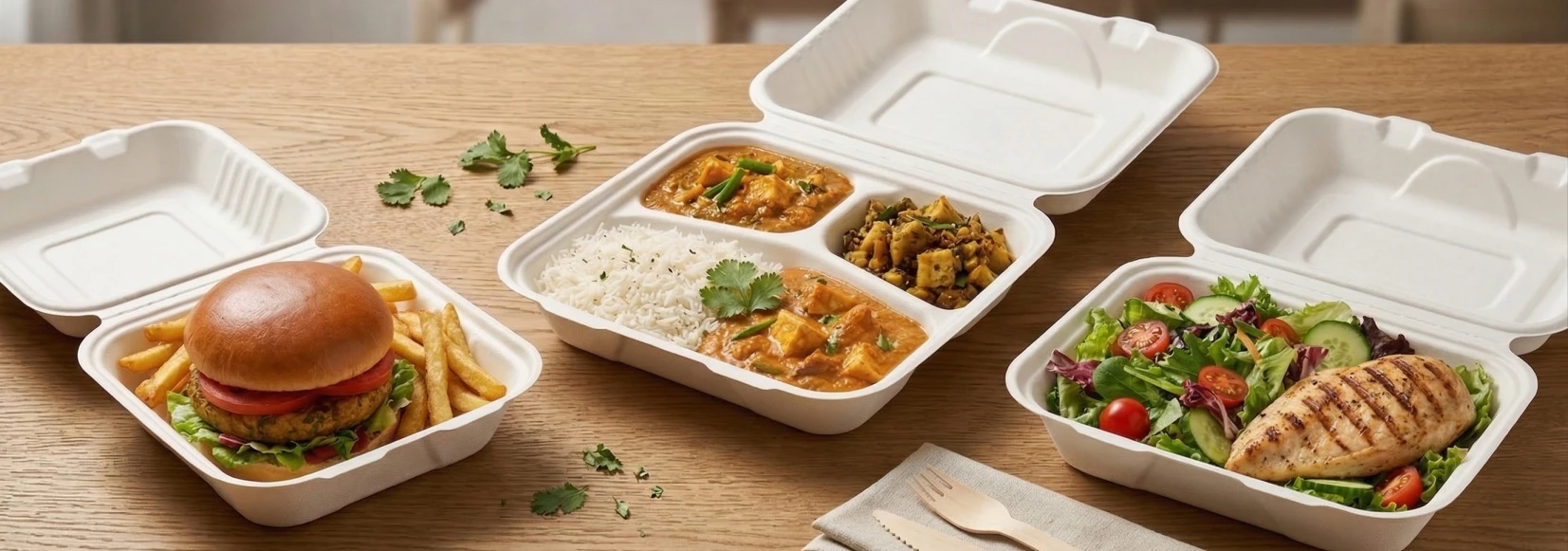
Uncoated moulded bagasse is rigid, grease-resistant and tolerant of hot, wet and oily foods. It does not soften under a hot curry the way thin plastics can, and many formats are microwave and freezer safe. Plastic varies by polymer: EPS foam insulates but is brittle and widely banned, with bagasse the standard compostable foam alternative; PET is clear but low-heat; polypropylene handles heat but is still restricted where single-use plastics are banned. The honest edge to plastic is clarity for cold grab-and-go display and certain liquid-tight or barrier formats.
Bagasse vs Plastic: Environmental Impact and End-of-Life
This is the clearest divide. Plastic foodservice items are rarely recycled in practice and persist, shedding microplastics. Bagasse is compostable and returns to organic matter rather than fragmenting. The crucial caveat: compostable only delivers its benefit where composting infrastructure exists, so match the material to the destination market’s waste system, not just the label.
How Long Does Bagasse Take to Decompose?
Uncoated bagasse typically breaks down in industrial composting within 60 to 90 days, far faster than conventional plastic. It is also free from BPA and phthalates, which is why procurement teams increasingly treat it as a cleaner food-contact option than many plastics.
The 2026 Regulations Driving the Switch from Plastic
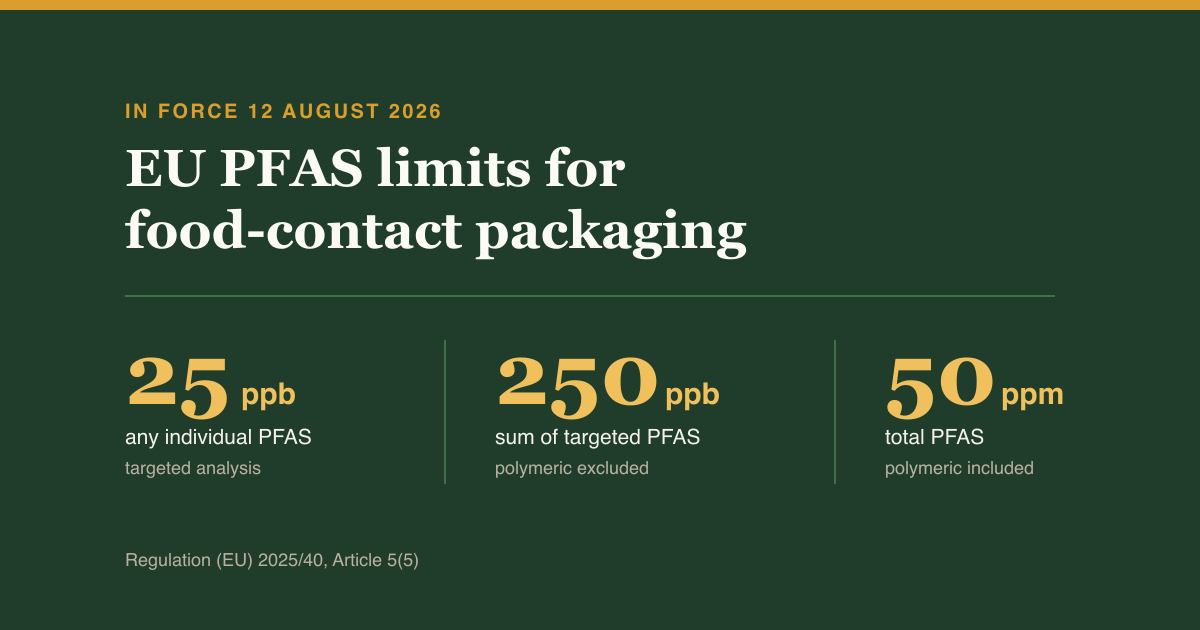
Regulation, not just preference, is moving procurement away from plastic. The EU Packaging and Packaging Waste Regulation (Regulation (EU) 2025/40) applies from 12 August 2026 and requires all packaging to be recyclable by 2030. The UK Plastic Packaging Tax applies at £228.82 per tonne (2026-27 rate) to plastic packaging with under 30% recycled content, and compostable fibre falls outside its scope. In the United States, a growing number of states restrict PFAS in food packaging and ban expanded-polystyrene foodservice foam (Safer States tracker). Single-use-plastic and polystyrene bans are also enforced across markets from the UAE to India.
For businesses selling into these markets, plastic is becoming a compliance liability, while compliant fibre packaging is now a documented requirement. See our guides to the UK Plastic Packaging Tax, the EU Packaging Regulation and PFAS-free verification, plus our 2026 single-use plastic ban tracker for which markets have restricted plastic.
“Buyers used to lead with price. Now the first question is ‘can you prove it’s compliant’, and that shift, not sustainability alone, is what is pushing plastic out of regulated markets.”
Sameer Kulkarni, Ecofy (leads export and compliance)
Bagasse vs Plastic Cost: Is Bagasse Cheaper?
Per unit, plastic is usually cheaper. But total cost is shifting. Plastic taxes, ban-driven forced re-switches and compliance risk change the maths, so buyers increasingly evaluate landed compliant cost rather than the headline unit price. In our own export inquiries, around 60% of B2B buyers now ask for compliance documentation, such as PFAS test reports and composting certificates, before they request a price, a reversal from a few years ago when unit cost led the conversation. One caution applies to fibre too: compostable is not automatically PFAS-free, so request a PFAS or total-organic-fluorine test report from any supplier, whatever the material.
Bagasse vs Plastic Containers, Plates and Trays: Which to Choose
- Hot, wet or oily meals, takeaway, regulated markets: bagasse.
- Cold clear-display grab-and-go, specific barrier formats: plastic, or a fibre base with a compatible lid.
- Any market with active single-use-plastic, foam or PFAS rules: compliant fibre (bagasse) with documentation.
If you are comparing compostable options against each other rather than against plastic, see also our bagasse vs PLA and bagasse vs paper and pulp comparisons, and is bagasse compostable for the standards and timelines.
For most hot-food, takeaway and regulated-market applications, compostable bagasse is now the more defensible B2B choice; plastic keeps a narrow edge on clarity and specific barriers. Whichever you choose, verify PFAS-free and match end-of-life to your market.
Ecofy manufactures compostable sugarcane-bagasse foodservice packaging, clamshell containers, plates, bowls, meal trays and takeaway containers, in a BRCGS Grade A facility, PFAS-free and verified through third-party testing, and exports to 30+ countries. Request a quote or free samples or explore the full product range.
Want guides like this in your Google results?
Add Ecofy as a preferred source. Google will surface our compliance standards and trade-data guides more often when you search packaging rules, including in AI Overviews. Takes one click and you can remove it any time.